
Unbiased headlines. Facts, not spin.
Unbiased Headlines is an independently owned news organization. We bring you the facts, not opinions, written fresh from 110+ named sources. Sources linked so you can verify it yourself.
 health
Notable (5/10)
health
Notable (5/10)
Passive Smoking Deaths in India Hit 325,600 in 2023, Up Nearly 50% Since 1990, Lancet Study Finds
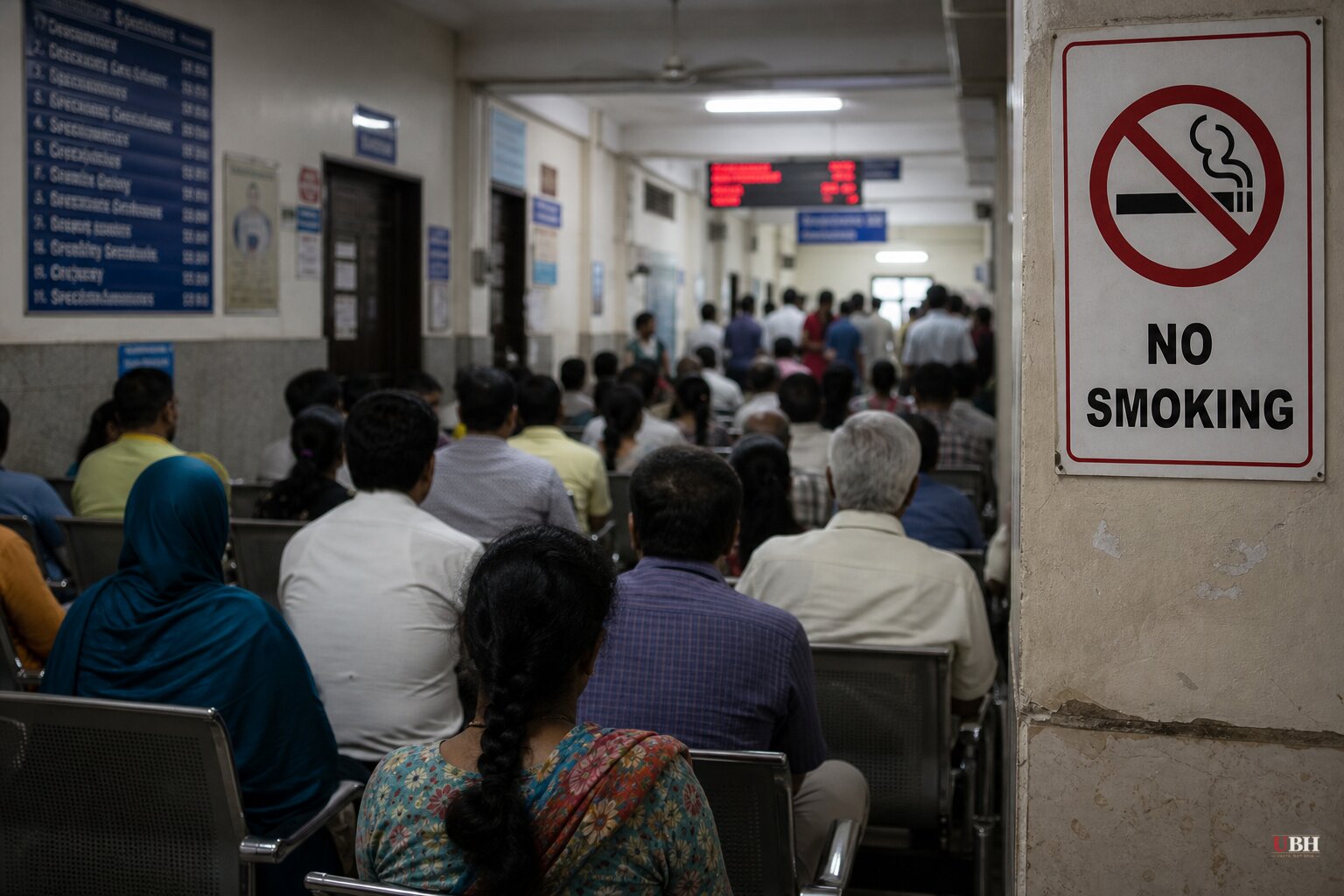
India's secondhand smoke death toll rose from 217,700 in 1990 to 325,600 in 2023, an increase of roughly 50%, according to a study published in The Lancet Public Health and reported by The Times of India.
India's age-standardized exposure rate, the share of the population breathing secondhand smoke adjusted for age, actually fell from 43.2% in 1990 to 30.6% in 2023. That represents real progress on a per-person basis.
But raw population growth wiped out most of that gain. The number of Indians exposed to secondhand smoke rose from 375 million in 1990 to 444 million in 2023, an 18.4% increase, according to the study. India now has the world's second-highest number of people exposed to secondhand smoke, trailing only China.
Deaths split roughly evenly by sex but moved in different directions. Fatalities among women rose from 113,400 to 156,900. Among men, deaths climbed from 104,300 to 168,700, according to the study data cited by The Times of India.
The health burden isn't limited to deaths. Secondhand smoke accounted for 9.28 million disability-adjusted life-years, or DALYs, in India in 2023, a measure of healthy years lost to premature death, illness or disability.
What's actually killing people
The study links secondhand smoke exposure to ischaemic heart disease, stroke, lung cancer, chronic obstructive pulmonary disease, breast cancer, type 2 diabetes, asthma, and lower respiratory infections. Among children specifically, lower respiratory infections were the leading contributor to disease burden, according to the findings.
Dr. G C Khilnani, chairperson of pulmonary and critical care at PSRI Hospital, told The Times of India that children and women are particularly vulnerable. "Kids and women are particularly vulnerable, with children's developing lungs making them more susceptible to respiratory issues," Khilnani said, adding that "smoking should be done outdoors, and greater public awareness is needed."
Khilnani's position doesn't call for banning smoking outright or criminalizing smokers. It calls for smokers to take responsibility for where they light up, particularly around kids. It's the kind of common-sense standard most people can get behind: your habit, your business, until it's someone else's lungs.
The global picture
Worldwide, 2.71 billion people were exposed to secondhand smoke in 2023, contributing to 1.66 million deaths and 44.8 million DALYs globally, according to the Lancet study. China and India together account for the largest share of people exposed, reflecting their massive populations more than any unique policy failure.
What the numbers don't settle
One legitimate pushback on headlines like "deaths up 50%" is that raw death counts in a country adding hundreds of millions of people over three decades will almost mechanically rise even if individual risk falls. India's declining age-standardized exposure rate is real evidence that public health messaging and smoking restrictions in public spaces have made some difference. A 50% jump in absolute deaths without that context could make it sound like things are getting worse across the board, when the per-person trend actually points the other way.
Still, 444 million people exposed and 325,600 dead in a single year is significant, and the study doesn't break down how much of that exposure is happening in workplaces, restaurants, and public transit versus inside people's own homes. That distinction matters for policy. A government can restrict smoking in a train car. It can't police what a father does in his own living room with his kids in the next room.
The Lancet study, as reported, doesn't recommend specific new regulations for India. That leaves an open question for public health officials and lawmakers: whether the next round of anti-smoking policy should target public enforcement, which is already trending in the right direction on a per-capita basis, or shift toward household-level awareness campaigns aimed at the exposure that current bans can't reach.
Sources used for this briefing
1 link from 1 independent newsroom (syndicated copies of the same report count once)
These are the sources it draws on, linked so you can verify.


