
Unbiased headlines. Facts, not spin.
Unbiased Headlines is an independently owned news organization. We bring you the facts, not opinions, written fresh from 110+ named sources. Sources linked so you can verify it yourself.
 health
Notable (6/10)
Pancreatic cancer drug Rasonque extended median survival versus chemotherapy in Phase 3 trial
Pancreatic cancer has been among the hardest cancers to treat for decades. The five-year relative survival rate is 13%. It is the third-leading cause of cancer death in the US, and death rates have barely moved for years.
In August, the FDA approved Rasonque (daraxonrasib) for metastatic pancreatic adenocarcinoma. It is the first broad RAS-targeted therapy approved for the disease.
What the trial showed
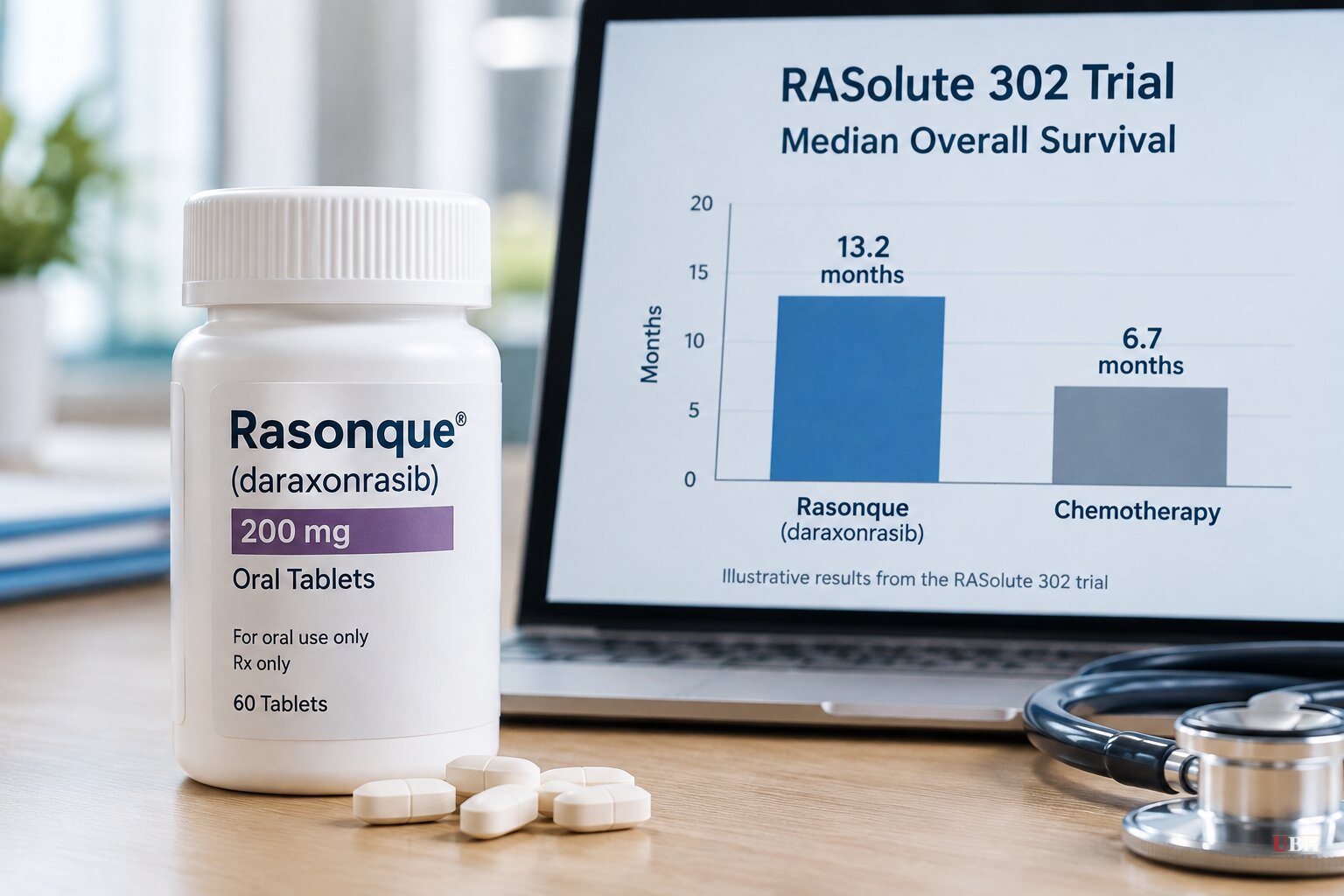
The Phase 3 RASolute 302 trial found that patients with previously treated metastatic pancreatic cancer who received daraxonrasib had a median overall survival of 13.2 months. Patients receiving standard chemotherapy had 6.7 months.
Clinical trial results also showed slower disease progression and delayed declines in pain and quality of life compared with chemotherapy.
These are median figures. Half the patients in each group lived longer than the number, and half lived shorter. The data describe a group, not a guarantee for any individual patient.
How the drug works
RAS is a protein involved in signaling that tells cells to grow. When it is abnormally activated, those signals can remain switched on, causing cells to multiply uncontrollably.
RAS mutations are found in more than 90% of pancreatic adenocarcinomas, making the pathway an important target for treatment.
Daraxonrasib is an oral RAS inhibitor that blocks activated RAS signaling. Unlike treatments that target a single mutation, it is designed to inhibit multiple forms of RAS.
Why the disease stays so deadly
Approval is a real advance, but the drug is not a cure. Most patients eventually develop resistance, with their tumors growing despite treatment. Much work remains to improve outcomes and catch the disease earlier.
The pancreas sits deep inside the abdomen. Pancreatic cancer can grow rapidly and be difficult to detect early enough for surgery. By the time symptoms such as abdominal or back pain, unexplained weight loss, loss of appetite, fatigue or jaundice appear, the disease may already be advanced.
Surgery and chemotherapy are the only established potentially curative treatment, and they require finding the tumor early enough. For most people, pancreatic cancer is diagnosed after symptoms appear. A drug for metastatic disease helps patients with advanced disease. It does not solve the detection problem.
Who is at risk
The exact cause is unknown in most cases. Age is the biggest risk factor, particularly being 65 or older.
Other risk factors include:
- Smoking cigarettes or cigars, or using tobacco
- Obesity
- Diabetes
- Exposure to pesticides and certain chemicals
- A family history of pancreatic cancer or an inherited gene mutation
A family history does not mean someone will necessarily develop the disease.
New symptoms deserve attention, especially in older adults. Unexplained weight loss, new abdominal or back pain, or newly developed diabetes can sometimes signal a problem with the pancreas and should be evaluated by a doctor. It is especially important to act quickly when pancreatic cancer is suspected or diagnosed.
What comes next
The approval covers metastatic pancreatic adenocarcinoma. The next challenge is determining whether that progress can be extended to earlier-stage disease, overcome treatment resistance and ultimately lead to cures. The hope is that the drug will open the door to additional therapies targeting the same pathway, as well as combinations that could produce even greater benefits.
Researchers are also pursuing earlier detection, including blood tests that could identify biological changes associated with cancer, more sophisticated imaging and artificial intelligence. People at particularly high risk may undergo regular imaging to look for early changes. Immunotherapy, including vaccines, has not yet produced the kind of breakthrough in pancreatic cancer seen with some other cancers.
Sources used for this briefing
1 link from 1 independent newsroom (syndicated copies of the same report count once)
These are the sources it draws on, linked so you can verify.


