
Unbiased headlines. Facts, not spin.
Every story is an unbiased news briefing written from 110+ sources across the spectrum — sources linked so you can verify it yourself.
 health
Notable (6/10)
September 16, 2026 at 03:00 AM
health
Notable (6/10)
September 16, 2026 at 03:00 AM
Ozone Hole Shrinks for Second Straight Year, But WMO Says Recovery Has Stalled
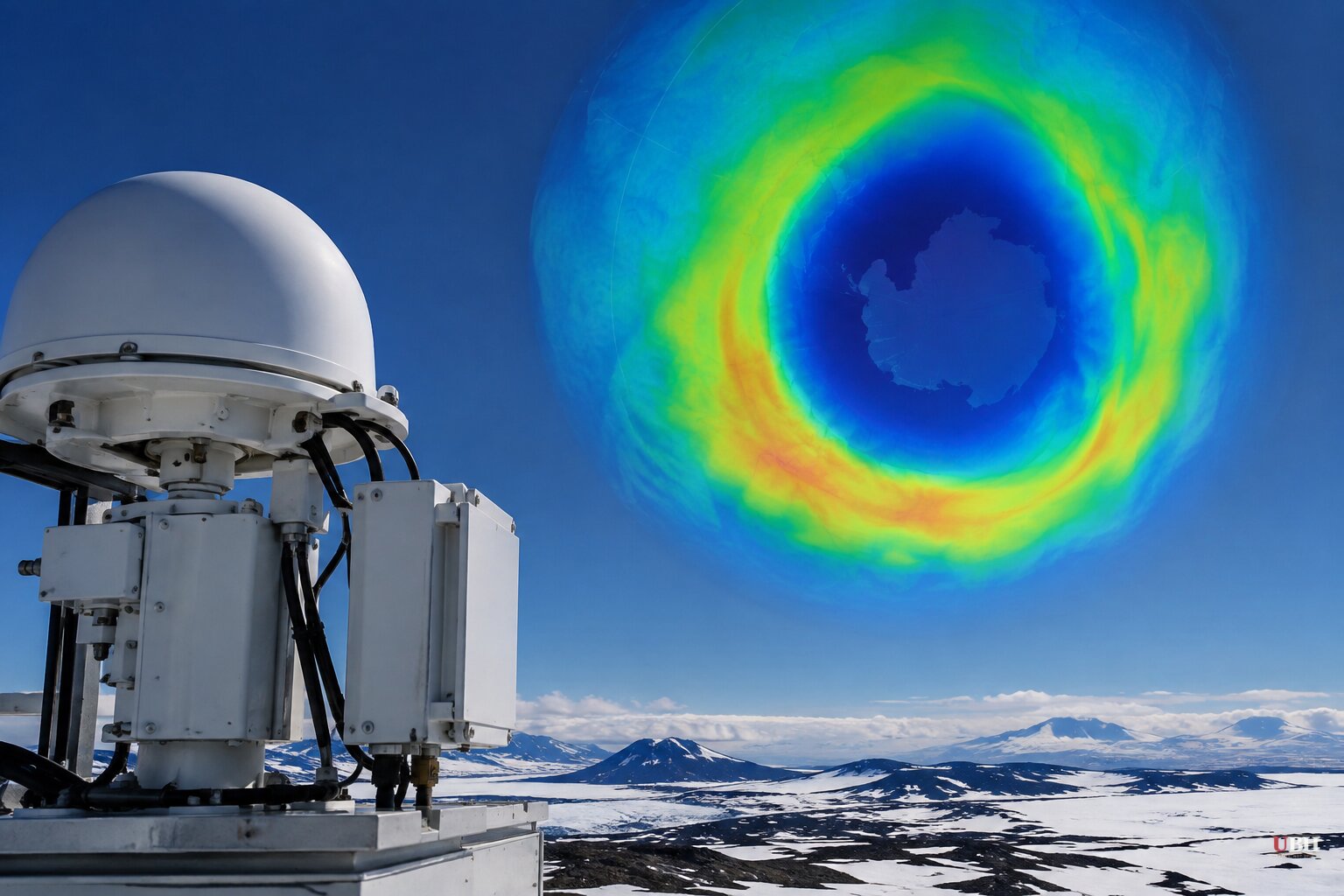
The hole is shrinking, just not as fast as hoped
The World Meteorological Organization's latest Ozone and UV bulletin finds the hole in Earth's ozone layer is "significantly" smaller than its average size between 1990 and 2020, according to Scientific American's coverage of the report published September 15, 2026.
This is the second consecutive year the WMO has recorded a smaller-than-average hole. The progress traces back to one of the cleanest policy wins in modern environmental history.
The ozone layer sits roughly nine miles above Earth's surface and absorbs ultraviolet radiation that causes skin cancer. Scientists linked its depletion to chlorofluorocarbons, man-made chemicals used in refrigerants and aerosols starting decades ago. In 1987 nearly every country on Earth signed the Montreal Protocol, banning CFCs outright. It is routinely cited, across the political spectrum, as proof that a targeted international agreement can fix a specific, well-understood environmental problem.
The caution nobody wants to hear
UCLA professor Suzanne Paulson told Scientific American that two good years don't mean much on their own.
"It does go up and down every year, so any one year doesn't really tell you a whole lot," Paulson said. "It certainly hasn't gotten worse in recent years, but for the most part, we haven't really seen major improvements."
Scientists had modeled a faster recovery curve than what's actually showing up in the data. A shrinking hole is good news. A recovery that's stalled below projections is not the same story as "problem solved."
A September surprise
Ozone levels swing through the year and typically hit their lowest point in October. In 2025, the low arrived in September instead, a month early, according to the WMO bulletin.
Laurence Rouil, director of the Copernicus Atmospheric Monitoring Service, flagged a similar pattern building again this year.
"While we have seen its area increase rapidly in early September this year, other indicators remain close to historical averages," Rouil said in a statement. "These findings highlight the importance of monitoring the complicated interaction between human-made disturbances and natural factors."
The hole grew fast in the first weeks of September even though most other measurements look normal for this time of year. Scientists don't yet know if that's a one-off blip or a sign that something is working against the recovery.
Scientific American links the slower pace to extreme weather, which the outlet attributes to human-driven climate change, disrupting the atmospheric chemistry that governs ozone repair. The bulletin itself doesn't pin this year's early growth spurt on a single confirmed cause, and Rouil's own language treats it as an open question rather than a settled one.
Why the framing matters
Environmental groups and government agencies alike have leaned on the ozone story for nearly 40 years as their go-to example that global cooperation works. It's a useful example precisely because the science is clean: CFCs went down, the hole responded. Nobody serious disputes that the Montreal Protocol did what it was designed to do.
"Significantly smaller than the 30-year average" is not the same claim as "healed." Paulson's read on the data says improvement has flattened, not accelerated, over recent years. Treating every modest year-over-year shrinkage as fresh proof of a triumphant trend risks the same kind of overclaiming that erodes public trust when a bad year eventually shows up.
What comes next
The Southern Hemisphere ozone hole typically bottoms out in October, so WMO scientists won't have a full read on this year's numbers for several more weeks.
If the rapid September growth Rouil described continues into October, it would break the pattern of the last two years and sharpen the question of whether extreme weather is now working against a 39-year-old treaty that, until recently, had a nearly uninterrupted record of measurable success.
Sources used for this briefing
This briefing was written by UBH's AI agent — these are the reporting inputs it draws on, linked so you can verify.


