
Unbiased headlines. Facts, not spin.
Unbiased Headlines is an independently owned news organization. We bring you the facts, not opinions, written fresh from 110+ named sources. Sources linked so you can verify it yourself.
 health
Notable (5/10)
Oxford study links 12 blood proteins to prostate cancer diagnosed 15 or more years later. It is not a screening test.
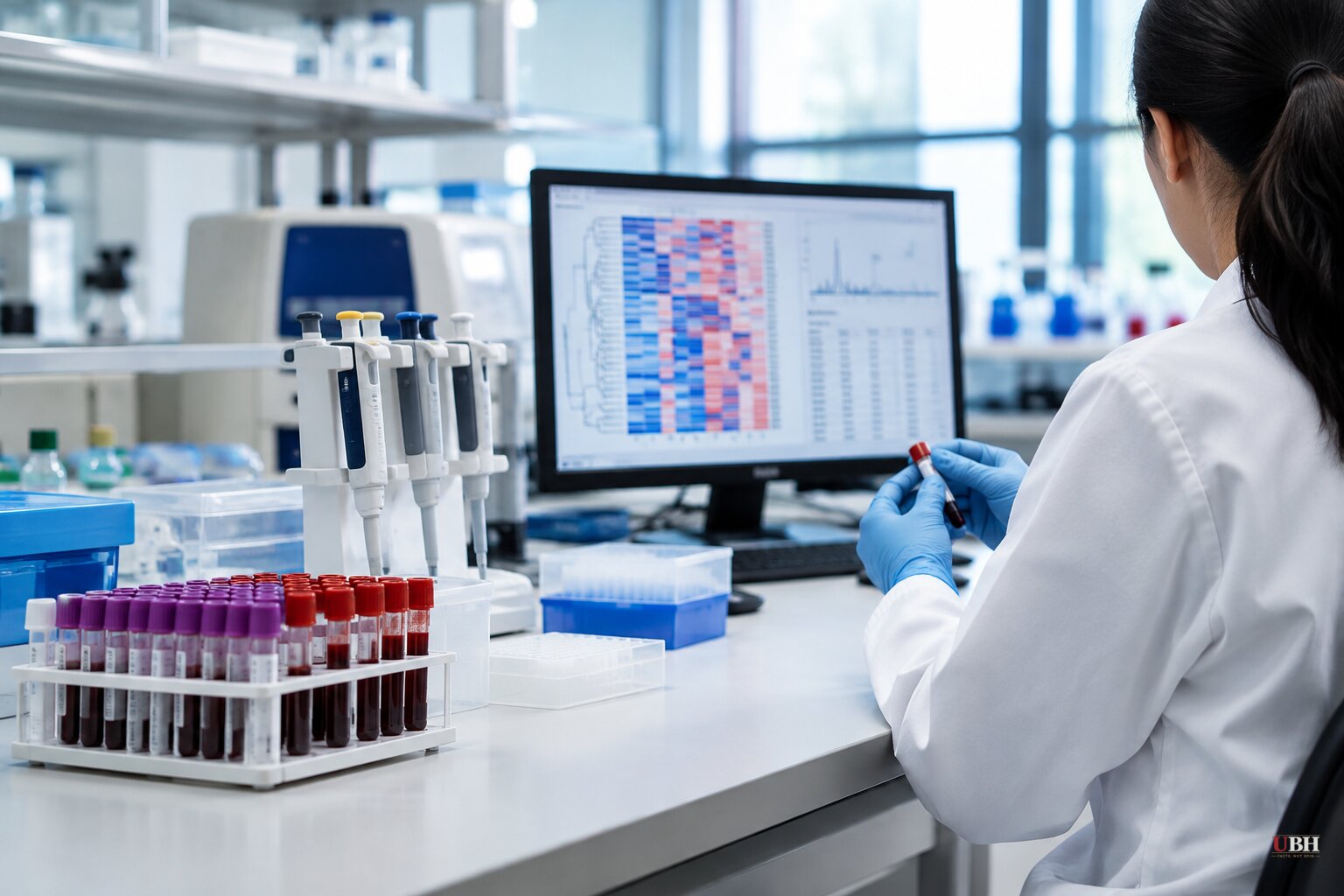
Blood drawn from men in the 1990s already carried signals of prostate cancer that would not be diagnosed until the 2010s. That is the finding from a team at Oxford Population Health, published in the journal European Urology and presented at the American Society of Human Genetics annual meeting.
The researchers call it the largest population-based study to date of blood proteins and future prostate cancer risk. They also say plainly that it is not a clinical test.
What the Oxford team did
The team analysed samples collected between 1992 and 2000 from the European Prospective Investigation into Cancer and Nutrition, known as EPIC. They compared 982 men who went on to develop prostate cancer with a randomly selected group of 1,573 men.
They measured more than 6,000 proteins in each man's blood plasma. Participants were followed for around 16 years.
The findings
Twelve proteins were linked to prostate cancer diagnosed more than 15 years after the blood was taken. One of them, GZMK, is produced by immune cells that recognise and destroy abnormal cells. The researchers say that suggests the immune system may help keep prostate cancer in check long before diagnosis.
Men with higher levels of certain immune-related proteins, including GZMK and ANXA2, showed a lower long-term risk.
Seven proteins were tied to aggressive disease. One, ANKRD1, was consistently linked to serious forms, including cancers that spread or were ultimately fatal. Other signals pointed to how tumor cells interact with surrounding tissue and how new blood vessels form.
"Prostate cancer is not one disease," said Dr. Zhe Huang, the study's first author and a postdoctoral epidemiologist at Oxford Population Health. "Many prostate cancers grow slowly and may never cause harm, while others are aggressive and can be life-threatening."
Karl Smith-Byrne, the corresponding author, said that finding proteins linked to known prostate cancer driver genes years before diagnosis "gives us new insights into the earliest stages of the disease."
Why a better risk signal matters
Prostate cancer is the most common cancer among men in the EU, with about 330,000 new cases and about 75,000 deaths a year, according to Euronews' tally of EU figures. Prostate Cancer UK says more than 63,000 men are diagnosed in Britain every year and more than 12,000 die.
The standard tool is the PSA blood test. Dr. Miki Haifler, head of urologic oncology at Meir Medical Center in Israel, said PSA "is not a test designed to assess long-term cancer risk, but rather to raise suspicion of cancer that may already be present." An elevated PSA can lead to biopsies and treatment for tumors that would never have caused harm.
Haifler said a validated long-range risk marker could one day let doctors screen high-risk men more often and space out tests for low-risk men.
The caution from the field
Haifler was careful about the timeline. He and the Oxford authors both stress that no clinically validated prediction test exists yet. The researchers themselves say the findings need further validation.
The overdiagnosis problem is the harder one. Ruth Etzioni, a biostatistician at Fred Hutchinson Cancer Center who studies cancer screening, made the point in the context of multi-cancer blood tests. "Finding a cancer earlier does not mean you will change that cancer's fate," she said. For slow-growing cancers such as some prostate cancers, she said, "the person just ends up knowing sooner."
Treatment for prostate cancer can cause urinary incontinence and erectile dysfunction. Etzioni said researchers do not yet know how often multi-cancer testing might lead to overdiagnosis.
The Oxford protein work is aimed at that distinction. The seven aggressive-disease proteins are an attempt to flag the tumors that matter, not simply to find more tumors.
A separate advance on treatment
A different prostate cancer finding came out of the European Society for Medical Oncology Congress in Madrid, held Oct. 23 to 27. Researchers at University College London analysed Decipher, a tissue-based genomic test, to see which men with high-risk, localized disease benefit most from the hormone therapy abiraterone.
In the STAMPEDE trial, abiraterone cut the risk of death in half for this group. The UCL team looked at Decipher scores from more than 27,000 patients in real-world data and 401 men with non-metastatic disease from the trial.
Higher scores predicted worse outcomes and more potential benefit from added treatment. Low scores suggested intensive treatment may be unnecessary. Lead researcher Dr. Sarah Howlett of the UCL Cancer Institute said identifying the same pattern in both the real-world data and the randomized trial strengthens the findings.
That test works on tumor tissue after diagnosis. The Oxford proteins were found in blood years before it.
What comes next
The Oxford authors say their results, combined with existing and future genetic evidence, may point to biological pathways that could be targeted to prevent aggressive prostate cancer. The immediate step is replication in other cohorts. Until a protein panel is shown to predict aggressive disease better than PSA in men who have not yet been diagnosed, it stays a research result and not a screening tool.
Sources used for this briefing
7 links from 7 independent newsrooms (syndicated copies of the same report count once)
These are the sources it draws on, linked so you can verify.


