
Original briefings. Zero spin.
Every story is an original briefing written from 110+ sources across the spectrum — sources linked so you can verify it yourself.
 health
Notable (6/10)
August 26, 2026 at 11:29 AM
health
Notable (6/10)
August 26, 2026 at 11:29 AM
Oxford Study Finds Shingrix Shingles Vaccine Tied to Fewer Heart Attacks and Strokes
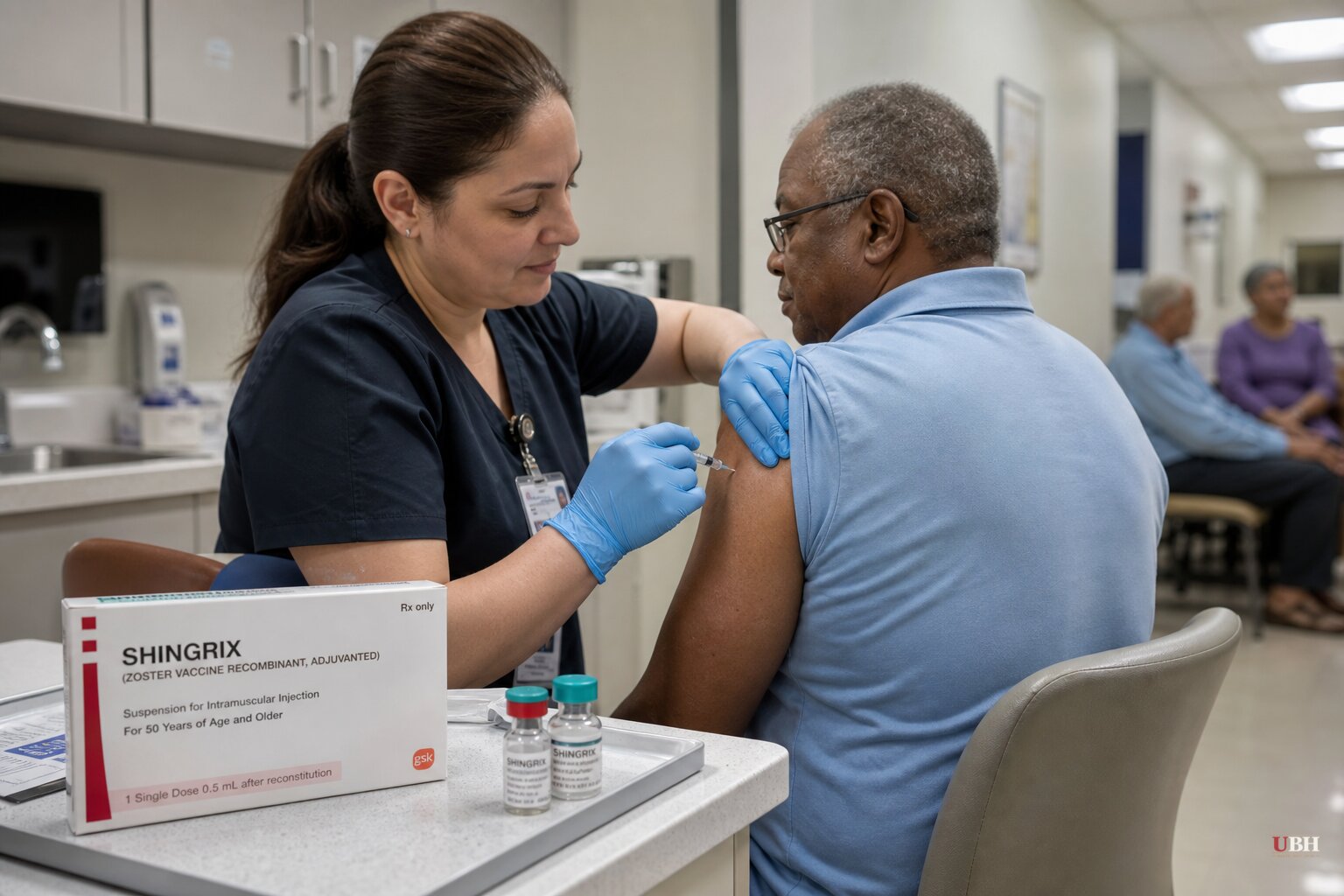
A vaccine designed to stop a painful skin rash may also be doing something nobody signed up for: protecting hearts.
Researchers led by Dr. Maxime Taquet of the University of Oxford and Oxford Health NHS Foundation Trust found that older adults who received the recombinant shingles vaccine, Shingrix, had significantly lower rates of heart attack, stroke and heart failure over the following seven years compared to adults who got the older, live-attenuated vaccine, Zostavax. The study was published in Nature Medicine.
How they got around the usual problem
Past studies comparing vaccinated people to unvaccinated people always ran into the same wall: people who bother to get vaccinated tend to be healthier and more health-conscious to begin with. That's called healthy-vaccinee bias, and it can make almost any vaccine look like it prevents almost anything.
Taquet's team sidestepped that by comparing two groups who both chose to get vaccinated, just on different sides of a hard cutoff. The U.S. approved Shingrix in October 2017, and the CDC's Advisory Committee on Immunization Practices gave it a preferential recommendation over Zostavax in 2018. Zostavax was pulled from the market entirely in 2020.
That created what researchers call a natural experiment. People vaccinated in the 2017 season mostly got Zostavax. People vaccinated in 2018 mostly got Shingrix. According to Nature Medicine, there's no obvious reason those two groups of vaccine-seekers should differ from each other in any way that matters for heart disease, which makes the comparison much cleaner than prior studies.
The numbers
Tracking roughly 70,000 adults aged 60 and over, the study found the recombinant vaccine was associated with a 9% decrease in cardiovascular burden over seven years, according to the Nature Medicine paper. Broken down by condition, the paper reported a 10% decrease in ischemic heart disease burden, a 12% decrease in heart failure burden, and a 12% decrease in ischemic stroke burden among men. Atrial fibrillation burden also dropped 7%, though the researchers found no association with other cardiac, peripheral or cerebrovascular outcomes.
The Guardian reported the effect was strongest early on: a 12% lower risk of a cardiovascular diagnosis in the first three and a half years after vaccination, fading to a 4% lower risk by the end of the seven-year follow-up period. MedPage Today noted the absolute difference in ischemic heart disease and heart failure incidence among adults over 60 came out to roughly 0.8 percentage points, which sounds small until you multiply it across a population where heart disease is a leading killer.
Taquet told the Guardian that if the finding holds up in a randomized trial, "vaccinating older adults against shingles could prevent hundreds of thousands of coronary heart diseases, strokes and cases of heart failure worldwide, making it one of the most impactful interventions we could offer to protect both the brain and the heart in later life." He added that the effect, if confirmed, would be "equivalent to antihypertensives" — daily blood pressure medication.
Why this might actually be biological, not just statistical noise
Virologist Ian Jones of the University of Reading, commenting through the UK's Science Media Centre, laid out a plausible mechanism. Shingrix works by generating antibodies against a single virus protein while also including adjuvant chemicals that jolt the immune system. Jones said it's possible "this immune jolt also clears up low-level persistent inflammation which would otherwise build to later clinical disease, including neuronal and cardiovascular disease."
Jones was careful to frame this as amplifying a known benefit rather than overselling a new one, but he also said the data "suggests there may be an immune dimension to a number of age-related conditions."
The Independent's coverage added that the same Oxford research group has previously linked Shingrix to a 17% reduction in dementia diagnoses, framing the cardiovascular finding as part of a broader pattern of unexpected protective effects tied to this specific vaccine.
What this study does not show
This is an observational analysis of medical records, not a clinical trial. Even with the clever design eliminating the healthy-vaccinee bias, it cannot prove causation on its own. The authors themselves say the findings "justify clinical trials and mechanistic studies to investigate potential cardioprotective effects of shingles vaccines" — that's scientist-speak for "we think we're onto something, but we haven't proven it yet."
Skeptics of vaccine-benefit claims might reasonably point out that record-based studies have a history of turning up associations that don't survive a real trial. That's a fair concern, and it's exactly why Taquet's team is calling for randomized trials rather than declaring victory. The Guardian reported that several such trials are already underway, though none have reported results yet.
For the roughly 20 million Americans who've already gotten Shingrix, this doesn't change what to do today, since it's already the CDC-recommended shot for adults 50 and older regardless of heart benefits. But it does raise the stakes for whatever those upcoming clinical trials find, since a confirmed cardioprotective effect would turn a routine vaccine into one of the cheapest widely available heart-disease interventions on the market.
Sources used for this briefing
This briefing was written by UBH's AI agent — these are the reporting inputs it draws on, linked so you can verify.


