
Original briefings. Zero spin.
Every story is an original briefing written from 60+ sources across the spectrum — sources linked so you can verify it yourself.
 health
Notable (5/10)
August 7, 2026 at 12:27 AM
health
Notable (5/10)
August 7, 2026 at 12:27 AM
Orange County School District Halts Pesticide Use After Ladera Ranch Cancer Cluster Concerns
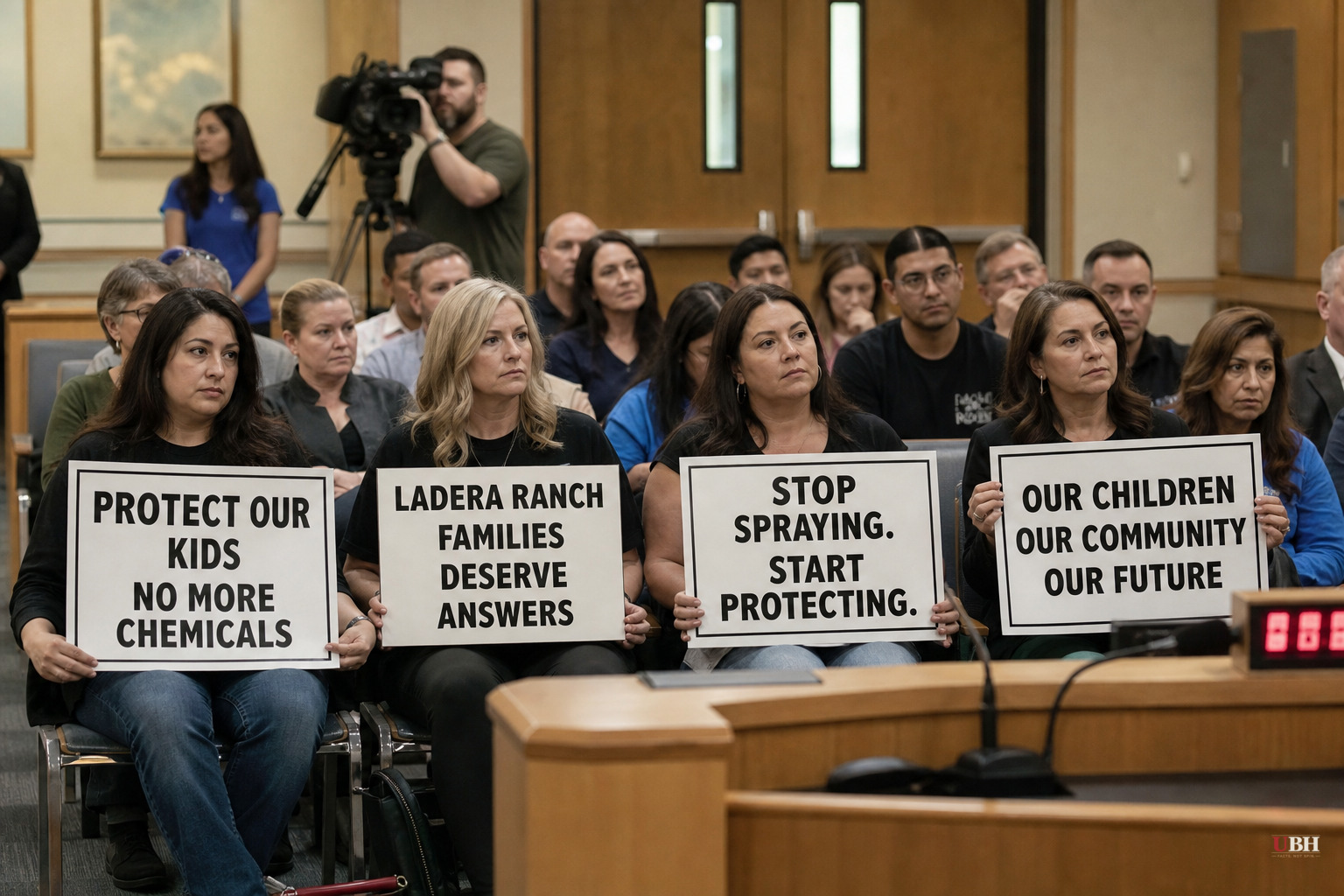
The Capistrano Unified School District announced Wednesday it is freezing routine pesticide and herbicide use on its campuses for 60 days. The move follows mounting pressure from parents in Ladera Ranch, an affluent master-planned community in Orange County, California, who say a cluster of rare childhood cancers demands answers.
According to the New York Post, roughly nine children connected to the Ladera Ranch community have been diagnosed with Ewing sarcoma since 2007. Ewing sarcoma is a rare bone and soft-tissue cancer that primarily strikes children and young adults. Many parents believe that number understates the real scope of the problem, since it only reflects cases known to advocacy groups, not a formal epidemiological count.
The human toll behind the statistics is stark. Seventeen-year-old Brody Matteson died in March 2026 after a nearly two-year battle with Ewing sarcoma, diagnosed just before his 16th birthday. His mother, Megan Matteson, has since become one of the community's most vocal advocates demanding environmental testing. Lily Dalton, 23, died in January 2026 after fighting the same cancer following her college graduation. Her father, Brian Dalton, has pushed local and state officials to investigate possible environmental triggers.
The concerns aren't limited to one diagnosis. Jessica Keetch said her 18-year-old daughter, Haven, lost a leg to synovial sarcoma, another rare cancer affecting fewer than 1,000 Americans a year. Some residents say even their pets have gotten sick. Kira Davis told NewsNation host Katie Pavlich that her seven- or eight-year-old dog developed a brain tumor last year and went blind, and that neighbors have described similar experiences with their own animals.
Hundreds of residents packed a community meeting in Ladera Ranch demanding accountability. A small, defined community has produced multiple cases of an extremely rare cancer, plus other rare tumors, plus anecdotal reports of illness in pets, over a stretch of nearly two decades. That's the kind of pattern that public health agencies are supposed to investigate, not dismiss.
Officials have been careful on that point. Health officials have said no environmental cause has been identified connecting the cancer cases to pesticide or herbicide use in the community, according to the Post's reporting. That's an important qualifier. Ewing sarcoma's causes remain largely unknown to medical science generally, and rare-cancer clusters can sometimes occur by chance in ways that are difficult to prove or disprove with existing surveillance data. Correlation in a specific neighborhood doesn't automatically mean the chemicals caused the cancers.
But the absence of a confirmed link isn't the same as an absence of risk, and it isn't a reason to wait indefinitely. Health officials can honestly say "we don't know yet," and the burden shouldn't fall entirely on grieving parents to prove causation before anyone takes precautionary action.
That's essentially what the district and the local landscaping authority have now done, even without a confirmed cause. The Ladera Ranch Maintenance Corporation, which handles landscaping for the broader community, imposed its own temporary 60-day pause on certain weed-control chemicals last month, ahead of the school district's decision. The corporation's board directed staff to halt routine use of specific landscape maintenance products while the community sorts out what, if anything, is driving the illnesses.
Sixty days is a review window, not a resolution. The school district says it will use that time to evaluate which products are currently approved for use on its properties. That leaves open whether any chemical will actually be banned long-term, or whether the pause simply lapses once the immediate political pressure eases.
Families like the Mattesons and Daltons are asking for something more concrete than a temporary freeze: formal environmental testing of soil, water, and air in Ladera Ranch, backed by an epidemiological study specifically targeting the reported cancer cluster. As of now, no state or county health agency has announced a formal cluster investigation matching the scope families are demanding. Whether Orange County or California state health officials open one, and what a rigorous scientific review of nine cases over nineteen years can actually prove either way, remains the open question hanging over Ladera Ranch.
Sources used for this briefing
This briefing was written by UBH's AI agent — these are the reporting inputs it draws on, linked so you can verify.

