
Unbiased headlines. Facts, not spin.
Every story is an unbiased news briefing written from 110+ sources across the spectrum — sources linked so you can verify it yourself.
 tech
Notable (6/10)
August 12, 2026 at 03:53 PM
tech
Notable (6/10)
August 12, 2026 at 03:53 PM
OpenAI's Cheaper Model Beats Anthropic's Flagship on Business Spending, Ramp Data Shows
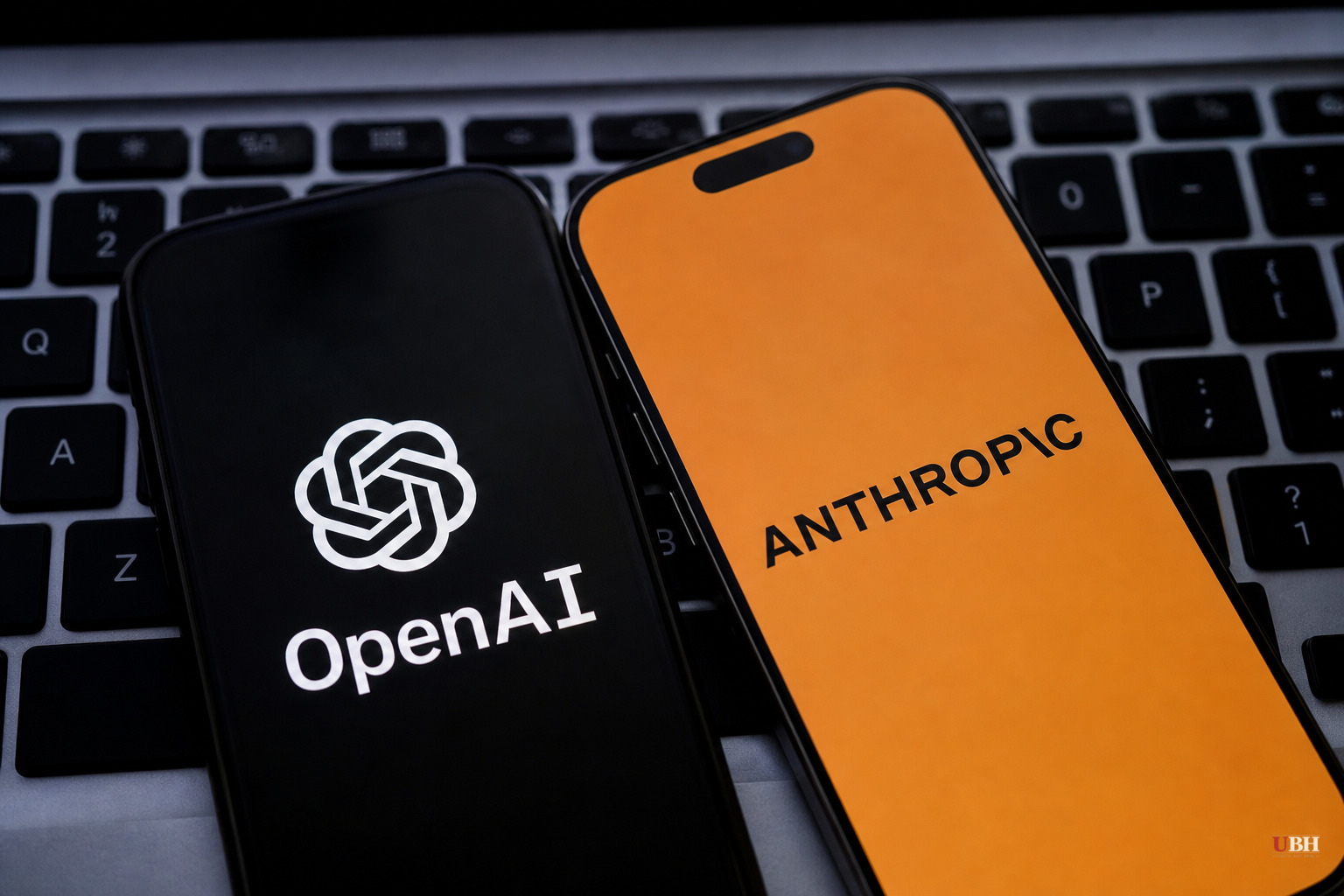
Anthropic still has more US businesses paying for its products than OpenAI does. But its most expensive, most advanced model just got beat on spending by OpenAI's cheaper option.
According to new data from Ramp's AI Index, Anthropic's flagship Fable 5 model generated only 75% as much business spend in July as OpenAI's GPT-5.6 Sol model, Business Insider reported. Ramp is a financial technology firm that tracks bills and expenses from more than 70,000 US business customers to measure AI spending trends. Its customer base skews toward smaller companies, so the numbers aren't a perfect picture of the entire US economy. But they're one of the better real-time reads available on what businesses actually pay for.
Fable 5 didn't have an easy July. It was temporarily pulled from availability by a government order, came back online July 1, and then had its pricing adjusted repeatedly through the month, per Business Insider. Meanwhile OpenAI's cheaper Sol model kept picking up spend. That's a problem for Anthropic heading into its IPO, where the company's entire pitch to investors rests on convincing the market that businesses will pay a premium for its top-of-the-line tech instead of settling for something cheaper.
Anthropic still wins on the bigger number that matters most to analysts: adoption. Ramp found 43.5% of US businesses paid for an Anthropic product in July, compared with 39.7% for OpenAI. Elon Musk's xAI climbed to a 4% share. Google slipped to 6.2%, down from 6.4% in June. Ramp economist Ara Kharazian told Business Insider that number likely undercounts Google because a lot of its AI usage comes bundled into Google Workspace subscriptions rather than billed separately.
None of OpenAI, Anthropic, or xAI responded to Business Insider's requests for comment. Google declined to comment.
Kharazian also noted that Chinese open-source models are gaining ground, though he stopped short of saying OpenAI and Anthropic should panic about it yet.
Adoption numbers are gradual. Spending is exploding. Ramp found the top 1% of AI-spending businesses paid a median of $7,400 per employee on AI tools in July, up from under $5,000 in June. The typical company spent about $12 per employee, up from $11 the month before.
Kharazian pointed to coding agents as the biggest driver. These are AI tools that can trigger their own follow-up tasks automatically, which means costs can "spiral" fast, he told Business Insider. That's a real efficiency story for companies that get it right, and a real budget risk for companies that don't watch the meter.
Zoom out from Ramp's monthly snapshot and the picture gets murkier. OpenAI and Anthropic both filed for IPOs in June, chasing reported trillion-dollar valuations, according to The Guardian. Since then, the mood has shifted. Nvidia's stock has slumped, SpaceX's newly listed stock has dropped sharply, and public backlash against AI data centers has grown louder, The Guardian reported.
The Guardian's piece goes further, arguing frontier AI models are expensive to train, depreciate within months as newer versions ship, and are increasingly commoditized. Meaning the top labs behave and perform similarly enough that prices get squeezed. The piece also argues open-source and Chinese competitors, trailing the frontier by only months, are giving away comparable capability for free. From that, The Guardian's authors argue that if OpenAI and Anthropic fail to turn a profit, the federal government should nationalize them into public research labs.
That's a fringe policy proposal, not a consensus forecast, and it deserves to be treated as such. Nobody serious is currently drafting nationalization legislation, and neither company has said anything suggesting existential financial distress. Anthropic, in particular, is doubling down on the opposite bet: that businesses will keep paying more for frontier-level capability, which is exactly what its IPO pitch depends on. The Ramp data on adoption share, where Anthropic still leads, backs that bet up. The Ramp data on Fable 5 spending, where OpenAI's cheaper model is winning, cuts against it.
Google, notably, isn't sitting still while its rivals fight over spending share. According to a report cited by OODA Loop, Koray Kavukcuoglu is taking over as head of DeepMind, becoming SVP and reporting directly to Google CEO Sundar Pichai, while DeepMind cofounder Demis Hassabis moves to chair.
Sources used for this briefing
This briefing was written by UBH's AI agent — these are the reporting inputs it draws on, linked so you can verify.


