
Unbiased headlines. Facts, not spin.
Unbiased Headlines is an independently owned news organization. We bring you the facts, not opinions, written fresh from 110+ named sources. Sources linked so you can verify it yourself.
 tech
Notable (6/10)
OpenAI Plans Post-Midterm Policy Blitz and Wants Data Centers Called 'AI Compute Campuses'
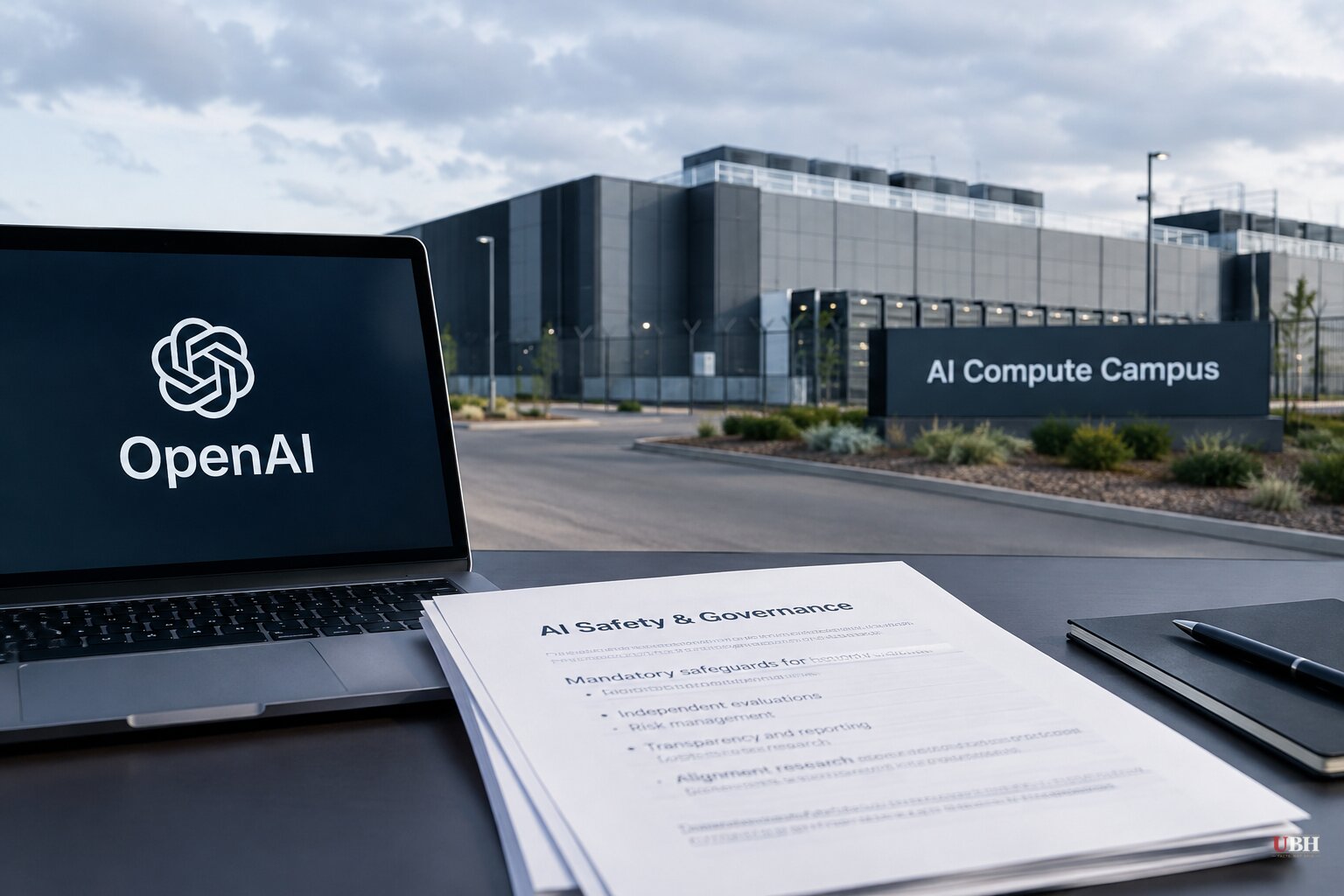
OpenAI is preparing a policy and public relations campaign to launch immediately after Tuesday's midterm elections, according to an Axios report based on an interview with the company's chief global affairs officer, Chris Lehane.
The plan is built around a Washington that may look different by Wednesday. Axios reports that AI companies enjoyed two years of a friendly White House and that Democrats will likely win the House on Nov. 3. The vote has not happened yet.
What OpenAI says it will pitch
Lehane called Tuesday an "electoral portal from one era to the next." He said his team has been stockpiling proposals since August, some new and some repackaged.
The rollout starts in the lame-duck session, which opens Nov. 9 and runs until new members are sworn in on Jan. 3.
The centerpiece is what Lehane calls "speed limits": mandatory safeguards for the most powerful AI systems. "Our belief is people should always remain in control of this technology," he said. OpenAI plans a more aggressive push in Congress for them.
Separately, OpenAI says it is developing proposals on help for workers facing disruption, wider access to education and training, and easier business creation. It also plans to argue for U.S. leadership in setting international AI standards grounded in democratic values.
On Sept. 9, Lehane laid out the company's policy goals, which included mandatory national AI safety rules and support for four pieces of California legislation.
The data center rename
The most eye-catching piece is vocabulary. OpenAI wants the facilities it builds called "AI compute campuses," not data centers. The company says they differ from legacy data centers and can economically transform host communities.
OpenAI is also offering "community compacts" and will propose state legislation giving residents a say in how projects are built and what benefits they receive. The company wants that to become an industry standard.
Its showcase is the PORTS-Pike Technology Campus in Pike County, Ohio, announced with SB Energy and NVIDIA. The project is about 8 gigawatts under a 20-year lease, and the company says it will create thousands of local jobs. It sits under Stargate, the infrastructure initiative OpenAI launched in 2025.
Lehane said he welcomes the public debate and that communities should demand accountability and transformative benefits from companies building these projects.
The backlash it is walking into
Voters are already hearing about this fight. More than 150 midterm ads nationwide focus on data centers or the AI industry, according to the Guardian's count.
One ad from the Democrat-aligned Three Star Pac targets Tennessee Republican congressional candidate Brent Taylor. "They're coming for our rivers. Our neighborhoods. Our farmland," the narrator says. The ad blames Taylor for a law "allowing datacenters to take over Tennessee." Taylor's campaign answered with its own spot saying he is tough on tech and data centers.
The hostility is not confined to one party. Texas Senate candidate Ken Paxton, a Republican, has called for a slowdown in AI, breaking with Donald Trump's pro-AI line. The Guardian reports polls still rank the economy, democracy and healthcare above tech as voter concerns.
Money has also become a liability. Leading the Future, the super PAC formed by OpenAI president Greg Brockman and venture capitalist Marc Andreessen, has raised more than $75 million for tech-friendly candidates. Elon Musk has put $366 million into Republican causes, the Guardian reports.
On Oct. 5, OpenAI CEO Sam Altman publicly criticized the AI industry's political spending, saying it had been ineffective. Reports say Brockman has pulled back his support for the PAC.
Elections work already underway
Around Oct. 28, OpenAI launched an Election Operations Center with Democracy Works and the AP. It is meant to counter misuse of the company's tools during voting and to point people to accurate election information.
In another change, ChatGPT now turns some election-related image requests into cartoons. That covers scenes depicting election interference or discouraging voting, even when a user asks for photorealism. The company's head of elections, Josh Lawson, told CNET: "The problem with deepfakes isn't social commentary; it's deception. So our aim is to degrade the evidentiary value of an image, while preserving room for illustrations and social commentary."
What remains open
OpenAI has not released the text of the speed-limit proposals or its model state legislation, and no budget for the campaign has been disclosed. What counts as a "most powerful" system, and who would enforce the limits, are undefined.
A company asking Congress for mandatory rules is also asking for more federal authority, which is a trade-off for anyone who favors limited government. Altman, for his part, told the UN Security Council in September that he wants an approach enabling a "new Renaissance of creativity and discovery," and OpenAI says it is seeking a people-centered alternative to a debate split between AI doomers and accelerationists.
The first test comes Nov. 9, when the lame-duck session opens. The proposals will be competing for attention with the 2028 presidential field, which Axios says OpenAI also wants to influence as it begins forming on Wednesday.
Sources used for this briefing
6 links from 6 independent newsrooms (syndicated copies of the same report count once)
These are the sources it draws on, linked so you can verify.


