
Unbiased headlines. Facts, not spin.
Unbiased Headlines is an independently owned news organization. We bring you the facts, not opinions, written fresh from 110+ named sources. Sources linked so you can verify it yourself.
 energy
Major Story (7/10)
OPEC+ Core Members Agree in Principle to Hold December Oil Output Targets, Three Sources Say
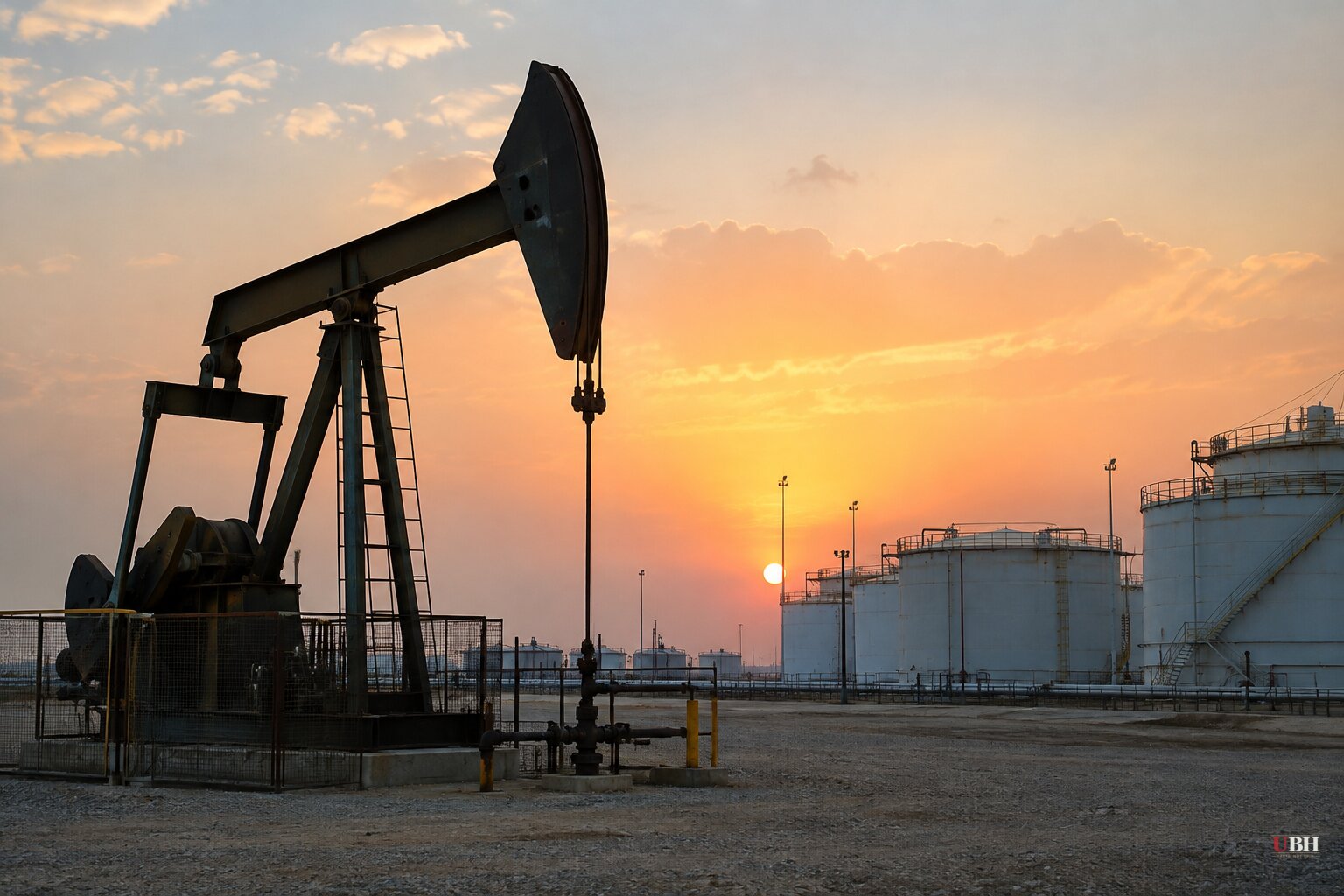
OPEC+ is set to hold its December oil output targets flat. Three people with knowledge of the matter told Reuters the group's core members have agreed to the decision in principle. All three declined to be identified, and nothing is final until the group meets.
That meeting is scheduled for Sunday, online. Seven countries take part in the monthly decisions: Saudi Arabia, Russia, Iraq, Kuwait, Algeria, Kazakhstan and Oman. OPEC+ as a whole has 21 members, Iran among them, but Iran is not one of the seven.
Targets are not the constraint right now
The more telling fact is not the targets. It is the gap between targets and actual barrels.
Gulf producers have been boosting exports that were disrupted for months by the Iran war, according to Reuters. Most are still pumping well below their quotas. A target that members cannot reach is a ceiling nobody is pressing against.
In September, OPEC+ finished the phased rollback of a 1.65 million barrel-per-day supply cut first agreed in 2023. A separate layer of cuts, about 2 million bpd and covering most members, remains in force through the end of 2026.
The 2027 fight is the real agenda
A pause was expected. Reuters reported in July that OPEC+ was unlikely to change its targets in the fourth quarter because negotiations had shifted to 2027 quotas.
Before those quotas can be set, the group has to finish a review of each member's production capacity during the fourth quarter, sources have told Reuters. The review will feed the 2027 baselines. Those baselines will determine future quotas and shape the plans to unwind the remaining cuts.
Capacity reviews are where the real bargaining happens. Every member has an incentive to claim it can produce more. After months of war-related disruption in the Gulf, what a country says it can pump and what it actually pumps may be far apart.
Iran's revenue squeeze runs on a separate track
The Iran war also sits behind another oil story. A U.S. naval blockade is aimed at Iran's seaborne crude sales. Energy intelligence firm Kpler says Iran's trackable floating oil inventory outside the blockade zone has fallen to zero. Kpler projects Tehran's crude revenues could dry up by the middle of December as outstanding payments are settled.
Oil directly accounts for roughly 30% of Iran's government budget, according to Gregory Brew, a senior Iran and energy analyst at Eurasia Group, and Miad Maleki, an Iran sanctions and financial expert at the Foundation for Defense of Democracies. Maleki estimated that oil and refined petroleum products account for between 50% and 60% of regime revenue when indirect income is included.
Brew said Iran entered the year expecting to export about 1.7 million barrels per day at roughly $54 per barrel. Actual exports have fallen short of that target, though higher oil prices allowed Tehran to build some financial cushion.
Maleki cautions against reading mid-December as a cliff. "The December timeline is more of a cash flow kind of disruption, and not really a collapse state," he told Fox News Digital. He said Tehran has so far allowed inflation and the weakening rial to absorb some of the pressure rather than abruptly stopping government salaries. "The purchasing power of Iranians incrementally declines," Maleki said.
The reporting frames the blockade as something that may deprive Tehran of one of its biggest sources of cash without immediately starving the military and the Islamic Revolutionary Guard Corps. Tehran could shield military spending while cutting civilian programs.
No source ties the OPEC+ decision to the blockade. The two stories overlap only because both involve Gulf supply and the Iran war.
What comes next
The immediate question is whether Sunday's meeting formalizes the hold as the sources describe. The larger one comes later. The roughly 2 million bpd layer of cuts is due to run through the end of 2026. The capacity review, which has to be finished this quarter, will feed the 2027 baselines that shape the plans to unwind those cuts.
Sources used for this briefing
6 links from 6 independent newsrooms (syndicated copies of the same report count once)
These are the sources it draws on, linked so you can verify.


