
Unbiased headlines. Facts, not spin.
Unbiased Headlines is an independently owned news organization. We bring you the facts, not opinions, written fresh from 110+ named sources. Sources linked so you can verify it yourself.
 energy
Major Story (7/10)
Event date: October 27, 2026 ·
Ghana's Weather Agency Warns of Hotter, Drier Dry Season as Chicago Lab Projects 373,000 Heat Deaths Worldwide
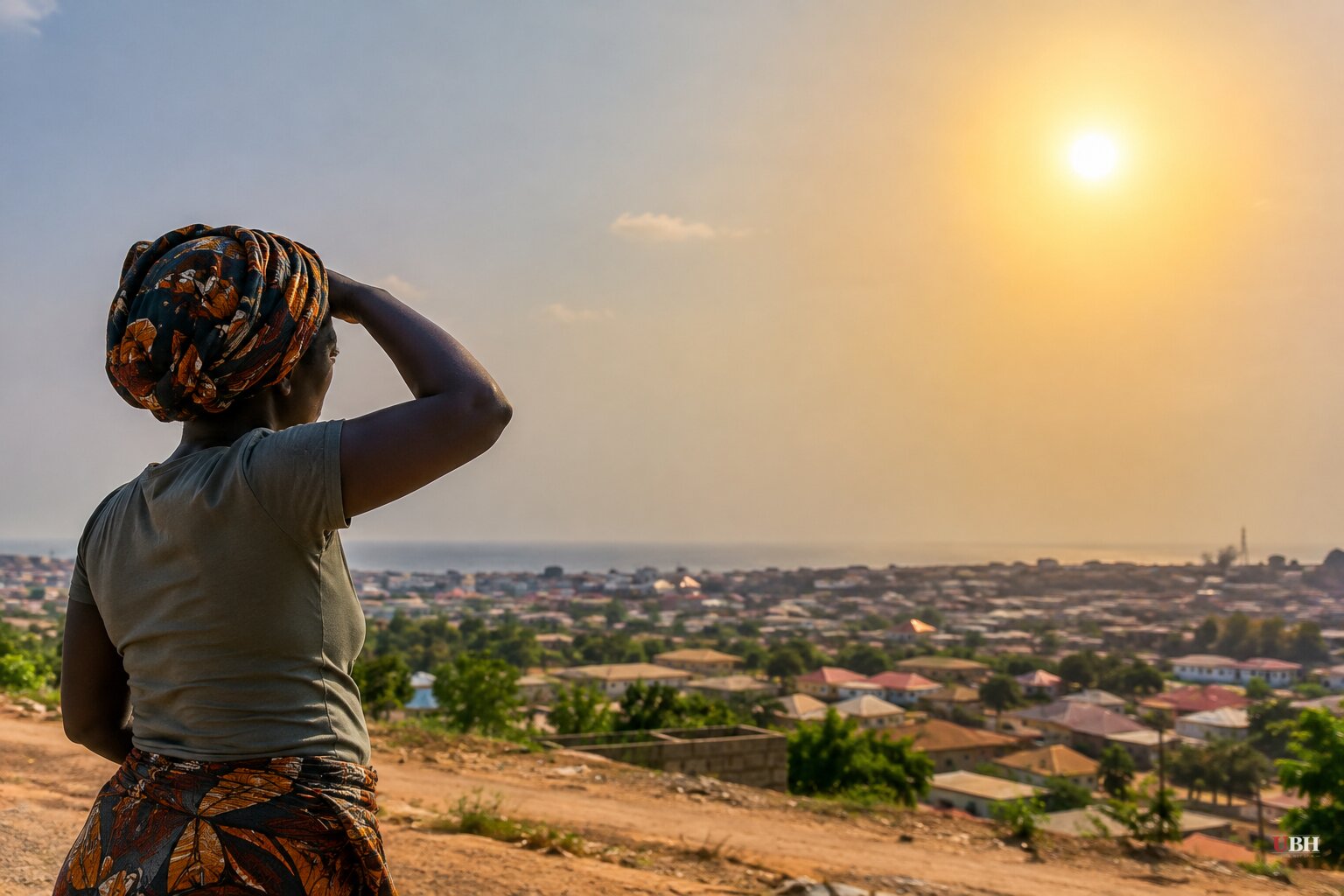
The focus has shifted to the countries least equipped for a near-record El Niño: West Africa, South Asia and Southeast Asia. NOAA's official U.S. winter outlook, released on a Thursday in mid-October, was dominated by the influence of what CNN called a "near-record strong El Niño event."
The Ghana Meteorological Agency (GMet) published an advisory Friday, Oct. 30, revised after its Governing Board reviewed the science on Oct. 27. It describes "a very strong and still intensifying El Niño event."
GMet cited NOAA's Climate Prediction Center, which puts the chance of very strong intensity between November and January at about 96 percent. The agency said El Niño is very likely to last into early 2027.
What Ghana is being told to expect
GMet expects a hotter, drier dry season from late November. Heat stress is forecast to peak February through April 2027, especially in the north.
The listed risks for November through April are bushfires, water stress and dust. The agency also warned that localized heavy rain and flooding remain possible even where seasonal totals run below normal.
That caution carries weight in Ghana. NADMO, the national disaster agency, says the June 29 floods killed 34 people and displaced 91,046.
GMet's October to December outlook calls for below-normal rainfall across much of the country, with warmer-than-average temperatures in most places. Some inland areas of Greater Accra, the Central Region and parts of the north are still expected to get above-normal rain.
For Saturday, Oct. 31, GMet projected afternoon highs of up to 38°C in Bolgatanga, 36°C in Tamale and 34°C in Kumasi.
Power supply and the meningitis question
On electricity, GMet said dry-season generation depends mainly on water already stored in Lake Volta. That reservoir had good inflows this year after above-normal rain in Burkina Faso and controlled spillage from the Bagré Dam starting Aug. 28.
The agency said the El Niño-sensitive period for hydropower is the 2027 inflow season, which will determine generation in 2028. It called the 2027 rainy seasons uncertain "in both directions." Late, weak rains are possible if El Niño fades slowly or the Gulf of Guinea stays cool. Flooding and dam spillage become more likely if La Niña develops by mid-2027.
GMet also said the usual dry-season meningitis risk in the north could be worsened by heat and dryness. It said this should not be described as an El Niño effect. The Health Ministry issued a meningitis alert in January during the last dry season.
The agency is calling for a National El Niño and Dry-Season Preparedness Task Force. It would bring together the ministries for food and agriculture, health, energy, water resources, local government and finance with the Volta River Authority, and report to Cabinet monthly through the peak risk period.
The death-toll projections
Climate scientists at the University of Chicago's Climate Impact Lab estimate roughly 373,000 additional heat-related deaths worldwide between October 2026 and March 2027. They say nations in Africa and Asia would be hit hardest.
By country, the lab's estimates are 56,000 for Nigeria, 55,000 for India, 29,000 for Indonesia and 19,000 for Brazil.
An earlier study by the lab, cited in Nigerian coverage, gave different numbers. It projected 31,400 deaths in Nigeria between September and February 2027, out of 66,800 across the Sahel nations in the Global South. The windows and totals differ.
The researchers themselves put limits on the numbers. They said the figures are statistical estimates and that the real toll will depend on the weather and on government action. They said early warning systems, cooling centres, better health care and keeping people from working outdoors would reduce deaths.
How strong is this El Niño?
The intensity claims are not uniform. NOAA's Climate Prediction Center said in September that the chance of a very strong event this fall and winter was above 90 percent. It also gave a 75 percent chance that October to December would be stronger than any El Niño on record since 1950.
There is a wrinkle. NOAA moved this year to a relative index that subtracts the average warming of all tropical oceans. On the traditional measure the event is already the strongest on record. On the relative measure, 1982 and 2015 remain stronger, which puts 2026 third. NOAA expects it to last through March, with a 97 percent chance it persists through April.
The World Meteorological Organization's Oct. 21 update said El Niño was likely to strengthen between November and January, with conditions expected to peak around December.
Nigeria's planning gap
Nigeria's 2026 seasonal forecast started from a largely neutral ENSO phase and normal rainfall across most of the country. Lagos State read it as pointing to above-normal rain.
The Nigerian Meteorological Agency's August update confirmed the onset of a strong El Niño. NiMet said at the time that the temperature impact might not be significant from August to October. It did flag delayed rainfall cessation in northern states including Yobe, Borno, Bauchi and Jigawa, and drier-than-normal conditions in parts of the south, including Lagos, Oyo and Ogun.
NiMet named agriculture, health, energy and water as the sectors most exposed, warning of "widespread droughts, floods and erratic rainfall that threaten food production and lead to malnutrition."
Global temperatures usually peak a few months after El Niño itself does. That would put the hottest stretch in 2027, overlapping Nigeria's normal February to April dry-season heat.
The open question is Accra. GMet has asked for a Cabinet-level task force with monthly reporting, and the Ghanaian government has not announced whether it will create one.
Sources used for this briefing
6 links from 6 independent newsrooms (syndicated copies of the same report count once)
These are the sources it draws on, linked so you can verify.


