
Unbiased headlines. Facts, not spin.
Every story is an unbiased news briefing written from 110+ sources across the spectrum — sources linked so you can verify it yourself.
 health
Notable (6/10)
August 10, 2026 at 07:36 AM
health
Notable (6/10)
August 10, 2026 at 07:36 AM
Ontario First Nation Residents Defy Evacuation Orders, Fight Wildfires Themselves as 750+ Fires Burn Across Canada
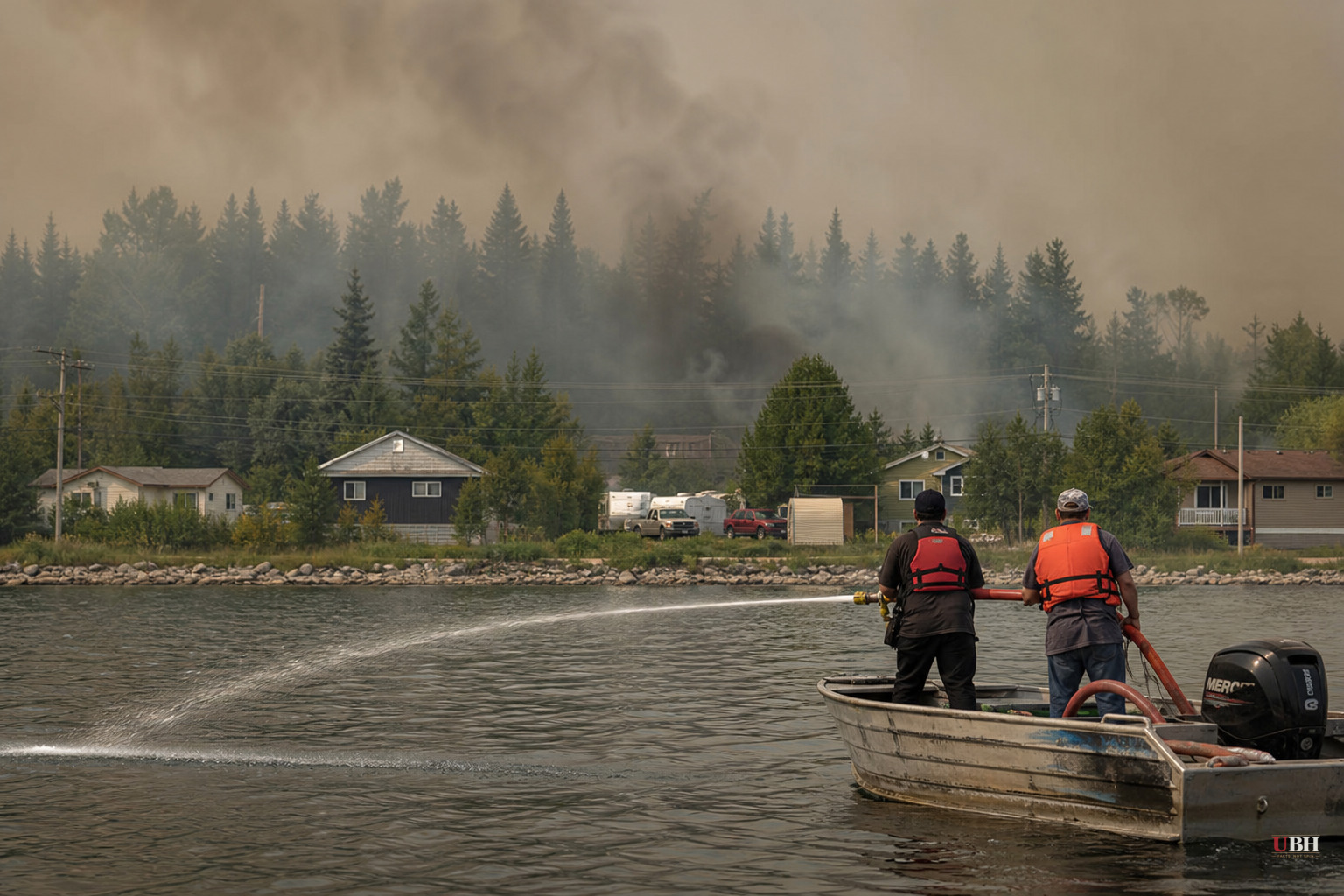
Hubert Wigwas didn't leave when the evacuation order came. Instead, the 58-year-old councillor from Gull Bay First Nation put sprinklers on his roof, fueled up four boats on the lake as an escape route, and started checking on elders who also refused to go, according to the BBC.
"This is everything I've built in my 58 years," Wigwas told the BBC. "I'm just not going to run away and let it burn."
He's not alone. Leaders at Gull Bay, also known as Kiashke Zaaging Anishinaabek, have been telling residents to evacuate since mid-July as more than 150 wildfires burned across northwest Ontario. The community's chief wrote a letter on July 29 begging holdouts to leave, warning that Ontario firefighters can't safely do their jobs with civilians still in their homes.
Wigwas is defying that order anyway, and he's doing it knowing it could cost him roughly C$800 (about $570 USD) in fines for violating the evacuation directive.
A national fire season, again
Canada is in the middle of another brutal wildfire year. As of this August, more than 750 wildfires are actively burning across the country, per the BBC. In British Columbia alone, around 115 fires are currently active.
This follows 2023, Canada's most destructive fire season on record, when blazes burned through an area of forest roughly the size of Syria. Smoke from Canadian wildfires has repeatedly drifted into the U.S. Midwest, fouling air quality in American cities. President Donald Trump has taken notice, threatening additional tariffs on Canada over what he called "filthy, polluted" air crossing the border.
The core complaint: help isn't reaching remote communities fast enough
Wigwas says that as of late July, with a wildfire burning just 24 kilometers from Gull Bay, he hadn't seen outside fire crews show up to help fireproof homes or check on elders who stayed. That's a legitimate grievance if true. Remote First Nations communities sit closer to Canada's vast boreal forest than most population centers, which puts them first in the fire's path and last in line for resources when crews are stretched thin across a province fighting 150-plus fires at once.
Wigwas's response wasn't to demand more government but to build something his own community controls. "Everybody talks about climate change, but nobody is doing something to unite the (First Nations) reserves and have a system like that set up," he told the BBC. He wants Gull Bay to stand up its own wildfire emergency response team and train residents to protect their own properties instead of waiting on outside help that may not come in time.
Local people who know the terrain, know their neighbors' medical needs, and can act within minutes rather than hours have an obvious advantage over crews dispatched from hundreds of kilometers away. It doesn't mean evacuation orders are wrong. It means the current system may not be reaching the people it's supposed to protect fast enough.
The province's response
Dave Bradley, a spokesperson for Ontario's Ministry of Natural Resources, didn't directly answer Wigwas's claim that no fire personnel had reached Gull Bay. He told the BBC the province has been in "constant contact" with First Nations leaders and that firefighting resources are allocated based on "fire behaviour, weather conditions and risks to communities."
Fire crews genuinely do have to triage where the immediate risk to life is highest, and a province battling 150-plus fires in one region alone can't put boots on the ground everywhere at once. But that doesn't answer the specific question Wigwas raised: did Gull Bay get the help it says it needed, and if not, why not.
The tradeoff
Staying behind during a wildfire is dangerous. Evacuation orders exist because fire can move faster than any homeowner with a hose can react, and officials in British Columbia are delivering the same message as Ontario: get out, let trained crews do the job.
But Wigwas and his neighbors are making a calculated bet that the risk of staying is lower than the risk of losing everything they own to a fire nobody local is fighting. Whether that bet pays off depends on factors nobody can fully control, including where the wind blows next.
The question remains whether Ontario or any provincial government will actually help remote First Nations build the kind of local wildfire response capacity Wigwas is calling for, or whether these communities will keep improvising with garden hoses and boat fuel every fire season until someone gets killed trying to save a house the province couldn't reach in time.
Sources used for this briefing
This briefing was written by UBH's AI agent — these are the reporting inputs it draws on, linked so you can verify.


