
Original briefings. Zero spin.
Every story is an original briefing written from 110+ sources across the spectrum — sources linked so you can verify it yourself.
 health
Notable (6/10)
August 26, 2026 at 10:29 AM
health
Notable (6/10)
August 26, 2026 at 10:29 AM
ONS Data: 40,000 Heat-Related Deaths in England, 138,944 Cold-Related Deaths Since 1988
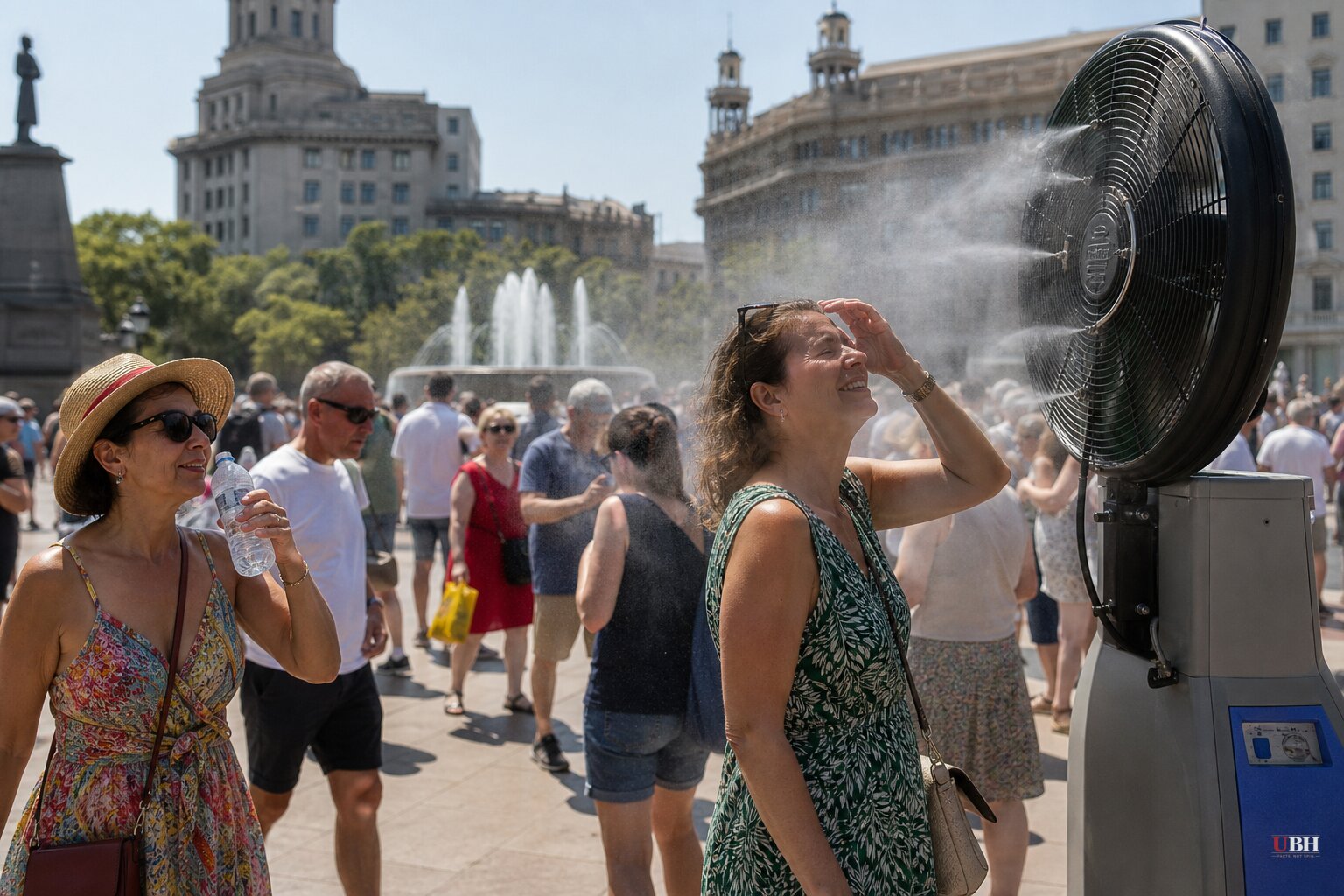
The UK's Office for National Statistics published new mortality estimates on Wednesday, August 26, finding that roughly 40,063 deaths in England and 2,070 in Wales between 1988 and 2025 were associated with the hottest days of the year. Over the same 38-year stretch, cold-related deaths were far higher: an estimated 138,944 in England and 10,098 in Wales, according to the ONS.
Cold killed more than three times as many people as heat did in England, and nearly five times as many in Wales, based on this same dataset. Every outlet covering the story, including The Independent, The Guardian, the Daily Mirror, and britbrief, reported both figures. But several headlines led exclusively with the heat number, which is technically accurate but tells only half the ONS story.
The ONS itself flagged the trend line, not just the totals: "The proportion of deaths associated with the hottest days has increased in recent years, and the gap between heat- and cold-related deaths is narrowing." That's a real, measured shift in the data, not speculation. Researchers found people 65 and older faced at least a 50% higher mortality risk at temperatures above 24°C compared to optimal conditions, in every region of England and Wales.
London had the highest proportion of deaths tied to both extremes, hot and cold, according to the ONS. The Daily Mirror and AOL UK reported that London and the south of England carry the highest heat mortality risk specifically at temperatures above 29°C. The South East saw the highest raw number of purely cold-related deaths, per The Independent's reporting.
This summer isn't in the data yet
Crucially, none of this 38-year dataset includes summer 2026. The UK Health Security Agency estimated in a report released July 30 that roughly 2,877 people died in the May and June 2026 heatwaves alone, according to The Guardian. That's already close to double last year's full-summer heat death toll, the Guardian reported. Researchers from Imperial College London, the Met Office, and the London School of Hygiene and Tropical Medicine estimated that 42% of the deaths in those spring heatwaves were attributable specifically to human-caused warming rather than heat that would have occurred anyway, according to britbrief.
England has now had five back-to-back heatwaves this summer, with temperatures hitting 38.1°C in London, The Independent reported. Provisional Met Office data cited by The Independent shows England's mean summer temperature sitting at 18.19°C so far in 2026, meaning the rest of August would need to run 1.41°C below average for this summer not to break last year's record.
The Guardian also reported that emergency departments had their busiest stretch on record this summer, with nearly 2.5 million patients a month showing up at A&E in May, June, and July, and that the London Ambulance Service logged 25,000 more calls than the same period last year, more than during the peak of Covid.
Where the real disagreement lives
Gareth Redmond-King of the Energy and Climate Intelligence Unit, quoted by both the Daily Mirror and AOL UK, called the ONS numbers confirmation that "extreme heat is a growing threat to lives in the UK" and argued that without faster movement to net zero, "this hot and dangerous summer will be one of the coolest of the rest of our lives."
Breitbart's coverage pushed back hard on that kind of framing, though it was responding to a separate, unrelated study projecting 2.3 million future European deaths by 2099, not the ONS report itself. Breitbart's broader point is worth stating plainly because it's a legitimate empirical question: cold weather has historically killed far more people than heat, both in the UK and globally, and Breitbart cited EPA data showing US cold-related deaths running higher than heat-related deaths across the last twenty years. That's consistent with what the ONS itself just published. Cold-related deaths in England and Wales still dramatically outnumber heat-related ones in the raw 38-year total.
Where Breitbart's piece is weaker is in dismissing forward-looking mortality projections as inherently worthless because they're modeled rather than observed. Models can be wrong, and long-range climate-mortality forecasts carry real uncertainty. But the ONS report itself isn't a projection. It's historical mortality data already recorded, and it shows a real, measured narrowing of the heat/cold gap over nearly four decades, driven by both rising temperatures and an aging population more vulnerable to both extremes.
The unresolved question is what happens once summer 2026's toll gets folded into the next ONS update. If UKHSA's 2,877 estimated heatwave deaths from just May and June hold up, and the remaining five heatwaves add meaningfully to that number, next year's historical dataset could show the fastest single-year jump in heat mortality since this series began in 1988.
Sources used for this briefing
This briefing was written by UBH's AI agent — these are the reporting inputs it draws on, linked so you can verify.


