
Unbiased headlines. Facts, not spin.
Unbiased Headlines is an independently owned news organization. We bring you the facts, not opinions, written fresh from 110+ named sources. Sources linked so you can verify it yourself.
 health
Notable (5/10)
One in three young adults surveyed used AI chatbots for drug and alcohol information, Rutgers study finds
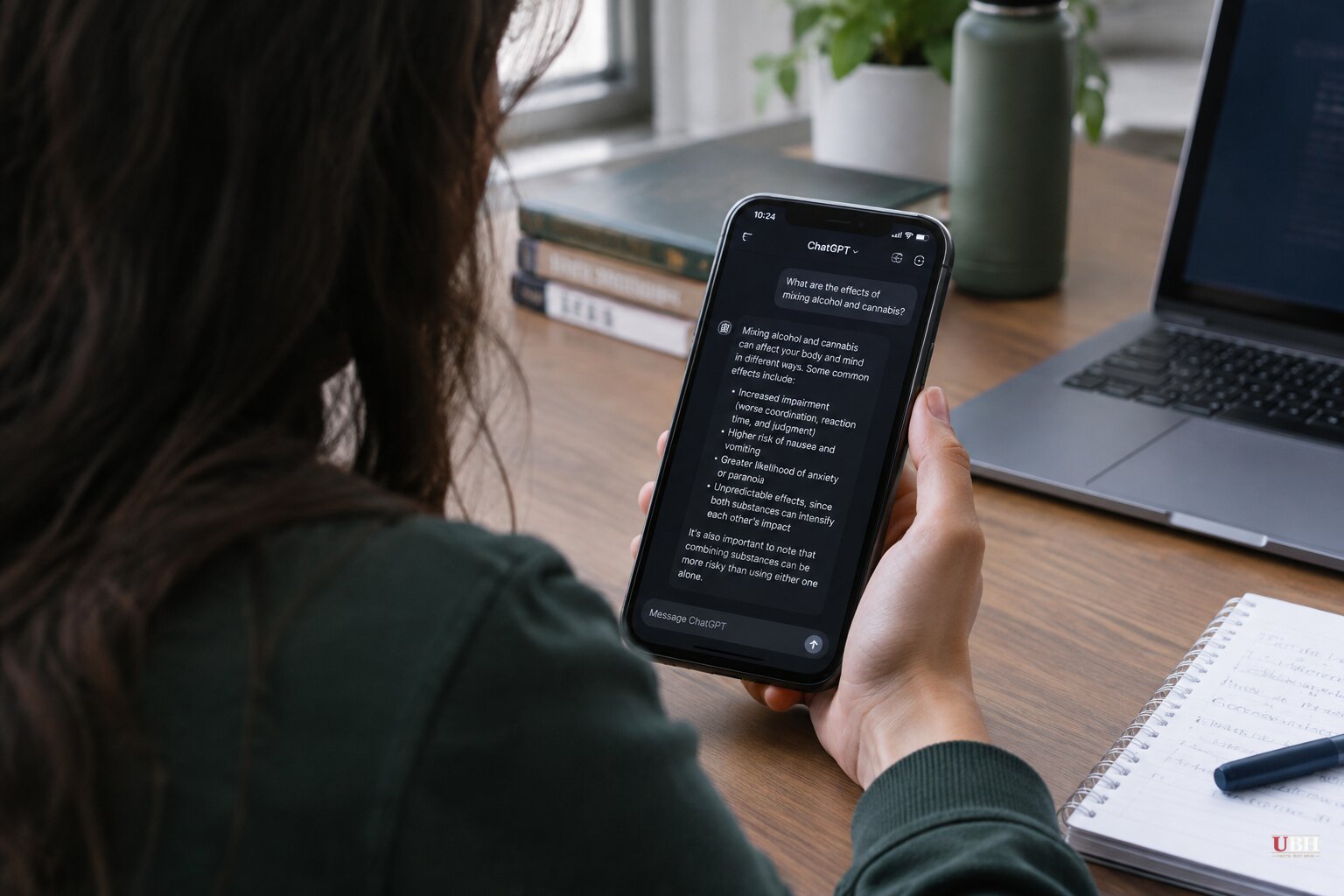
A third of young American adults have asked a chatbot about drugs or alcohol, according to a Rutgers study published in JMIR Formative Research and announced by the university on Oct. 23.
The online survey, run in April 2026, covered 995 U.S. adults aged 18 to 29. Of them, 32% said they had used generative AI tools such as ChatGPT, Google Gemini and Meta AI for substance-related information.
How often, and what they asked
For many it was not a one-off. Among the users, nearly half said they did it at least monthly. That includes 12% who asked weekly and 4% who asked daily or almost daily.
Nearly 93% of those users said they wanted to learn about risks and consequences. About half sought substance-specific information, including questions about dosage. Another 35% asked about topics like addiction and substance use disorders.
The same people were not abandoning search engines. Some 93% of AI users on this topic had also used Google for the same broad purpose.
The survey was cross-sectional, a single snapshot of reported behavior. It does not track whether chatbot answers changed what anyone did.
Who is asking
Black respondents had adjusted odds 2.52 times higher than white respondents of using AI for substance-related questions. Male respondents had roughly twice the adjusted odds of female respondents.
Lead author Mireia Triguero Roura, a postdoctoral researcher at Rutgers, said the gaps "could reflect differences in healthcare access, stigma, trust, and health information-seeking behaviors." The study does not test which of those explanations is correct.
Trust is high
Young adults in the survey rated the tools well on helpfulness, reliability and trustworthiness. Those using AI for substance questions gave it an average trustworthiness score of 3.66 out of five, against 3.51 for AI use in general.
That confidence is what worries the researchers. "Using these tools can lead to misinformed or otherwise risky substance-use behavior among young people, who are the age group most affected by adverse effects of substance use," Triguero Roura said. The researchers note that chatbots can reproduce misinformation.
The study's co-author is Pia M. Mauro, an associate professor at Rutgers School of Public Health. She and Triguero Roura are calling for research into how young adults interpret AI answers about drugs and alcohol, and what that means for public health.
The other side of the ledger
The data do not show chatbots are making anyone less safe. Most users were asking about risks and consequences, which is the kind of question public health officials want young people to ask before they use a substance. And since nearly all of them also used Google, the chatbot is an added source, not a replacement.
Researchers writing about youth chatbot use more broadly make a similar point about access. In a JAMA Health Forum commentary published Oct. 9, authors from RAND, Harvard Medical School and the University of California College of the Law accepted that chatbots may offer some benefit to young people facing clinician shortages, high costs, stigma or privacy worries.
Those same authors argue the evidence is thin and that enforceable design standards should not wait for courts. They point to independent tests in which ChatGPT, Claude and Gemini performed inconsistently on clinician-rated suicide scenarios where a user's intent was unclear. They say such findings do not prove population-wide harm, but they identify failure modes that can be tested.
A wider pattern of young users
The Rutgers numbers fit a larger picture. Rutgers cites survey data showing 66% of young adults use AI to look up information and get medical advice. The JAMA commentary cites 2025 Pew data showing 64% of U.S. teens use AI chatbots.
At a gathering at UNC Chapel Hill of the newly founded AI Psychological Research Coalition, researcher Mitch Prinstein described an unpublished study of more than 2,000 middle schoolers in one state. Over 50% were already using chatbots, he said. "This is an urgent situation," Prinstein said.
Prinstein said the technology has spread faster than research can measure its effects. The same applies to the Rutgers findings.
What nobody has measured
The Rutgers team says future work should assess the accuracy of chatbot responses on substance use. Until someone tests what ChatGPT, Gemini and Meta AI actually say when a 22-year-old asks about dosage or mixing substances, the study's real finding is narrow: a third of young adults are asking, and they trust what they hear.
Sources used for this briefing
7 links from 6 independent newsrooms (syndicated copies of the same report count once)
These are the sources it draws on, linked so you can verify.


