
Original briefings. Zero spin.
Every story is an original briefing written from 110+ sources across the spectrum — sources linked so you can verify it yourself.
 health
Major Story (7/10)
Event date: August 11, 2026 at 12:00 PM
health
Major Story (7/10)
Event date: August 11, 2026 at 12:00 PM
One in Three U.S. Counties Now a Maternity Care Desert, March of Dimes Finds
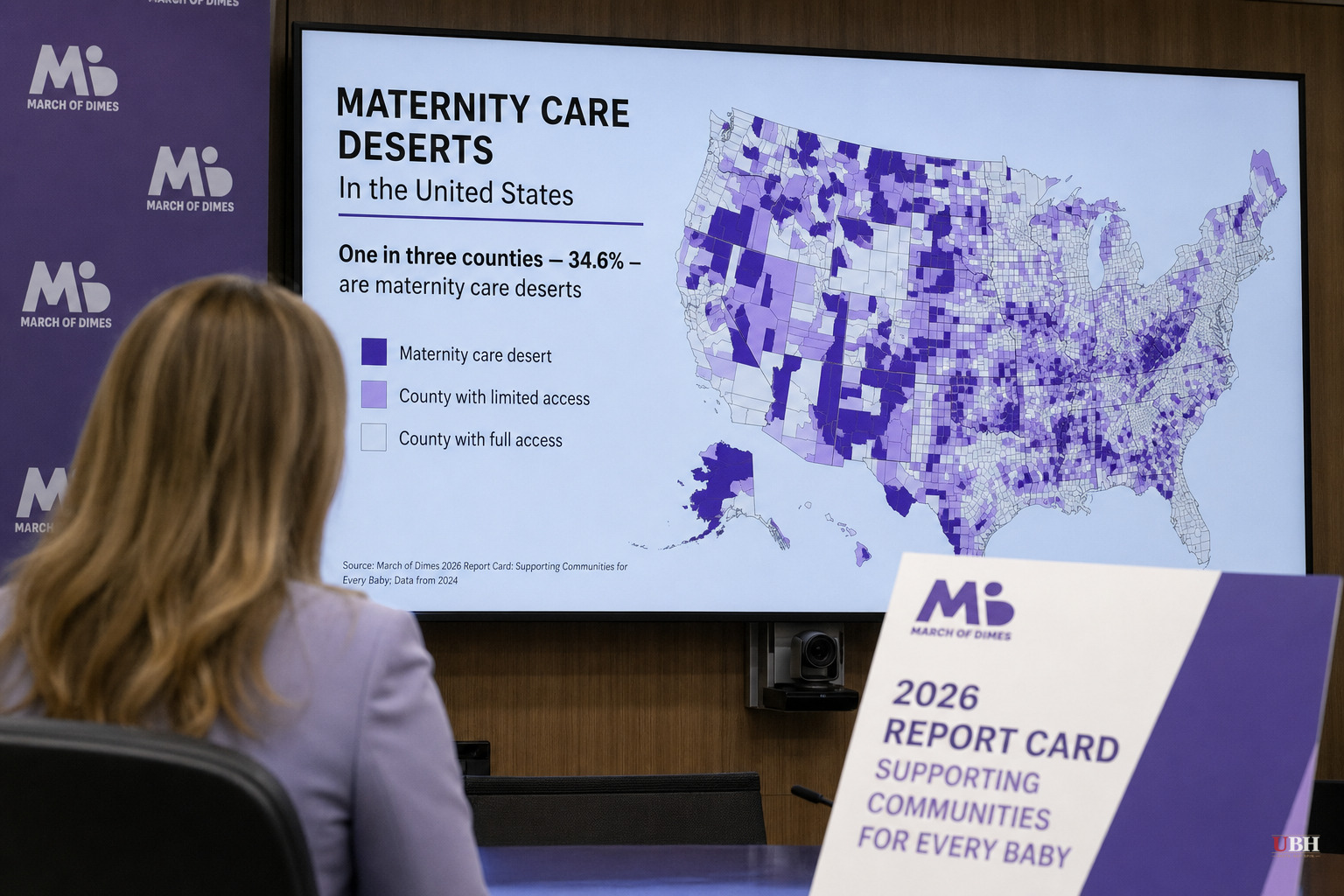
More than one in three U.S. counties, 34.6%, are now what the March of Dimes calls a maternity care desert. That means no hospital with labor and delivery services, no birth center, and no obstetric clinician anywhere in the county.
The nonprofit's 2026 "Nowhere to Go" report, released August 11, found that more than half of U.S. counties lack a hospital offering labor and delivery services at all. According to the report, that picture is "relatively unchanged since 2016," a full decade of policy talk about rural health care that has not moved the needle.
"This goes beyond a mere inconvenience," said Dr. Michael Warren, chief medical and health officer for the March of Dimes, in comments reported by CapRadio. "We know that those women who live in maternity care deserts are more likely to have bad outcomes when it comes to their pregnancies."
The CDC figures cited by CapRadio put real numbers on that: more than 20,000 babies die before their first birthday every year in the U.S., and roughly 600 women die annually from pregnancy-related complications. Indigenous and Black women face significantly higher maternal death rates than white women, according to March of Dimes and CDC data.
Why the deserts keep spreading
The economics are brutal and simple. Obstetric units need round-the-clock staffing, including anesthesiologists, whether or not many babies are being born that month. In low-birth-rate rural counties, hospitals eat that cost anyway.
When patients do show up, Medicaid pays less than private insurance. A 2022 study cited by TIME found Medicaid reimbursed hospitals $8,732 less per birth than employer-sponsored plans. Rural areas have disproportionately high shares of Medicaid patients, so hospitals get hit twice: fewer patients and lower payment per patient. Warren called it "a double whammy."
TIME reports that H.R. 1, the One Big Beautiful Bill Act signed into law July 4, 2025, is expected to cut Medicaid payments further and add new eligibility burdens that could push people off the program entirely. A 2025 analysis from the National Partnership for Women and Families found 131 rural hospitals with labor and delivery units are at risk of closing or scaling back specifically because of that law. The expiration of ACA subsidies is also pushing more uninsured patients into emergency rooms, straining hospital finances further, according to TIME.
That's a real, measurable fiscal squeeze. Whether Congress intended for rural maternity wards to be collateral damage in a broader Medicaid reform push is a fair question critics are raising, and it deserves a straight answer from lawmakers who voted for the bill, not just the assurance that savings estimates were the point.
By 2035, the March of Dimes projects nearly every state will see rural obstetric staffing shortages worsen, with 57.9% of rural counties already lacking a practicing obstetric clinician today.
Filling gaps with midwives
In Alabama, certified midwife Nadia Gramby drives up to 302 miles in a single day between prenatal appointments in Anniston, Montgomery, Helena, and Alabaster, according to CapRadio. She's one of roughly 1,200 Black midwives in the country, per the American Midwifery Certification Board, and she founded her practice, Crown of Glory Birth Services, in 2018 partly to reach women in deserts the hospital system has abandoned.
Midwives can't replace a fully staffed hospital obstetric unit for high-risk pregnancies. But for low-risk births in counties with zero clinicians, they're often the only option left.
A separate problem: doctors who won't see pregnant patients at all
Beyond geography, there's a second access failure showing up inside hospitals that do have specialists on staff. MedPage Today reported a case where a tertiary care hospital's specialists refused a consultation for a pregnant patient with a non-obstetric illness, simply because she was pregnant, forcing an overnight transfer to another facility for care that was available on-site the whole time.
The piece argues this isn't really about a knowledge gap in obstetrics. It's a gap in a specialist's own field: they understand their organ system in men and non-pregnant women but haven't kept current on how pregnancy changes the picture. Obstetricians aren't asking cardiologists to deliver babies. They're asking them to treat hearts, including hearts that happen to belong to pregnant women.
Where the politics get sharper
The report's release landed the same month Massachusetts Gov. Maura Healey signed a law, on August 10, 2026, expanding legal abortion access through all nine months of pregnancy in specified circumstances, joining nine other states with similarly broad statutes, according to the Daily Signal, which argues the law strips protections from viable preborn children and calls the celebratory signing ceremony "jarring." Supporters of such laws generally frame them as removing vague, arbitrary cutoffs that leave doctors uncertain when they can legally intervene for a patient's health. Both claims are about legal access to abortion, not about the maternity desert access crisis, though the Daily Signal's framing folds the two issues together in a way the March of Dimes report itself does not.
Separately, the Daily Wire highlighted internal 2021 text messages between Dr. Anthony Fauci, then-CDC Director Rochelle Walensky, and then-Surgeon General Vivek Murthy, in which Fauci privately raised a theoretical concern that severe post-vaccine fever could be "associated with miscarriage in the 1st trimester," while public statements from officials described the vaccines as unconditionally "safe and effective" for pregnant women. Whether that private caveat should have been disclosed as part of informed consent is a legitimate, unresolved question that touches on the same theme running through all these stories: pregnant patients are frequently treated as a special case, sometimes to their benefit and sometimes very much not.
None of these threads resolves the underlying supply problem. Congress has not proposed a specific fix for the 131 at-risk rural hospitals identified by the National Partnership for Women and Families, and no federal legislation currently reverses the Medicaid reimbursement gap the March of Dimes says is driving unit closures.
Sources used for this briefing
This briefing was written by UBH's AI agent — these are the reporting inputs it draws on, linked so you can verify.


