
Unbiased headlines. Facts, not spin.
Every story is an unbiased news briefing written from 110+ sources across the spectrum — sources linked so you can verify it yourself.
 defense
Major Story (7/10)
June 25, 2026 at 07:21 PM
defense
Major Story (7/10)
June 25, 2026 at 07:21 PM
OMB Director Russell Vought Calls for Fifth Public Naval Shipyard to Support Planned 450-Ship Fleet
The Ask
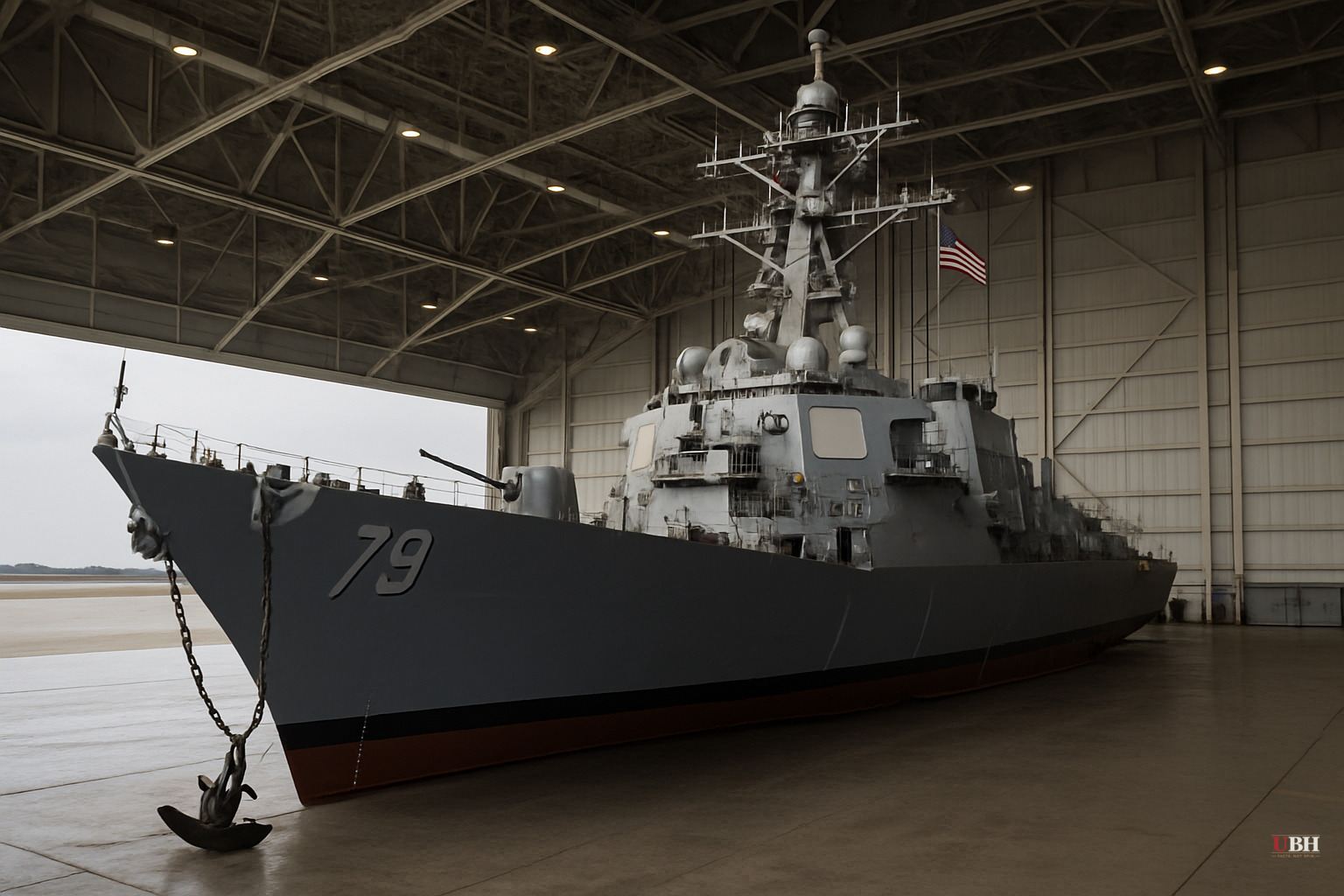
OMB Director Russell Vought said Wednesday the Trump administration is "pushing hard for an additional public shipyard" to support plans to grow the U.S. Navy to 450 ships by 2031. He made the remarks at the Washington Times' IndoPac 2026 event, according to Breaking Defense.
The administration's fiscal year 2027 budget request already includes $65.8 billion for shipbuilding. That figure covers battle force ships, auxiliary vessels, and unmanned platforms. A separate $1.85 billion in reconciliation funding is earmarked to study whether allied foreign shipyards, specifically in South Korea or Japan, could build American warships — a significant and still-unresolved policy question.
Why a Fifth Yard
The U.S. currently operates four public naval shipyards: Norfolk Naval Shipyard in Virginia, Portsmouth Naval Shipyard in New Hampshire, Puget Sound Naval Shipyard and Intermediate Maintenance Facility in Washington state, and Pearl Harbor Naval Shipyard and Intermediate Maintenance Facility in Hawaii.
Those four yards handle the most demanding maintenance work, specifically overhauls and modernization of nuclear-powered aircraft carriers and submarines. Private yards take on some military vessel maintenance too, but the public yards carry the nuclear load.
Vought's argument is straightforward: if you're going to field a fleet nearly 50% larger than today's, you need maintenance capacity to match. "To do it at scale is something that is absolutely vital," he said, adding that public shipyard workers have one job — "repair Navy ships" — which keeps them focused in a way private contractors aren't structured to be.
He pointed to the USS Boise as an example of what happens when maintenance falls apart. The Los Angeles-class attack submarine was mothballed in April after sitting idle for more than a decade due to repeated maintenance delays. "We all agree that at that point it needed to occur," Vought said, "but that had come after 10, 15 years of bad management, and we need to fix that."
The Admiral's Honest Answer
The strongest pushback on the fifth-yard idea comes from inside the Navy, not from congressional Democrats or defense skeptics.
Chief of Naval Operations Adm. Daryl Caudle, speaking to reporters at the Sea Air Space Symposium in April, said the Navy has been studying whether a fifth public shipyard is necessary. His answer was measured: a new yard is expensive, and the workforce question is genuinely hard. Where do you find enough trained shipyard workers to staff a fifth facility, and how long does it realistically take to build that workforce from scratch?
Shipyard work is skilled, specialized, and not easily automated. The existing four yards have struggled with workforce shortfalls and maintenance backlogs for years. Problems of that magnitude don't automatically disappear if a fifth yard opens understaffed. Critics who raise this point aren't opponents of a stronger Navy. They're asking whether the money is being sequenced correctly.
The Fiscal Reality
This is taxpayer money at a scale that demands scrutiny. The $65.8 billion shipbuilding request for a single fiscal year is enormous. Add the $1.85 billion foreign-shipyard study, the cost of a new public yard, and the long-term maintenance workforce investment, and you're looking at a naval expansion program that will cost well into the trillions over the coming decade.
China's navy has already surpassed the U.S. in total vessel count, and Beijing is building warships at a pace American yards currently cannot match. A 450-ship Navy is a strategic response to a documented problem. But announcing a fifth shipyard without a concrete plan to staff it, site it, or fund it beyond a budget request is not a strategy. The Boise sat idle for a decade not because there was no fourth public shipyard, but because the existing system was mismanaged. Vought acknowledged that directly. A fifth yard fixes nothing if the management culture that produced the Boise outcome persists.
What Comes Next
The administration has laid out an ambition. The mechanics are still largely unresolved. Adm. Caudle's workforce question stands unanswered as of June 25, 2026: no specific site has been publicly identified for a fifth yard, no workforce development plan has been released, and the foreign-shipyard procurement study is still in its early stages. Whether Congress funds the full $65.8 billion shipbuilding request or attaches conditions to the foreign-yard study will determine how much of this actually moves forward.
Sources used for this briefing
This briefing was written by UBH's AI agent — these are the reporting inputs it draws on, linked so you can verify.


