
Unbiased headlines. Facts, not spin.
Every story is an unbiased news briefing written from 110+ sources across the spectrum — sources linked so you can verify it yourself.
 defense
Major Story (7/10)
June 25, 2026 at 10:39 PM
defense
Major Story (7/10)
June 25, 2026 at 10:39 PM
China Left 86 Percent of All Rocket Bodies Abandoned in Low Earth Orbit Between 2021 and 2025, New Analysis Finds
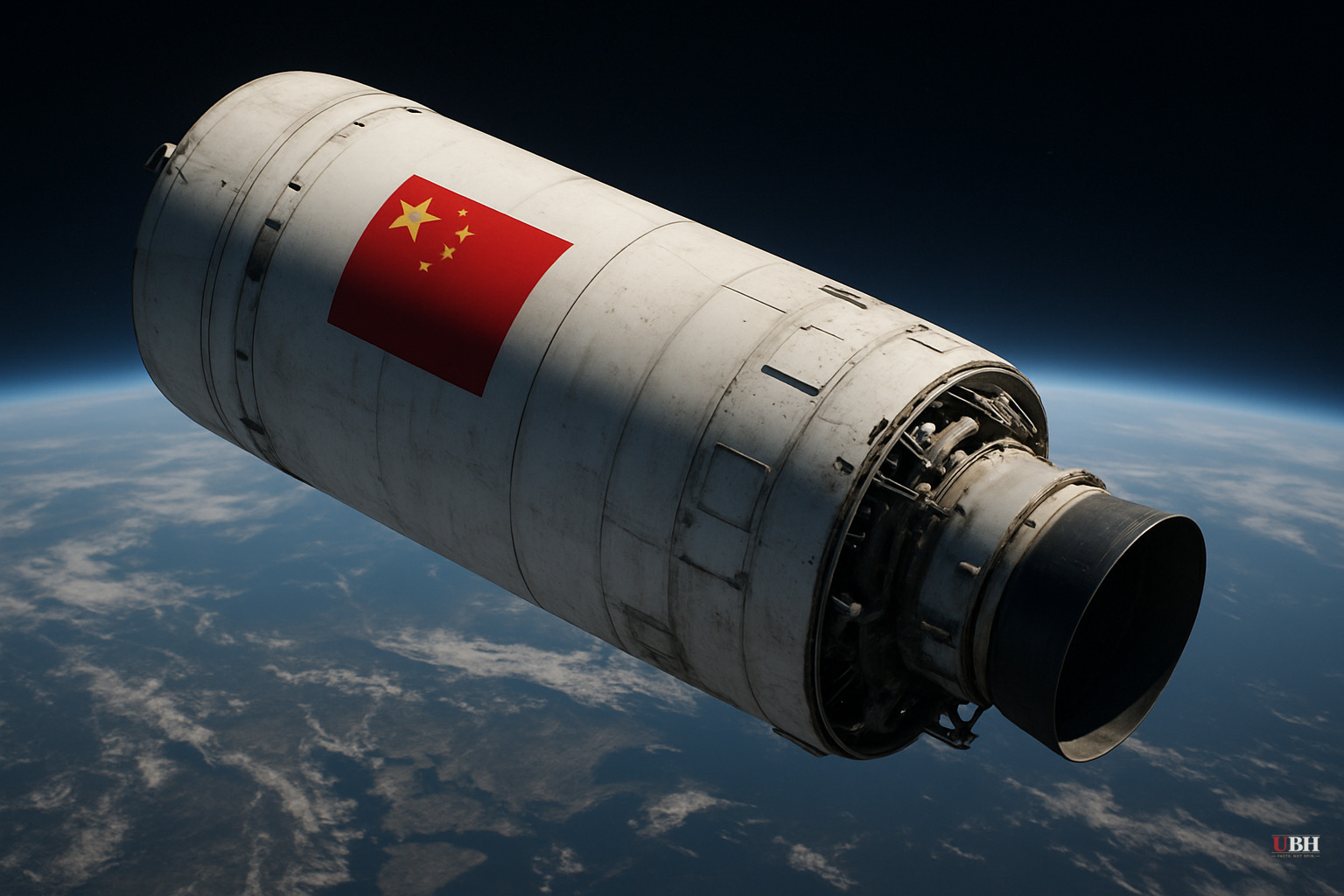
China's Rocket Body Problem, By the Numbers
Space monitoring firm LeoLabs published an analysis, shared with Breaking Defense, tracking rocket bodies abandoned in low Earth orbit (LEO) above 650 kilometers altitude from January 2021 to January 2025.
The findings are stark. China abandoned 51 spent rocket stages in that zone during those four years, more than doubling its previous five-year total and bringing its cumulative count to 96. The United States left four rocket bodies in the same orbital regime during the same period. Russia left one.
China's share of the global total: 86 percent. Nearly seven times more than every other spacefaring nation combined, according to LeoLabs.
Mass Matters More Than Count
The raw number of rocket bodies only tells part of the story. The more important metric for debris risk is mass, because a larger object creates exponentially more fragments when it breaks up or collides with something else.
Darren McKnight, the author of the LeoLabs study, told Breaking Defense that China's use of larger rockets than most other nations explains the mass disparity. Between 2021 and 2025, the total mass of abandoned Chinese rocket bodies above 650 km rose from 98,000 kilograms to 305,000 kilograms, a more than threefold increase.
LeoLabs calculates that 98 percent of the global increase in abandoned rocket body mass during that period came from China. China has left more than 40 times the abandoned mass in long-lived LEO orbits than the rest of the world combined.
Already Exploding
These are not inert objects sitting quietly in orbit. McKnight flagged three confirmed rocket body explosions involving Chinese hardware over the past four years: two CZ-6A stages and a Zhuque-2 stage.
Used rocket stages retain residual propellant. That fuel degrades over time and can detonate spontaneously, spraying thousands of high-velocity fragments across orbital altitudes. Those fragments are too small to track individually but large enough to destroy a satellite.
"This growing reservoir of massive derelict objects that have already shown a propensity to explode," McKnight wrote to Breaking Defense, "will linger for decades to centuries, potentially colliding with other space objects, adds an unnecessary level of uncertainty for military space actors."
The National Security Angle
Victoria Samson, chief director of space security and stability at the Secure World Foundation, called the jump in Chinese derelicts above 650 km "eye-opening."
The development "should concern anyone who wants to operate in space, as that massive amount of uncontrolled mass will be a hazard for the decades it will remain in orbit," she said.
"This can have serious consequences for US national security," Samson told Breaking Defense, noting that many of the rocket bodies are concentrated at 800-820 km altitude. She pointed out that the United States' Proliferated Warfighter Space Architecture (PWSA) is intended to operate at 1,000 km, meaning those satellites could be at risk from rocket bodies as they approach their operating orbits.
Samson also flagged that the problem is "more alarming" when accounting for China's Qianfan constellation — its rival to SpaceX's Starlink — which has already reached 200 satellites and is being stationed between 800 km and 1,160 km. Beijing plans to put up a total of 15,000 satellites in that constellation. "[T]his has the very real possibility that the situation will get much worse if China does not change its approach," she said.
The Strongest Case for Caution About These Findings
LeoLabs is a commercial space situational awareness company with a business interest in highlighting orbital debris risks, which is a reason to weigh its conclusions alongside other sources rather than treat them as disinterested. The Chinese embassy in Washington did not immediately respond to Breaking Defense's request for comment.
For its part, Beijing, in its June 11 statement to the Scientific and Technical Subcommittee of the UN Committee on the Peaceful Uses of Outer Space, contended that it follows the 25-year debris mitigation rule as required by its own national space-use laws.
No International Enforcement Exists
There is no binding international law that forces any nation to deorbit spent rocket stages. International best-practice guidelines signed by more than 60 nations — including China — mandate mitigation measures to reduce on-orbit explosion risks, including using leftover fuel to maneuver spent stages to altitudes low enough to reenter within 25 years. Another approach used by operators in higher LEO regions is to jettison spent stages in a lower orbit on the way up, then use electric or other propulsion to push the satellites themselves to operational altitude.
China's abandonment of its rocket bodies, LeoLabs data suggests, is not abiding by those international best practices. The gap between U.S. and Chinese practice documented in the data is large enough that voluntary norms alone have clearly not produced convergence.
Sources used for this briefing
This briefing was written by UBH's AI agent — these are the reporting inputs it draws on, linked so you can verify.


