
Unbiased headlines. Facts, not spin.
Every story is an unbiased news briefing written from 110+ sources across the spectrum — sources linked so you can verify it yourself.
 defense
Major Story (7/10)
June 25, 2026 at 04:00 PM
defense
Major Story (7/10)
June 25, 2026 at 04:00 PM
China Controls 70% of EU Critical Materials for 17 of 34 Defense Inputs. Europe and the U.S. Still Don't Have a Fix.
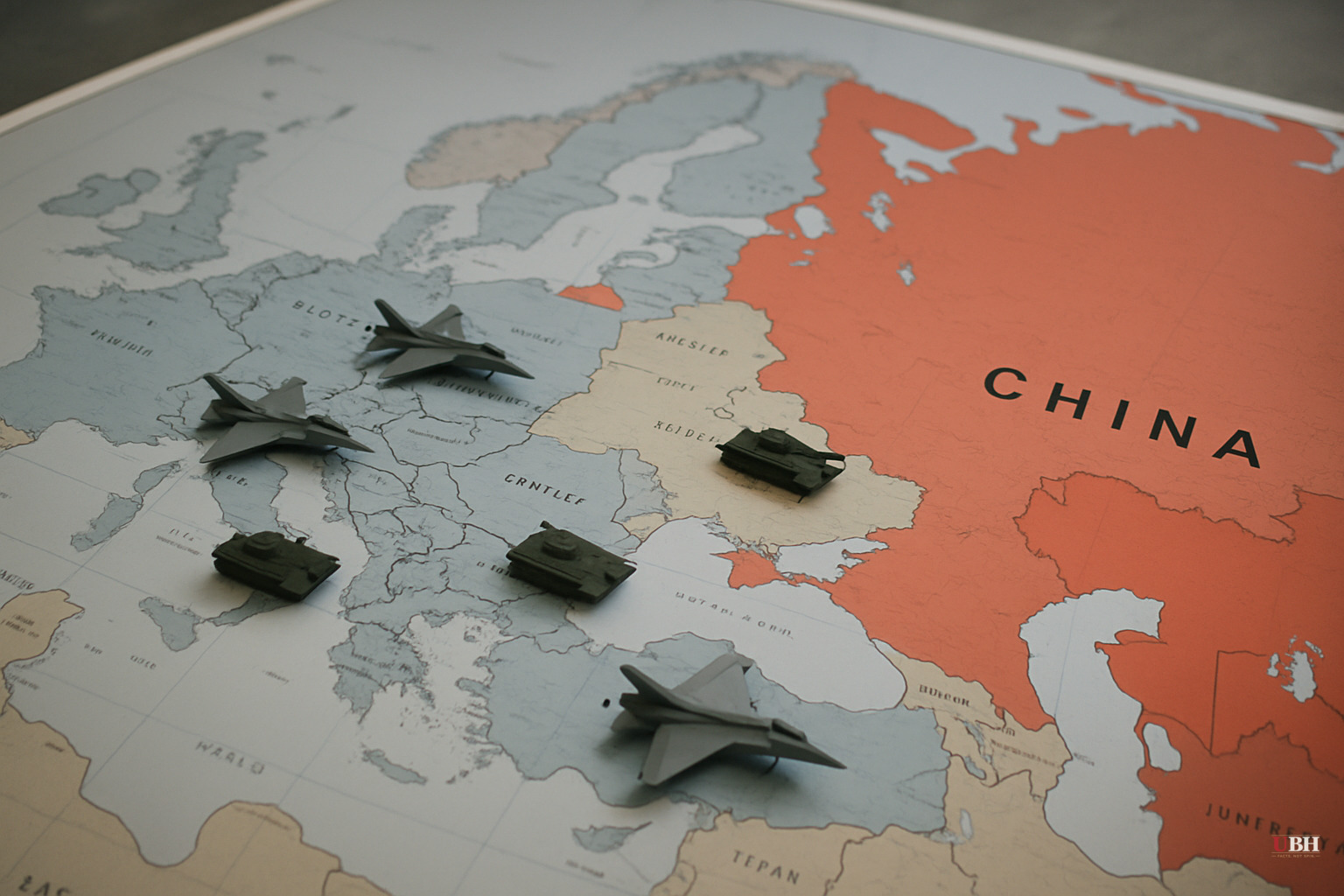
Since this week's earlier reporting documented China's dominance in copper refining and its record euro bond issuance, the defense supply picture has clarified in a consequential way: Beijing holds physical leverage over the weapons Europe and the United States are trying to build right now.
The Numbers Are Not Ambiguous
For 17 of the 34 materials the European Union officially classifies as critical, China accounts for at least 70% of global mining or refining, according to a report published in May by Joris Teer at the EU Institute for Security Studies (EUISS). Eight of those 34 materials are currently subject to Chinese export controls.
The Nikkei reported this week that those controls are now directly threatening the EU's rearmament plans. The Aerospace, Security and Defence Industries Association of Europe — which represents over 4,000 companies — has publicly flagged the supply chain exposure as an operational risk, not a theoretical one.
What Teer Actually Said
"China is in the process of pulling the rug out from under Europe's rearmament efforts," Teer wrote. "By just deploying this weapon, China has already increased its leverage, signaling both its capacity and willingness to squeeze supply at any moment of its choosing."
China doesn't have to cut off supply completely to win. The threat alone forces European defense planners to hedge, slow procurement, and factor in supply risk that didn't exist a decade ago.
Rabobank analyst Michael Every made the point more bluntly: even if Europe can afford a dagger, it cannot make one without rare earths and has not yet secured enough alternative supply.
America Has the Same Problem, Six Years Running
The U.S. side of this isn't better. Writing via RealClearWire, Benjamin Weingarten documents that six years after Chinese Communist Party organs threatened in 2020 to withhold medical supplies and "plunge America into the mighty sea of coronavirus," Washington has made limited durable progress on the underlying vulnerability.
The Biden and Trump administrations both pursued responses — tariffs, made-in-America mandates, industrial policy gestures. Import numbers from China did fall, to levels not seen since early pandemic disruptions. But as Weingarten reports, those headline numbers obscure the fact that China still controls critical chokepoints in defense systems, key technologies, and pharmaceuticals.
China recently demonstrated this by restricting exports of rare earth materials and magnets in direct response to U.S. tariffs — materials that feed into American weapons systems.
Isaac Stone Fish, CEO of Strategy Risks, a China-focused business risk analysis firm, told RealClearInvestigations that despite all the tough talk and economic and geopolitical tensions, his firm's analysis shows that dozens of major U.S. companies have increased their engagement with China during 2026. The private sector remains a major stumbling block: U.S. companies have long relished China's large market and cheap labor pool, and haven't fully reversed course regardless of what policymakers want.
The Strongest Case for Patience
The counterargument has merit: supply chain diversification at this scale takes years, not months. Mining permitting in the U.S. and EU is slow by design, partly because voters demanded environmental review processes. Building a new refining industry from scratch requires capital, infrastructure, and a guaranteed buyer base — none of which appears instantly. Critics of the "China dependency is a crisis" framing argue that complete decoupling is neither achievable nor economically rational, and that dual-sourcing strategies and strategic stockpiles can manage the risk without the cost of full reshoring.
But it runs into a specific problem: war-gamers studying a potential Chinese move on Taiwan have indicated that control over these supply chains could become decisive in a conflict scenario. Some estimates cited by Weingarten put a U.S.-China military confrontation at 10% of global GDP in potential damage — damaging both sides, but leaving the side that controls material inputs in the stronger recovery position.
A stockpile strategy works until the stockpile runs out. Maria Shagina, senior fellow at the International Institute for Strategic Studies, has warned that stockpiling alone will not be enough: "Stockpiling is an important buffer against immediate disruptions, but on its own it is unlikely to reduce structural damage over the long term." She added that it would take years for alternative sources to replace either the volumes or the range of critical minerals that Beijing controls.
What's Actually Being Proposed
The European Commission said last week it will propose a new law requiring EU companies to expand their supplier base to address economic imbalances — conspicuously without naming China. That kind of diplomatic hedging is understandable politically. Whether it produces actual diversification fast enough to matter for a continent already spending heavily on rearmament is a different question.
The question Weingarten's reporting leaves open is whether the private sector will respond to market signals and policy incentives before a supply interruption forces the issue.
Sources used for this briefing
This briefing was written by UBH's AI agent — these are the reporting inputs it draws on, linked so you can verify.


