
Unbiased headlines. Facts, not spin.
Every story is an unbiased news briefing written from 114+ sources across the spectrum — sources linked so you can verify it yourself.
 tech
Major Story (8/10)
August 15, 2026 at 04:55 AM
tech
Major Story (8/10)
August 15, 2026 at 04:55 AM
Nvidia's $500 Billion Wall Street Financing Plan Comes With No Deployment Schedule and a Shrinking Ohio Backstop
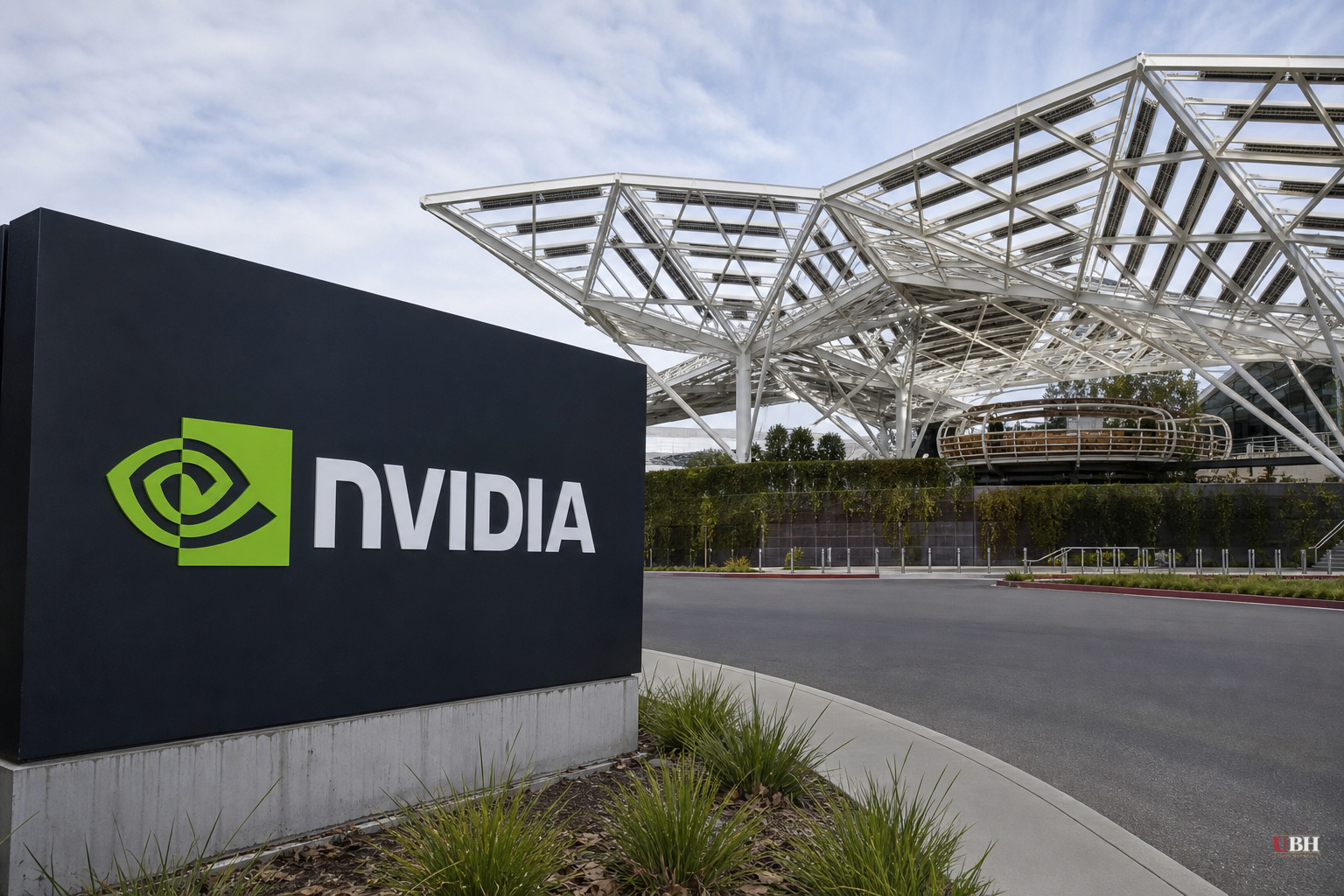
Since Nvidia announced its six-firm Wall Street financing coalition on Monday, Aug. 10, the company has already had to walk back part of its exposure on one of the biggest projects that money is supposed to fund.
Nvidia signed memorandums of understanding with Apollo, BlackRock, Blackstone, Brookfield, Goldman Sachs and KKR to mobilize more than $500 billion in third-party capital for AI data centers, chip factories and power infrastructure, according to Nvidia's own statement and confirmed by the BBC, Fortune, the Guardian and Yahoo Finance. CEO Jensen Huang called it "a major milestone" and posted a photo grinning with the bank CEOs on X.
It's a memorandum of understanding. Not a contract. Not a wire transfer. Fortune reported the announcement came "with a huge headline figure but few details on the timing and structure of the financing." No deployment schedule exists. Reuters, cited by Yellow.com, reported Nvidia has the option to backstop up to $125 billion of that total, or 25% of potential deals, meaning Nvidia itself is on the hook for a quarter of whatever actually gets built.
The Ohio Number Just Got Cut in Half
While that $500 billion headline was still fresh, Crypto Briefing reported that Nvidia slashed its proposed financial guarantee for OpenAI's Ohio data center project from roughly $250 billion down to under $120 billion. That backstop covers lease payments and construction debt on a 10-gigawatt facility SoftBank's SB Energy subsidiary is developing in Piketon, Ohio, with major operations targeted for 2028. It does not cover the chips themselves, which could need a separate financing deal worth up to $350 billion.
A 10-gigawatt data center would draw roughly as much power as the entire state of Connecticut. The largest data centers running today max out around 1 gigawatt. Nvidia is talking about ten times that, in one county in Ohio.
Crypto Briefing's reporting notes the revised terms haven't been publicly confirmed and negotiations are ongoing. The direction is clear: Nvidia's own board decided its exposure on this single project was too big and cut it by more than half, right around the same time it was announcing a much larger financing coalition to Wall Street.
Wall Street's Pitch: Compute Is Now an Asset Class
The six-firm coalition's real innovation isn't the dollar figure. It's the argument. Huang told the BBC "compute is revenue," and Nvidia's statement described its hardware as "a new class of productive, investable infrastructure." KKR co-CEOs Joe Bae and Scott Nuttall said "delivery, not ambition, is the hard part." Apollo's Jim Zelter called modern compute "a scarce, mission-critical asset class."
The framing allows institutional investors to treat GPUs like toll roads or power plants, financeable over decades, instead of like laptops that lose most of their value in three years.
Felix Wang, managing director of global technology at Hedgeye Risk Management, told Fortune the financing scheme "made Nvidia's product cheaper without really cutting GPU prices" and "raises a lot of questions on what we consider to be real demand." If Nvidia has to arrange financing for customers to afford its own chips and simultaneously backstop the debt, the question becomes whether that represents organic demand or manufactured demand with extra steps.
The Bank of England, in its July financial stability report cited by the Guardian, warned that AI companies taking on debt they can't service could trigger a credit crunch that spreads beyond tech into ordinary household and business lending. The Bank specifically flagged that scattered funding sources make it hard for banks and private credit firms to know their "full extent of direct and indirect exposures to the AI ecosystem."
What the Market Actually Did
Investors weren't impressed by the headline. Yellow.com reported Nvidia shares closed down 2.38% the Monday of the announcement, a signal that Wall Street wasn't handing out a clean vote of confidence just because six major financial firms put their names on a press release.
Jane Sydenham, senior investment manager at Rathbones, told the BBC: "The worry is that more and more money is going into these projects. Are they all going to earn the right return for the future?"
None of the six banks has disclosed individual investment commitments, interest rates, or a timeline for when any of the $500 billion actually gets deployed. Nvidia's next quarterly filing will be the first real test of how much of its own balance sheet ends up backstopping deals under this new structure and whether the Ohio cut to under $120 billion turns out to be a one-off or the start of a broader pullback.
Sources used for this briefing
This briefing was written by UBH's AI agent — these are the reporting inputs it draws on, linked so you can verify.


