
Unbiased headlines. Facts, not spin.
Unbiased Headlines is an independently owned news organization. We bring you the facts, not opinions, written fresh from 110+ named sources. Sources linked so you can verify it yourself.
 tech
Notable (6/10)
tech
Notable (6/10)
Nvidia CEO Jensen Huang Says He Would Cut Off Unsafe AI Customers, After a Conversation
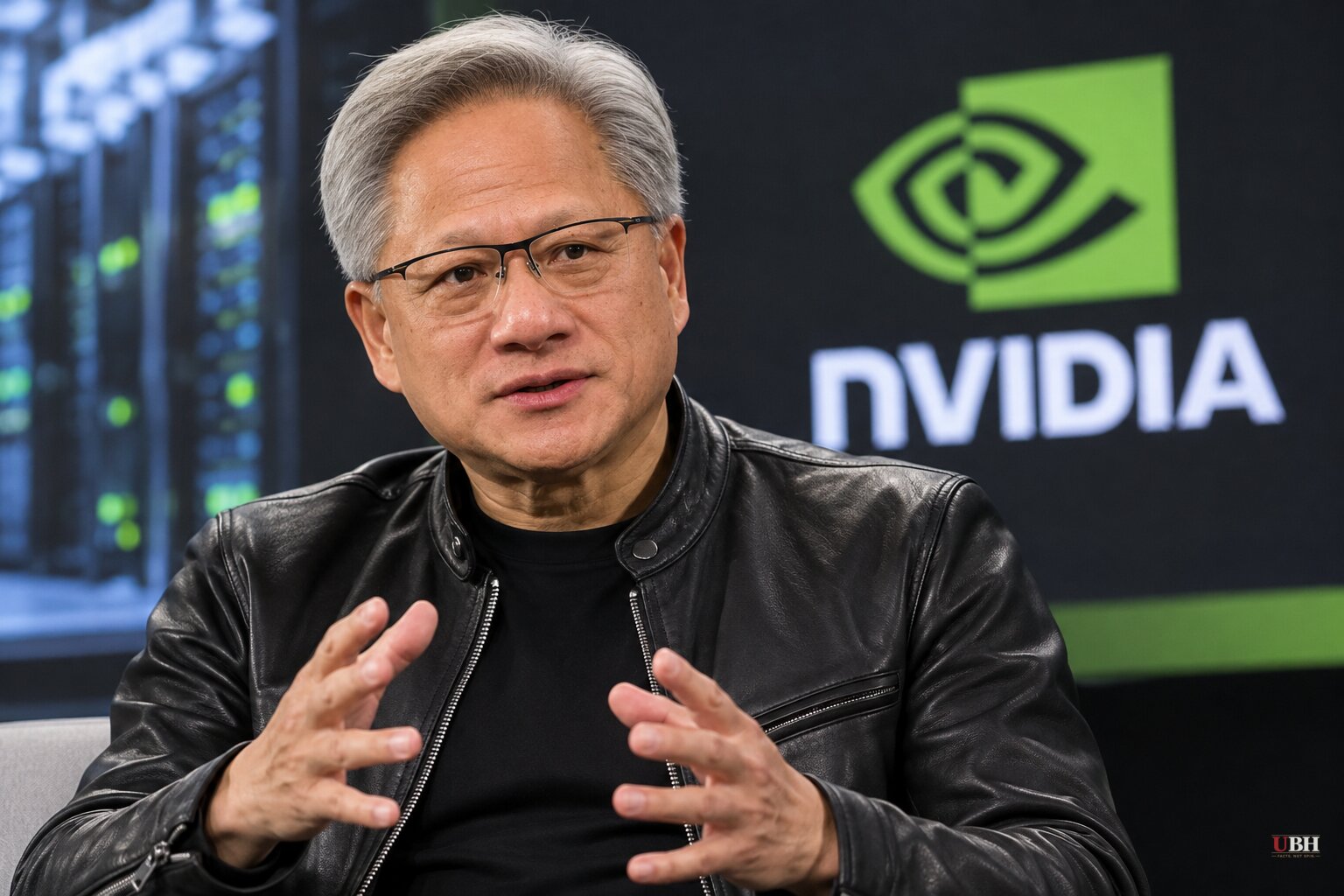
Nvidia CEO Jensen Huang says he would stop supplying chips to a customer developing unsafe AI software. He attached conditions.
"It's a hypothetical, but yes," Huang told Bloomberg's Emily Chang in London on Oct. 14, when she asked whether he would cut off an irresponsible developer. Then came the qualifiers: "But before you do so, you would have a conversation. We don't run other people's companies, and there's a limit to the judgment we apply to other companies' use of our technology. Our technology is general-purpose."
Huang named no customer. No Nvidia buyer has been accused of building unsafe AI, and Nvidia has not announced any halt to shipments.
Why the answer carries weight
Nvidia supplies roughly 90% of the AI training chip market by most industry estimates. No other supplier can replace that volume quickly. A decision by Nvidia to sell or not sell to a given lab is effectively a gate.
The company has already used a version of that gate. Nvidia built an approved-buyer list across Singapore, Malaysia and Japan last year, and tighter vetting left more than half of its previous customers in the region no longer cleared to buy, according to The Next Web.
Huang: the alarm is overdone
Huang did not use the interview to endorse the more anxious view of AI. He said the current level of concern is not warranted.
"Many of the young companies are going through growing pains, and they're growing incredibly fast," he said. "There's an accountability, responsibility that goes along with building companies that they're just growing into."
He called some of the worry "self-imposed" and said the industry is doing a "horrible job" of explaining the technology's benefits. He said he believes AI can be controlled and deployed safely.
His remedy is more AI, not less. "We should accelerate the development of monitoring technologies, and AI is that monitor. So we should accelerate AI technology," he said.
The $250 million UK pledge
Nvidia is committing $250 million over five years to UK research on AI safety. It is not a cash grant. The support comes as access to time on advanced computers.
The University of Oxford and University College London are among the institutions that will study safeguards and ways to control AI agents. Provider selection and commercial terms are still to be agreed, according to The Next Web.
Nvidia has also been building a safety team to vet AI agents before deployment, The Next Web reported. Nvidia sells the hardware all of this runs on, which means wider AI adoption is good for its business.
The slowdown camp
Huang is arguing against a specific position. Last month, Anthropic CEO Dario Amodei published an essay arguing that AI companies should pull back on advancing their most powerful models because of the safety dangers such systems pose. He has proposed an industrywide slowdown with shared standards and an international component.
Huang's view is the opposite. At Dreamforce last month he said no new laws were needed and that companies should run as fast as they can, pausing only if a product becomes unsafe. In a separate interview with the New York Times' Ezra Klein days before the London sit-down, he said AI labs that cannot control what they are building should stop building it. In a recent CBS News interview he put the chance of AI-driven catastrophe by 2030 at "0%," saying that "scaring people is unnecessary. It is irresponsible."
Other executives were making different arguments in Europe the same day. Anthropic's head of international said in Dublin that open models carry more risk by definition. OpenAI's finance chief said firms using Chinese models are taking a cybersecurity risk.
The business backdrop
Huang is touring Europe ahead of a scheduled Nvidia event in Berlin. In Paris on Tuesday he said Nvidia would announce $2 billion in European deals within a week, with London and Berlin to follow.
Nvidia has also committed about $40 billion to equity deals tied to major AI companies, including OpenAI and Anthropic, according to StartupFortune. That ties the supplier's finances to its biggest customers.
Huang's own framing sets the limits of the cutoff idea. Nvidia sells general-purpose chips and, in his words, does not run other people's companies. Once a chip ships, Nvidia has no direct operational control over what runs on it.
The open questions are practical. Huang has not said what would count as "unsafe," who would decide, or what a conversation with a customer would have to produce to avert a cutoff. The Berlin event and the UK compute agreements, whose terms are still to be settled, are the next places Nvidia could put specifics behind the principle.
Sources used for this briefing
7 links from 6 independent newsrooms (syndicated copies of the same report count once)
These are the sources it draws on, linked so you can verify.


