
Unbiased headlines. Facts, not spin.
Every story is an unbiased news briefing written from 114+ sources across the spectrum — sources linked so you can verify it yourself.
 tech
Major Story (8/10)
Event date: September 11, 2026
tech
Major Story (8/10)
Event date: September 11, 2026
NSA, FBI and CISA Say Chinese AI Developers Are Extracting Capabilities From US Models; Anthropic Alleges Fraudulent Accounts
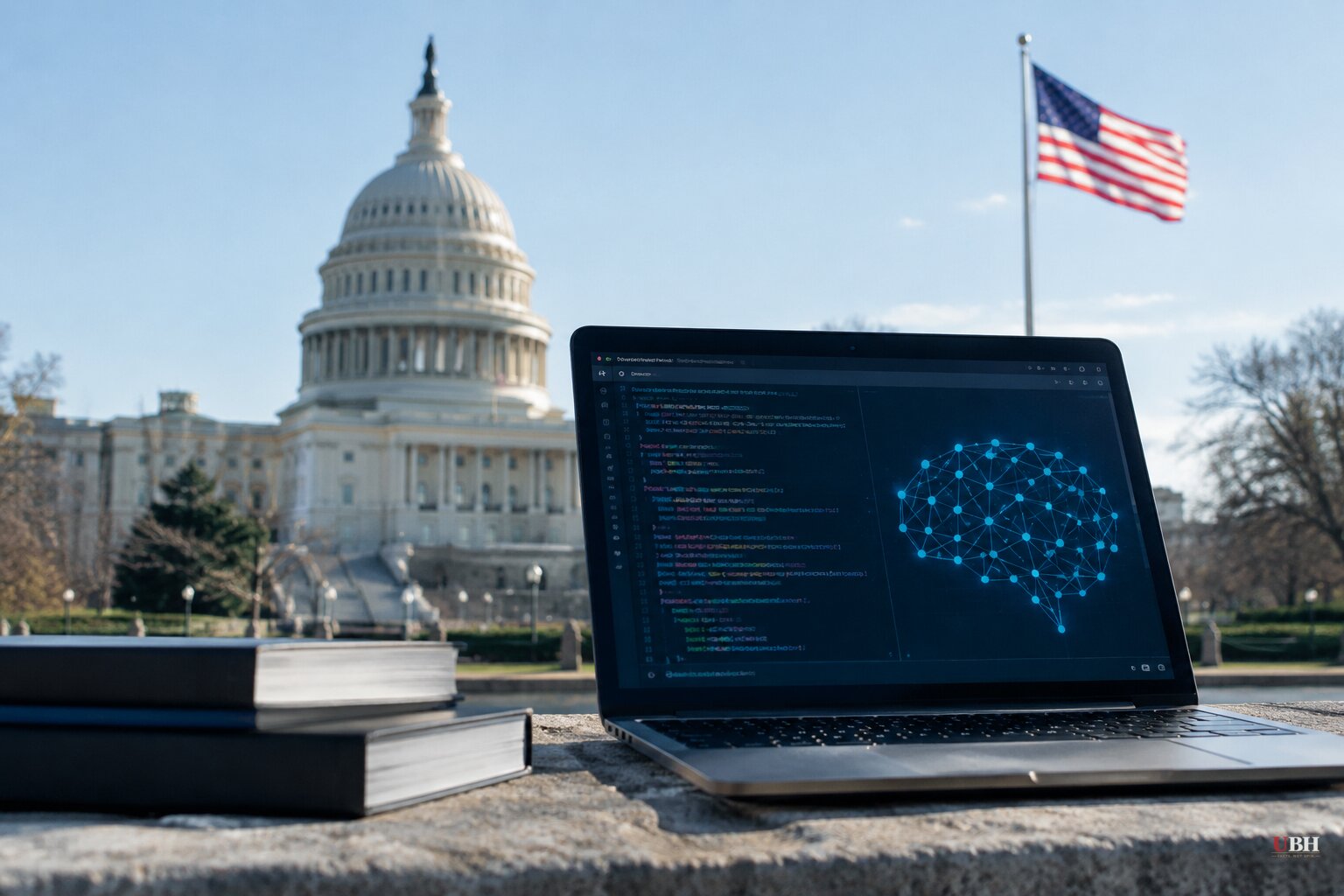
The US government and one of its leading AI labs now say Chinese companies are using American models to build their own.
A joint advisory from the National Security Agency, the FBI and the Cybersecurity and Infrastructure Security Agency, issued last month, says Chinese AI developers have been systematically extracting capabilities from US frontier models. The goal, according to the advisory, is to cut their own computing, electricity and research costs.
Treasury Secretary Scott Bessent raised the same alarm in July, warning that Chinese firms were engaged in large-scale "distillation."
What Anthropic alleges
Distillation means training a model on the outputs of a stronger one. It is a shortcut. You skip much of the expensive work of building the original.
Anthropic claims Chinese developers used fraudulent accounts and proxy networks to siphon reasoning data out of Claude, its flagship model. In some cases, the company says, they used Claude as a covert back end for their own apps.
Those are Anthropic's allegations about specific conduct. The company is also a commercial competitor with a stake in the outcome. The government advisory is a separate source, though the notes available to us do not detail the evidence behind it.
A different explanation for the motive
One analyst quoted by the South China Morning Post offered a twist. If the claims are true, said the analyst, Beijing's main concern would not be intellectual property theft or model copying. It would be data security.
The reasoning is that routing queries through a US model hands sensitive information to a foreign system. That is a separate worry from whether a Chinese firm is copying American work. The analyst's view is an interpretation of motive, not an established fact.
Beijing's own AI push
On Oct. 9, the Communist Party Central Committee and the State Council issued national guidelines with 19 measures tying AI, computing capacity and data to industrial development. They call for advances in AI theory and core technologies, and for an integrated national computing network. They also call for an "open, shared, and secure" national data market.
The guidelines also require monitoring, early warnings and emergency responses to keep AI "safe, reliable, and controllable." They warn against speculative bubbles and poorly planned investment. Officials can be held accountable if misuse of policy or indiscriminate investment causes major losses.
The guidelines do not mention the US allegations. They do show that Beijing treats compute and data as state industrial policy, not just a private-sector race.
Washington's split over what to do
Writing in TIME, a former Commerce Secretary who instituted the first chip export controls on China and created the AI Safety Institute argues the US must "outcompete China on the technology itself, while also working with China on addressing the risks." The op-ed says President Trump hosted Chinese President Xi Jinping at the White House, the pair's second meeting this year after a May summit in Beijing.
The author says it would be "foolish to trust" PRC leaders. The answer, the op-ed argues, is verification mechanisms that work without trust. It points to Bessent's announcement of a possible AI dialogue with Chinese Vice Premier He Lifeng as a sign Beijing sees room for cooperation.
That sits awkwardly beside the NSA, FBI and CISA advisory. One arm of the government is accusing Chinese firms of extracting American capabilities. Another is floating talks.
The congressional angle
Sen. Adam Schiff, D-Calif., laid out his own view at Punchbowl News' Tech Summit in San Francisco this week. He said competition with China should include "prioritization of safety, developing a skilled workforce, and improving education."
Schiff said he does not believe self-policing by AI companies is sufficient. "There's just too much profit motive," he said, and he wants "protocols and monitors" so Congress does not "have to simply take the word of the companies."
He also raised privacy. With AI agents able to hunt for personal data, and with Flock cameras and other CCTV systems vulnerable, he asked whether Americans will have any privacy left.
Schiff said that if Democrats win a majority, industry should expect "constructive oversight, not destructive oversight." He also described legislation to make private industry pay for the energy data centers use, so households do not absorb higher power costs from the AI buildout.
Critics of heavier regulation, including those who favor a smaller federal footprint, would say more government monitoring of frontier labs risks slowing American developers while Chinese firms race ahead. None of the notes available to us quote anyone making that argument directly, so it stays a point of tension rather than a documented position.
What is still open
The advisory says extraction is happening. Anthropic says it saw it happen on its own platform. Neither the advisory's underlying evidence nor any Chinese government response to the specific claims has been laid out in detail.
What comes next is a policy question with a short fuse. If Bessent's proposed AI dialogue with He Lifeng goes forward, the talks would open with US agencies on record accusing Chinese developers of exploiting American models.
Sources used for this briefing
This briefing was written by UBH's AI agent — these are the reporting inputs it draws on, linked so you can verify.


