
Original briefings. Zero spin.
Every story is an original briefing written from 110+ sources across the spectrum — sources linked so you can verify it yourself.
 health
Notable (6/10)
August 27, 2026 at 11:04 AM
health
Notable (6/10)
August 27, 2026 at 11:04 AM
NRC Moves to Scrap 50-Year-Old ALARA Radiation Rule, Public Comment Closes Aug. 31
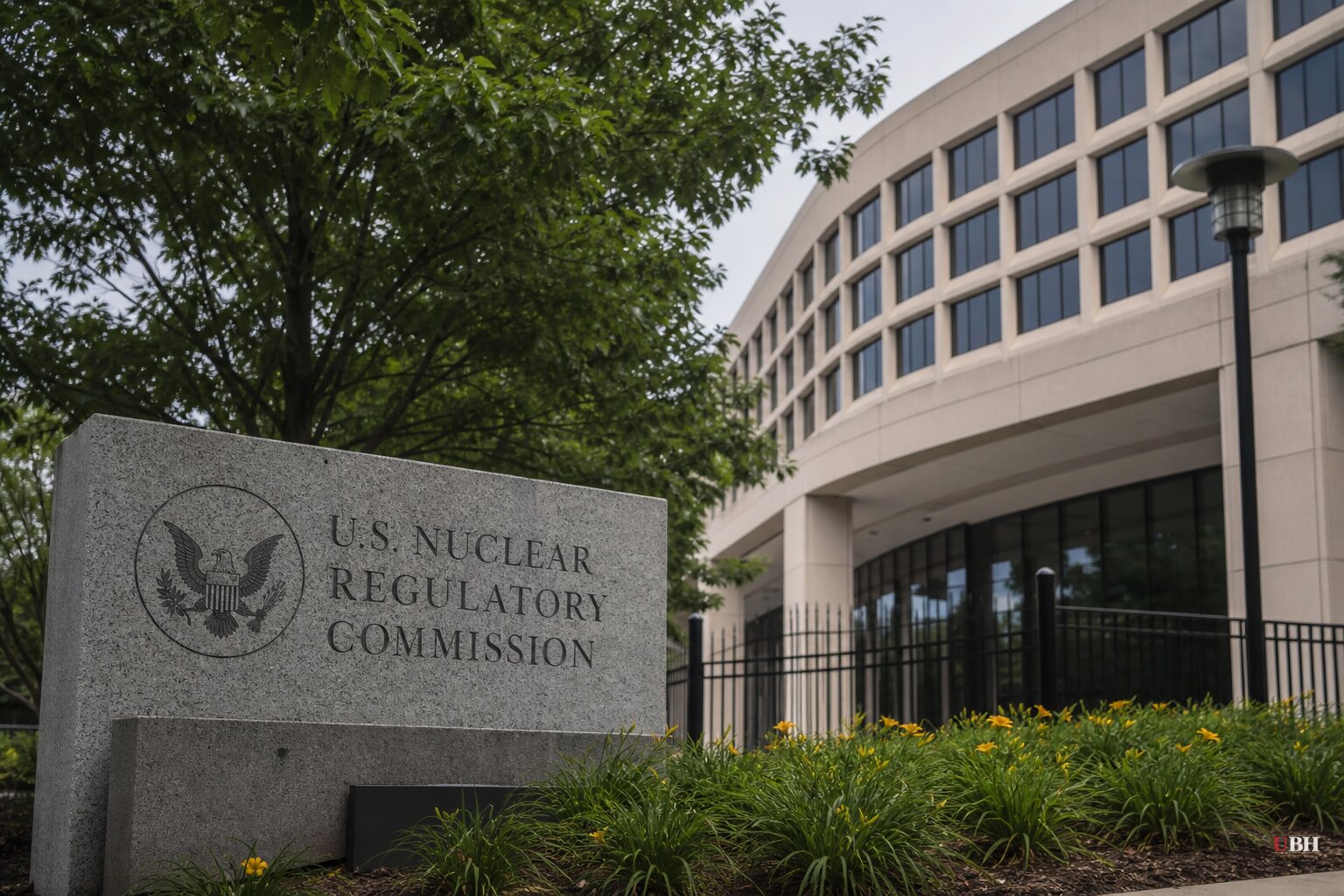
The Nuclear Regulatory Commission is moving to kill a radiation safety standard that's been on the books for roughly fifty years. Public comment on the proposal closes Monday, August 31. If finalized, the change could take effect early next year, according to NPR.
The rule in question is called ALARA, short for "As Low As Reasonably Achievable." It requires nuclear operators to push radiation exposure for workers and the public below federal limits whenever practical, not just under the limit. The NRC's new proposal, formally titled "Reforming and Modernizing the NRC's Radiation Protection Framework" and published July 15, would strip that requirement out and replace it with what the agency calls a "graded approach to dose management framework," built around fixed thresholds instead of a continuous push toward minimal exposure, according to Safety+Health Magazine.
The rule also creates something new: a "planned occupational dose limit extension." Under it, workers could exceed annual radiation dose limits in specific circumstances, as long as the resulting exposure stays under a multiyear cap, per Safety+Health Magazine's review of the proposal.
Where this came from
This traces directly to President Trump's Executive Order 14300, signed in May 2025, which demanded a wholesale overhaul of nuclear regulation. The order specifically singled out ALARA, calling it a "flawed" approach to radiation risk, according to NPR and Iowa Public Radio. The broader push is tied to the administration's effort to expand nuclear power generation, largely to meet surging electricity demand from AI data centers.
NRC Chairman Ho Nieh defended the move on Federal News Network, arguing ALARA has stopped working as intended. Nieh told the Associated Press in a report published July 26: "We're just removing the ambiguity. But the standard for exposure to workers and the public, those are not changing. We're just putting in place greater clarification."
Notably, the NRC is NOT touching the underlying science. The agency's Linear No Threshold model, which assumes any radiation dose carries some cancer risk with no safe floor, stays in place, according to Iowa Public Radio and Safety+Health Magazine. Only the ALARA requirement to keep pushing exposure below the limit goes away.
The case for scrapping it
Emily Caffrey, a radiation health physicist at the University of Alabama at Birmingham, told NPR the core idea behind ALARA "was a fair idea" but that in practice it forced companies into an endless ratchet of increasingly strict, and expensive, protection measures without a clear stopping point. Her complaint is about vagueness: "what's 'reasonable' to one person isn't reasonable to another person," she said.
A standard with no fixed endpoint is hard for companies to plan around and hard for regulators to enforce consistently. If the NRC's fixed-threshold approach genuinely just clarifies compliance without loosening actual protection, that represents a potential trade-off worth considering.
The case against it
Edwin Lyman, director of nuclear power safety at the Union of Concerned Scientists, isn't buying that framing. He told NPR that removing ALARA "would remove that incentive for these companies to continue to maintain the practices that protected their workers and the public."
The Union of Concerned Scientists went further in a July 2 statement, arguing the NRC "proposes to weaken radiation protections, putting workers and communities at risk," and warning that companies "may choose to save money by cutting corners on radiation shielding or other protection measures" once the incentive to go below the legal limit disappears.
ALARA never set a hard numeric floor. It set a direction: always try to do better than the minimum. A fixed threshold, by definition, removes that pressure once a company hits the number. Whether that actually translates into higher real-world exposure is unproven. It hasn't happened yet. It's a prediction from a watchdog group, not a documented outcome.
Why the science stays murky either way
David Brenner, director of the Center for Radiological Research at Columbia University, told NPR that high radiation doses clearly cause cancer. Nobody disputes that. The problem is low doses, the kind ALARA was designed to police. Roughly 40% of Americans develop cancer at some point regardless of radiation exposure, according to Brenner, which makes it "really really hard" to isolate a small added risk from routine occupational or environmental exposure.
When you can't precisely measure the risk of a given dose, the safest bet is to minimize the dose. That's why ALARA existed in the first place. Killing ALARA doesn't resolve that uncertainty. It just changes who bears the consequences if it turns out to matter.
The NRC held a virtual public meeting on the proposal August 10. Comments close August 31, and the agency could issue a final rule as soon as early 2027. Whether Congress, industry watchdogs, or workers' groups push back before then remains an open question.
Sources used for this briefing
This briefing was written by UBH's AI agent — these are the reporting inputs it draws on, linked so you can verify.


