
Unbiased headlines. Facts, not spin.
Unbiased Headlines is an independently owned news organization. We bring you the facts, not opinions, written fresh from 110+ named sources. Sources linked so you can verify it yourself.
 health
Notable (5/10)
Novartis Backs $4 Billion-Plus Peak Sales for MS Drug After Barclays Cut; Merck Calls 2027 'Another Year of Investment'
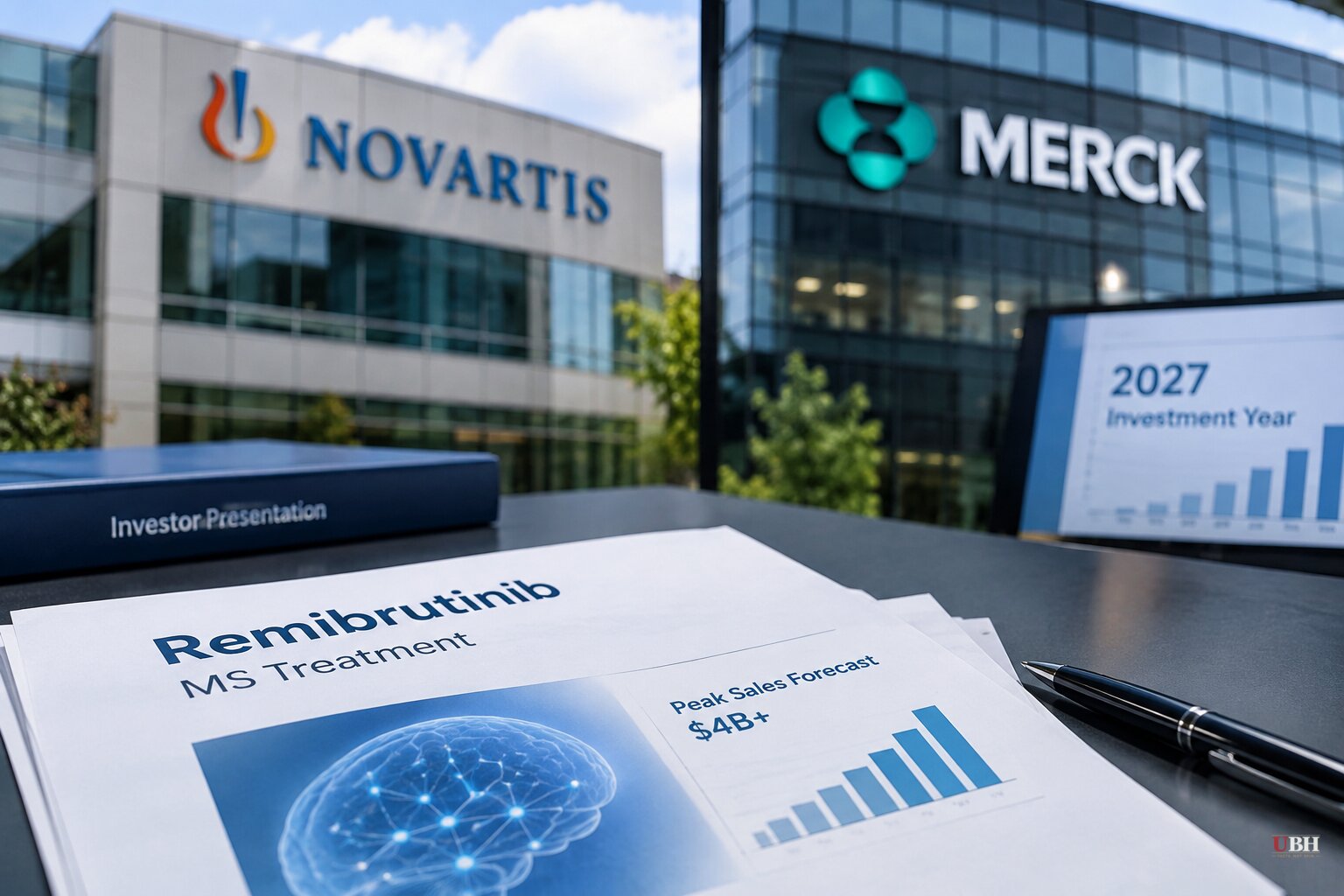
Heading into November, two of the world's biggest drugmakers have used this week's earnings to show how they intend to survive their patent losses. Their answers differ, and so does the evidence behind them.
Novartis defends its MS bet
Novartis CEO Vas Narasimhan told CNBC on Tuesday, Oct. 27, that remibrutinib, the company's experimental multiple sclerosis drug, "could be one of our largest medicines in history." He backed the drug to generate more than $4 billion in peak annual sales.
Days earlier, Barclays had cut its peak-sales forecast for the drug. The bank's reason: detailed results from two late-stage trials showed remibrutinib reduced relapses in MS patients by less than analysts expected.
Novartis has guided for $8 billion-plus in total remibrutinib sales when indications beyond relapsing MS are counted.
The company reported sales growth this week even after losing key patent protection for its heart drug Entresto. That is the patent cliff it is leaving behind.
The next cliff is already on the calendar
Barclays analysts said Wednesday that the market is already looking at what comes after Entresto. Kisqali and Kesimpta both face patent expirations around 2032. Together they represent $18 billion in peak sales.
Barclays called that "the market's bigger question."
Novartis is set to outline its long-term growth strategy in mid-November. Remibrutinib's performance will be part of how investors judge it.
What a neurologist says about the drug
Narasimhan's optimism is not universally shared. Amit Bar-Or, an MS specialist at the University of Pennsylvania, told CNBC that remibrutinib appears to have a promising safety profile. He also said it is unlikely to control relapsing MS as well as high-efficacy antibodies such as Novartis' own Kesimpta.
Bar-Or said remibrutinib's relapsing-MS results look similar to those of Roche's rival BTK inhibitor, fenebrutinib. Both look less effective at preventing relapses than anti-CD20 drugs like Kesimpta.
No head-to-head trials have compared remibrutinib with fenebrutinib or with anti-CD20 treatments. Any direct comparison is therefore rough.
Bar-Or pointed to progressive MS as the bigger opening, since treatment options there remain limited. A trial testing remibrutinib in progressive MS is expected to read out in 2031. He also said the drug could be an attractive switch for patients with progressive disease who are on an anti-CD20.
On safety, Bar-Or said BTK inhibitors regulate immune cells rather than eliminate them. That could make them safer over the long term than some existing MS treatments. He said long-term safety data is still thin.
Merck: spend now, Keytruda expires in 2028
Merck faces the nearest cliff. Keytruda, the industry's best-selling drug, approaches patent expiry in 2028.
On an investor call Thursday, Oct. 29, CFO Caroline Litchfield said, "For 2027, we see it as another year of investment as we invest behind our expansive pipeline and our new product launches to drive long-term growth." She added that business development remains a priority, and that Merck has financial flexibility within a strong investment-grade credit rating to pursue deals.
CEO Robert Davis said he feels "very good about where we are and our ability to navigate the Keytruda LOE," citing recent positive clinical readouts.
Third-quarter revenue came in at $18.1 billion, ahead of analyst expectations. Guggenheim had projected about $17.4 billion.
Leerink Partners agreed with management's read. In a Thursday note, the firm said Merck's pipeline is "progressing well as we near the Keytruda LoE," with important Phase 3 readouts across oncology, immunology and infectious diseases expected in the next six months.
Merck's anti-TL1A antibody tulisokibart posted a Phase 3 win in ulcerative colitis in June, with detailed data still to come. Phase 2 results are also expected in rheumatoid arthritis and axial spondyloarthritis. Merck will present Phase 2b MASH results at the AASLD conference next month.
Merck has also been working on Keytruda's delivery. The FDA approved a subcutaneous version last September.
The industry-wide exposure
More than $500 billion in worldwide prescription drug sales are potentially at risk from generic competition between 2026 and 2032, according to Norstella forecasting data provided by Evaluate.
The exposure comes in waves, not as a single drop. Evaluate puts 6.5% of the worldwide prescription drug market at risk from patent expiry in 2028 alone, the year Keytruda approaches expiry. The largest single-year exposure in the 2026-2032 forecast lands in 2031.
Other companies face pressure too:
- AbbVie's exposure rises sharply early next decade as Rinvoq and Skyrizi lose protection.
- Johnson & Johnson's risk escalates in 2027 and 2028 as Imbruvica and Darzalex approach patent end.
- Sanofi's Praluent and Dupixent may face competition in 2029 and 2030.
- AstraZeneca has a cluster of products facing expiries early next decade.
Sales at risk are not sales lost. Evaluate notes that patent expiry, market geography, the timing of generic or biosimilar competition and lifecycle-management strategies all affect how fast revenue erodes.
The forecast also helps explain why large drugmakers have spent heavily on dealmaking to refill their pipelines before blockbusters face competition.
Novartis' mid-November strategy presentation is the next test. Management will have to show how remibrutinib's less-than-hoped relapse data fits a growth story that has to absorb roughly $18 billion in Kisqali and Kesimpta peak sales leaving protection around 2032. For Merck, the clock is Leerink's six-month window of Phase 3 readouts, with Keytruda's 2028 expiry behind it.
Sources used for this briefing
6 links from 4 independent newsrooms (syndicated copies of the same report count once)
These are the sources it draws on, linked so you can verify.


