
Unbiased headlines. Facts, not spin.
Every story is an unbiased news briefing written from 110+ sources across the spectrum — sources linked so you can verify it yourself.
 health
Notable (6/10)
August 6, 2026 at 03:57 PM
health
Notable (6/10)
August 6, 2026 at 03:57 PM
Not One English River, Lake or Coastal Water Passed Chemical Pollution Test, Environment Agency Finds
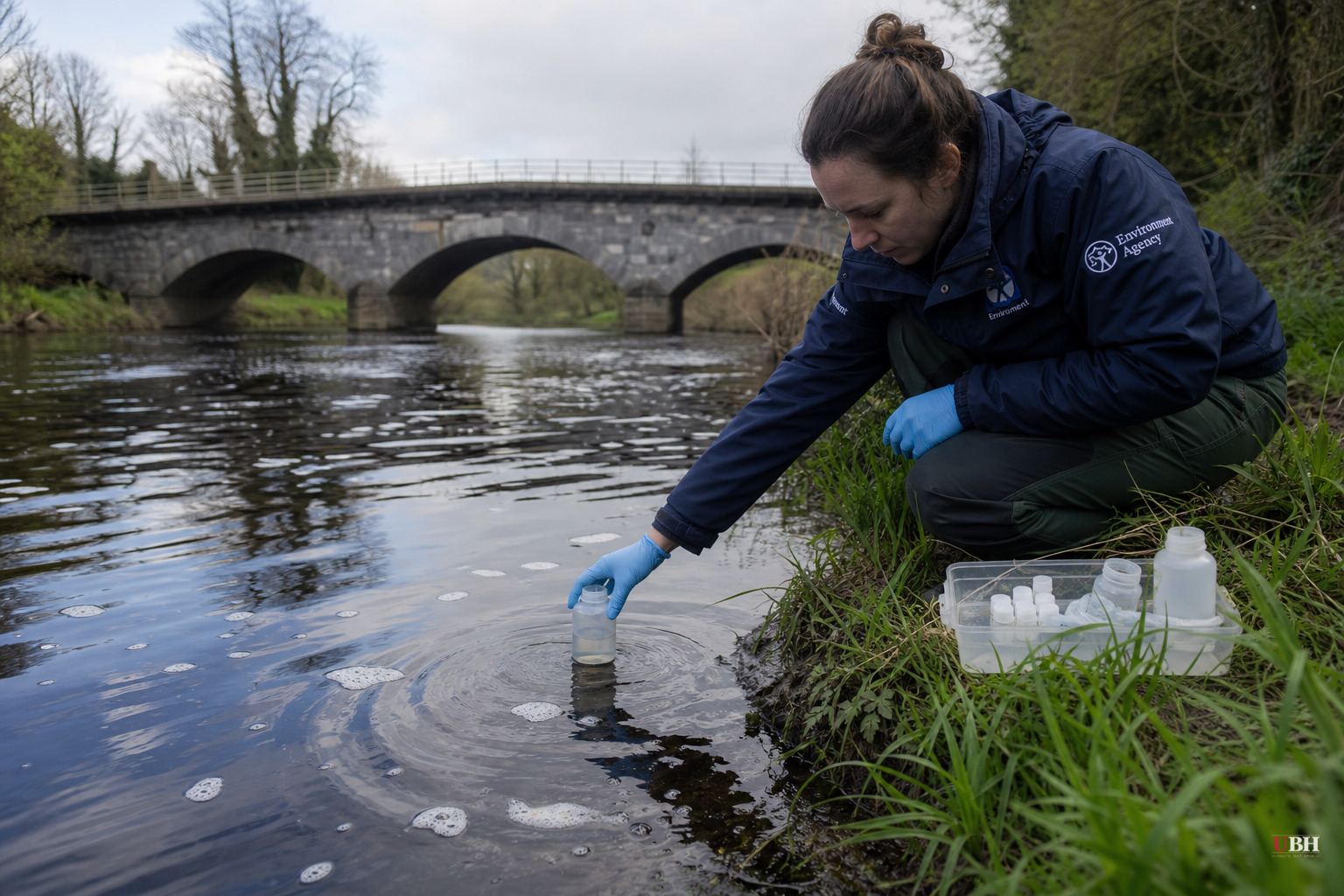
England's rivers, lakes and coastal waters are failing basic chemical safety tests. Not one. Zero out of every water body assessed passed the Environment Agency's chemical pollution standard, according to the agency's first comprehensive health assessment in six years, reported by the BBC.
On ecological health, the numbers aren't much better. Only about 15% of rivers and fewer than 7% of lakes are classified as being in "good" condition. Despite years of political promises and a record £22 billion earmarked for water company environmental upgrades through 2030, the overall picture has changed little since 2019 — though the Environment Agency notes that this year's data can't be directly compared to 2019 because it changed its assessment methods, and part of the steep drop in lakes rated "good" reflects that methodological shift rather than a genuine decline.
The single biggest driver of poor river health is phosphate pollution, mostly from sewage discharge and farm runoff. Around half of England's rivers still exceed safe phosphate levels, per the Environment Agency's data.
The chemical failure is a separate problem. The agency says legacy contaminants like heavy metals and so-called "forever chemicals," PFAS, are building up in waterways. These substances don't break down. They just accumulate.
A Regulator Admitting Its Own Failure
This isn't a hostile outside group making the claim. It's the Environment Agency itself, the government body responsible for enforcing water quality, saying the country's waterways are "below standards" — a description its chair, Alan Lovell, has acknowledged, while adding that the agency is "transforming" its enforcement work with its largest ever workforce.
The Office for Environmental Protection, an independent watchdog, is now investigating both the government and the Environment Agency for possible rule breaches. The watchdog has already warned that England will miss its legally binding target of restoring 77% of waters to good ecological status by 2027, and will miss it by what it called a "considerable margin."
That's a government-set legal target, not an activist wish list, and the government's own watchdog says it's going to be blown through badly.
Money Spent, Results Flat
Environment Secretary Angela Eagle said the figures "underline the need for wholesale change across the water sector." She pointed to new laws the government has introduced to hold water companies to account, and to record investment, saying: "We will drive forward a system that puts the public interest first."
Water UK, the trade body representing water companies, pushed back on the idea that nothing is happening, telling the BBC that companies are investing £22 billion in environmental improvements by 2030 to "secure our water supplies, support economic growth and end sewage entering our rivers and seas."
That's a fair point worth taking seriously. £22 billion is real money, and infrastructure fixes, sewer overflow upgrades, treatment plant modernization, take years to build and years more to show up in water quality data. Judging a six-year, multi-billion-pound infrastructure program on a snapshot taken mid-cycle risks unfairly pinning today's numbers on money that hasn't finished being spent yet.
But that defense only goes so far. The Environment Agency's report shows the overall picture has changed little since 2019, meaning whatever spending happened in the intervening years hasn't clearly moved the needle on the metrics that matter. There are currently 23 enforcement notices against water companies specifically requiring them to lower PFAS levels to reduce the danger to human health, according to the agency — a sign the industry is still working through existing obligations even before the new £22 billion promise is fully spent. Water UK has separately called for PFAS to be banned outright to limit their build-up and reduce water treatment costs, though the chemicals remain in wide use, from school uniforms to medical devices.
Regulation Hasn't Caught Up to New Chemicals
Beyond sewage and farm runoff, the report flags petrol, garden pesticides, and road runoff carrying microplastics and chemicals as contributors to water pollution. But the more structural problem, according to Professor Penny Johnes, a water quality scientist at the University of Bristol, is a "failure to regulate effectively" the new chemicals entering rivers.
Johnes told the BBC that PFAS and antibiotics, among other substances, are "not routinely monitored." She said the classification scheme itself is "not fit for purpose," measuring too few pollutants too infrequently and missing nitrogen and other substances long understood to be driving rivers' decline. Asked directly whether England's waters are healthier than six or seven years ago, she said: "No, definitely not."
This reveals an accountability gap. The regulator's own findings and the watchdog's investigation are on the record, but the question remains: why is an agency responsible for enforcement also the one grading its own homework and coming up short? When the referee admits the game is broken, the next question is who checks the referee.
The Office for Environmental Protection's investigation into the government and the Environment Agency is ongoing, with no findings or conclusions issued as of now. Whether that probe results in binding consequences, or another report acknowledging failure with no teeth behind it, is the open question hanging over England's water system heading into 2027.
Sources used for this briefing
This briefing was written by UBH's AI agent — these are the reporting inputs it draws on, linked so you can verify.


