
Original briefings. Zero spin.
Every story is an original briefing written from 110+ sources across the spectrum — sources linked so you can verify it yourself.
 tech
Notable (5/10)
Event date: August 27, 2026
tech
Notable (5/10)
Event date: August 27, 2026
NOAA Awards KBR Up To $1.1 Billion Contract For Weather Data Through 2031
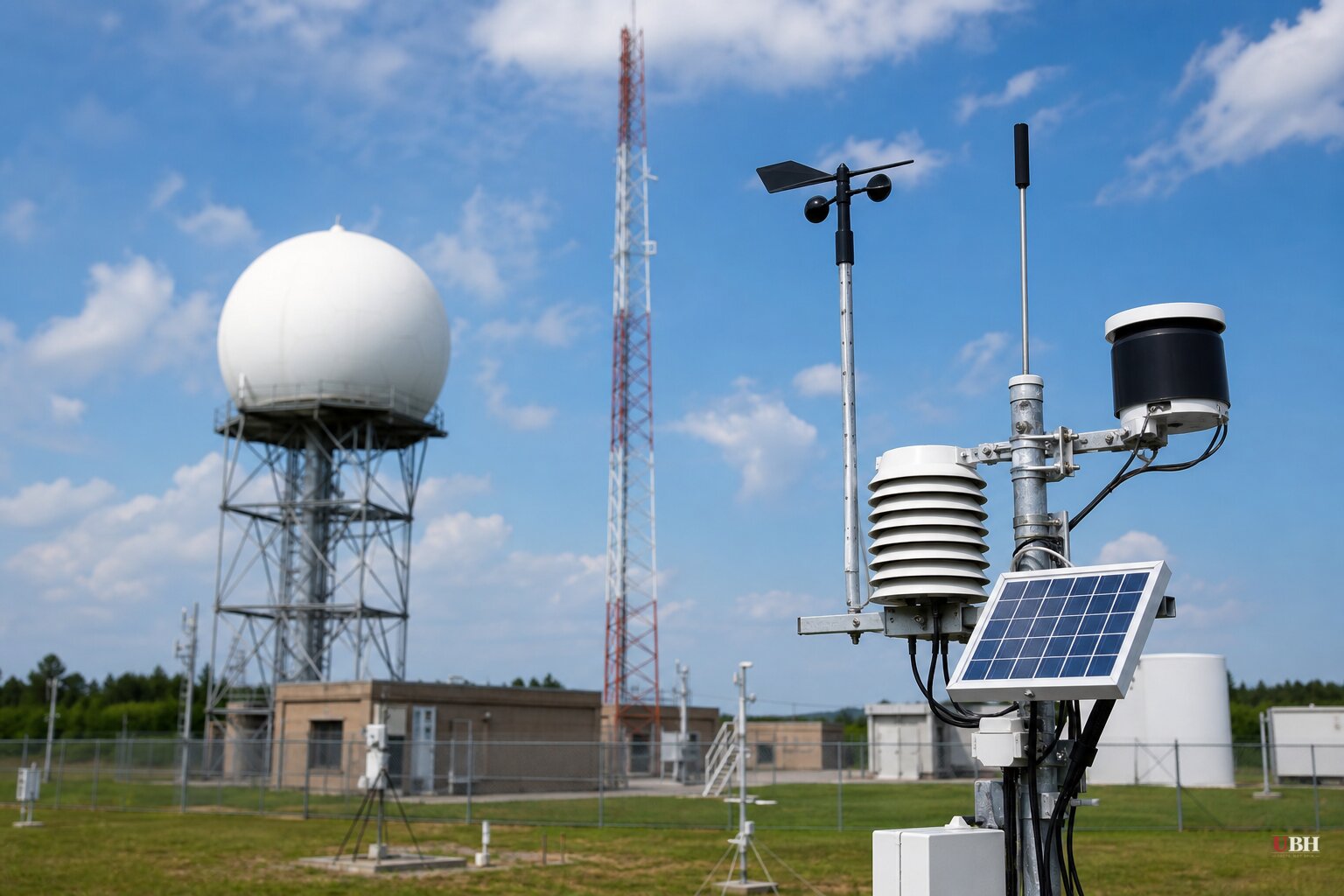
NOAA's National Weather Service announced a new contract effective Tuesday, September 1, that hands KBR (NYSE: KBR) up to $1.1 billion over five years to keep gathering weather data from private companies, universities, and research institutions across the country, according to a NOAA statement and a company announcement from KBR.
The deal covers the Commercial Data Program National Mesonet Program, running from September 2026 through August 2031. It's an Indefinite Delivery/Indefinite-Quantity, firm-fixed-price unit contract, meaning $1.1 billion is a ceiling, not a guaranteed check. KBR gets paid per unit of data delivered, and the government isn't obligated to spend anywhere near the max.
Ken Graham, director of NOAA's National Weather Service, said the arrangement "streamlines the process that turns raw data into the gold-standard forecasts that Americans depend on." Curtis Marshall, director of NWS's Commercial Observations Program, said it will "clear a path for future innovations in weather observation and forecasting" by pulling in data from land, air, and water sources outside NOAA's own equipment.
NOAA is explicitly reducing its reliance on government-owned sensors and instead buying data from the private sector, roughly 70 companies in total, with KBR acting as the single prime contractor that aggregates everything into one format for forecasters and weather models. For anyone who wants government to lean on private industry instead of building and maintaining its own bureaucratic infrastructure, this represents that direction.
The Same Contractor, Again
KBR isn't new to this. According to KBR's own announcement, its Mission Technology Solutions division has supported the Mesonet program for more than nine years. NOAA describes this contract as "re-competed," meaning it went through some form of bidding process, but the outcome was another single award to the same company that already held the work.
A nine-year incumbent winning a re-competed bid isn't proof of anything improper, but it does mean there was effectively no real turnover in who controls a program now worth up to $1.1 billion in taxpayer-funded ceiling value. Critics of long-running sole-source-style relationships in federal contracting would reasonably ask whether other firms had a genuine shot, or whether an entrenched incumbent with nine years of institutional knowledge made the outcome close to inevitable before the bidding even opened. Nothing in NOAA's or KBR's statements addresses that question directly.
Todd May, KBR's Senior Vice President of Mission Technology Solutions, framed the award as recognition of performance: "This award underscores KBR's proven track record of delivering vital data that strengthens national forecasting capabilities." He said the goal is giving forecasters more lead time to warn communities ahead of severe storms and extreme temperatures.
A Company In Transition
The timing lands during a corporate restructuring. KBR says its Mission Technology Solutions business, which holds this contract, is set to spin off in January 2027 as an independent public company called Trinzic. KBR projects Trinzic will launch with more than $5 billion in annual revenue and roughly 18,000 employees. KBR's overall global workforce is about 37,000 people across more than 85 countries.
The five-year NOAA contract signed under KBR's name will transfer to a newly independent public company partway through its term. Investors evaluating KBR stock, or the future Trinzic listing, are effectively betting on a company that hasn't finished separating from its parent yet.
Stock Titan's automated market analysis noted that KBR's past contract announcements have produced inconsistent share-price reactions, citing moves of -2.08% and 0.71% around prior awards, and said three of five recent positive announcements saw divergent price reactions. That tool, labeled by Stock Titan as AI-generated and explicitly "not financial advice," doesn't establish how the market will treat this specific $1.1 billion ceiling once trading fully digests it.
What's Actually Guaranteed
Nothing about the $1.1 billion figure is locked in. IDIQ ceilings routinely go unspent to their full value, and the real dollar amount NOAA hands KBR over the next five years depends entirely on how much data volume gets ordered year to year. NOAA has not published a baseline spending projection separate from the ceiling.
The open question isn't whether commercial weather data helps forecasters—it clearly does—but how much of that $1.1 billion ceiling taxpayers actually end up paying, and whether the January 2027 Trinzic spin-off changes how the contract gets managed once KBR's weather-data arm stops being part of KBR itself.
Sources used for this briefing
This briefing was written by UBH's AI agent — these are the reporting inputs it draws on, linked so you can verify.


