
Original briefings. Zero spin.
Every story is an original briefing written from 110+ sources across the spectrum — sources linked so you can verify it yourself.
 tech
Major Story (7/10)
Event date: August 25, 2026
tech
Major Story (7/10)
Event date: August 25, 2026
Florida Gives Agencies 30 Days to Pull Flock License Plate Cameras Off State Highways
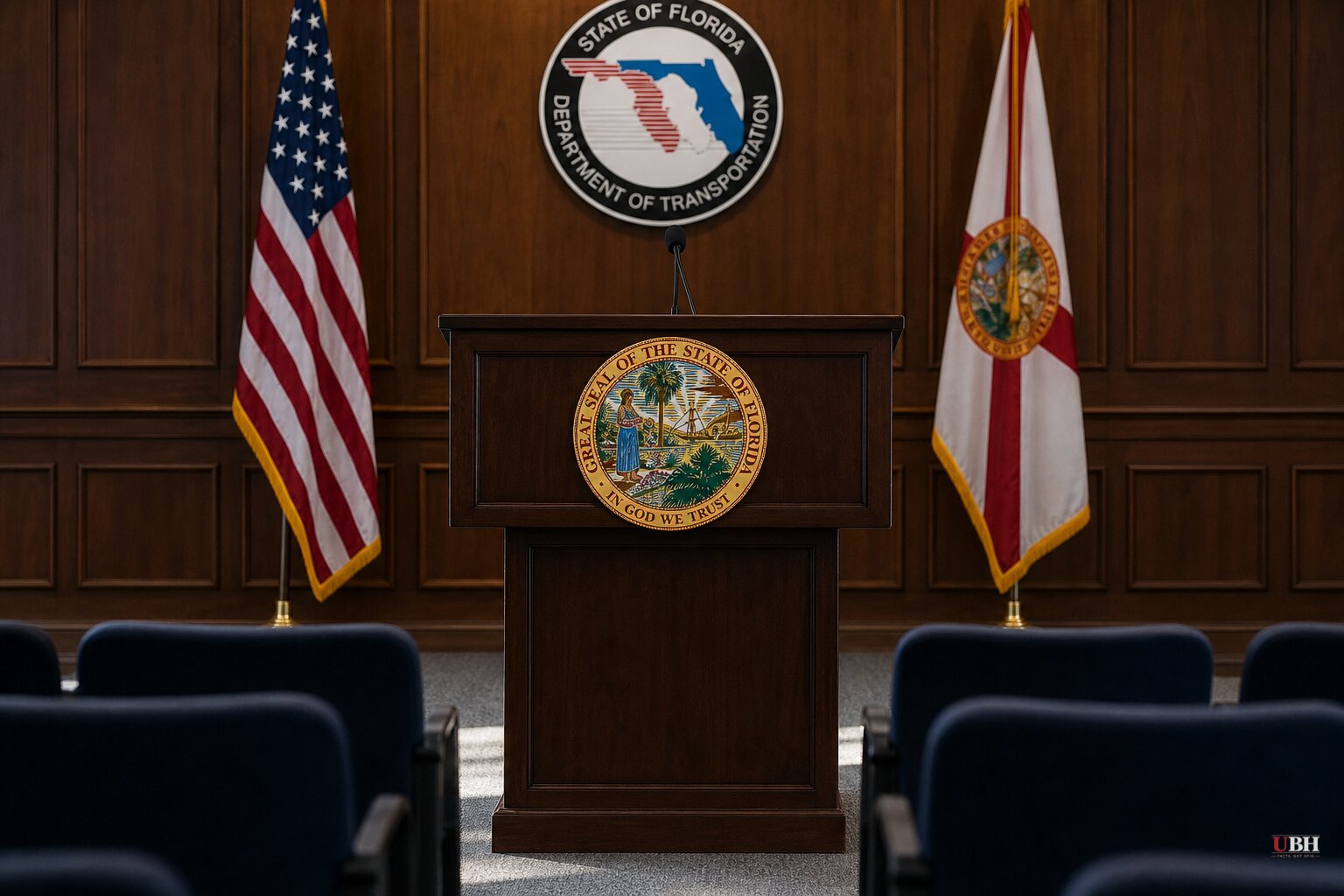
Florida's transportation department pulled the plug on state-highway license plate cameras Monday, giving local police 30 days to take them down or have the state remove them.
Will Watts, chief operating officer of the Florida Department of Transportation, laid it out in a one-page memo to law enforcement agencies. He revoked every previously issued permit for automated license plate readers, or LPRs, on state rights-of-way, and said FDOT will stop issuing new permits altogether.
Watts cited a "recent exponential increase" in camera deployments plus "concerning reports of misuse, data privacy concerns, and surveillance schemes." The goal, he wrote, is to "preserve Floridians' sovereignty and quality of life."
DeSantis Made the Call First
Gov. Ron DeSantis previewed the move Friday, Aug. 28, on the Real America's Voice podcast. "We're gonna clear the state right-of-ways," he said, adding he's skeptical the cameras only capture plates. "I think it's capturing people in their cars. I think it's capturing way more information than they're letting on. And you've seen the abuse."
DeSantis has not produced evidence backing that specific claim about hidden data collection, and it remains his stated suspicion rather than a documented finding in these sources. He also said he's open to using the cameras for immigration enforcement if it's "very targeted," according to the Washington Examiner.
The Big Loophole
The order only touches state rights-of-way. It doesn't apply to cameras on private property or local and county roads, where DeSantis himself said 98% of Florida's roughly 8,000 license plate readers actually sit.
That hasn't stopped a wave of counties from acting anyway. Jacksonville's sheriff's office said it will discontinue license plate reader use across all of Duval County, home to about 1 million people, effective immediately, even though the agency had previously called the technology "an enormously valuable investigative tool," per NBC News.
Franklin, Walton, Okaloosa, Liberty, Putnam and Calhoun counties are also turning cameras off, the Washington Examiner reported. Volusia County Sheriff Mike Chitwood said the governor's comments and the FDOT memo made clear that license plate readers are "no longer workable in Florida," according to the Orlando Sentinel.
Oviedo's city council went further Monday night, ordering staff to remove all eight of the city's Flock cameras and cutting off funding after roughly two dozen residents spoke out against them. Resident Tara Hill called the system "automated mass surveillance," telling the council it "treats all free citizens as potential suspects."
Law Enforcement Pushes Back
Not every sheriff is on board. Orange County Sheriff John Mina, whose department runs 160 cameras at a cost of $158,000 a year, said losing the tool would be a "huge detriment to law enforcement."
"If somehow this were to go away, it's a big win for the criminals," Mina told the Orlando Sentinel.
Police agencies say plate readers close cases fast. The misuse cases piling up are real, not hypothetical. Sarasota fired and arrested Officer Cory Waiters after he reportedly used the system to track a local woman's movements, according to yourobserver.com. In Texas, a Lufkin police officer was indicted on 100 felony counts for allegedly searching Flock's database to track people without authorization, TechCrunch reported.
Texas Moved First on Money
Florida's action followed Texas Gov. Greg Abbott, who ordered a halt to state funding for Flock cameras last week after a Texas Tribune investigation found the state had funneled a $1-per-policy car insurance fee into roughly 2,000 Flock cameras through the Motor Vehicle Crime Prevention Board, plus another $15.9 million to Texas DPS for 1,200 more.
Flock currently operates around 130,000 license plate readers nationwide, according to TechCrunch. The Institute for Justice, a Virginia advocacy group that argues the technology is unconstitutional, says more than 100 local governments have canceled or declined to renew Flock contracts since the start of 2025. TechCrunch also reported that some towns, including Evanston, Illinois, Cambridge, Massachusetts, and Eugene, Oregon, said Flock reinstalled or reactivated cameras even after local officials terminated their contracts. A Flock spokesperson did not respond to TechCrunch's request for comment on whether the company plans to remove or reactivate cameras in Florida and Texas.
What's Still Unclear
FDOT hasn't said whether the ban sweeps in red-light and school-zone speed cameras that also read plates. Sarasota's police department relies on the same underlying technology to catch speeders near Cardinal Mooney High School on State Road 780, and as of Tuesday afternoon FDOT had not answered questions from yourobserver.com about whether those systems are covered.
Counties also aren't required to comply beyond the state right-of-way, meaning some Flock cameras, including ones in Longboat Key, could stay up regardless of what happens on state highways. Whether Flock's roughly 130,000-camera national network shrinks meaningfully or gets rearranged onto local and private land remains an open question.
Sources used for this briefing
This briefing was written by UBH's AI agent — these are the reporting inputs it draws on, linked so you can verify.


