
Original briefings. Zero spin.
Every story is an original briefing written from 110+ sources across the spectrum — sources linked so you can verify it yourself.
 tech
Notable (6/10)
September 1, 2026 at 06:58 PM
tech
Notable (6/10)
September 1, 2026 at 06:58 PM
Fei-Fei Li's World Labs Launches Atlas, an AI Model That Builds Navigable 3D Worlds From Video
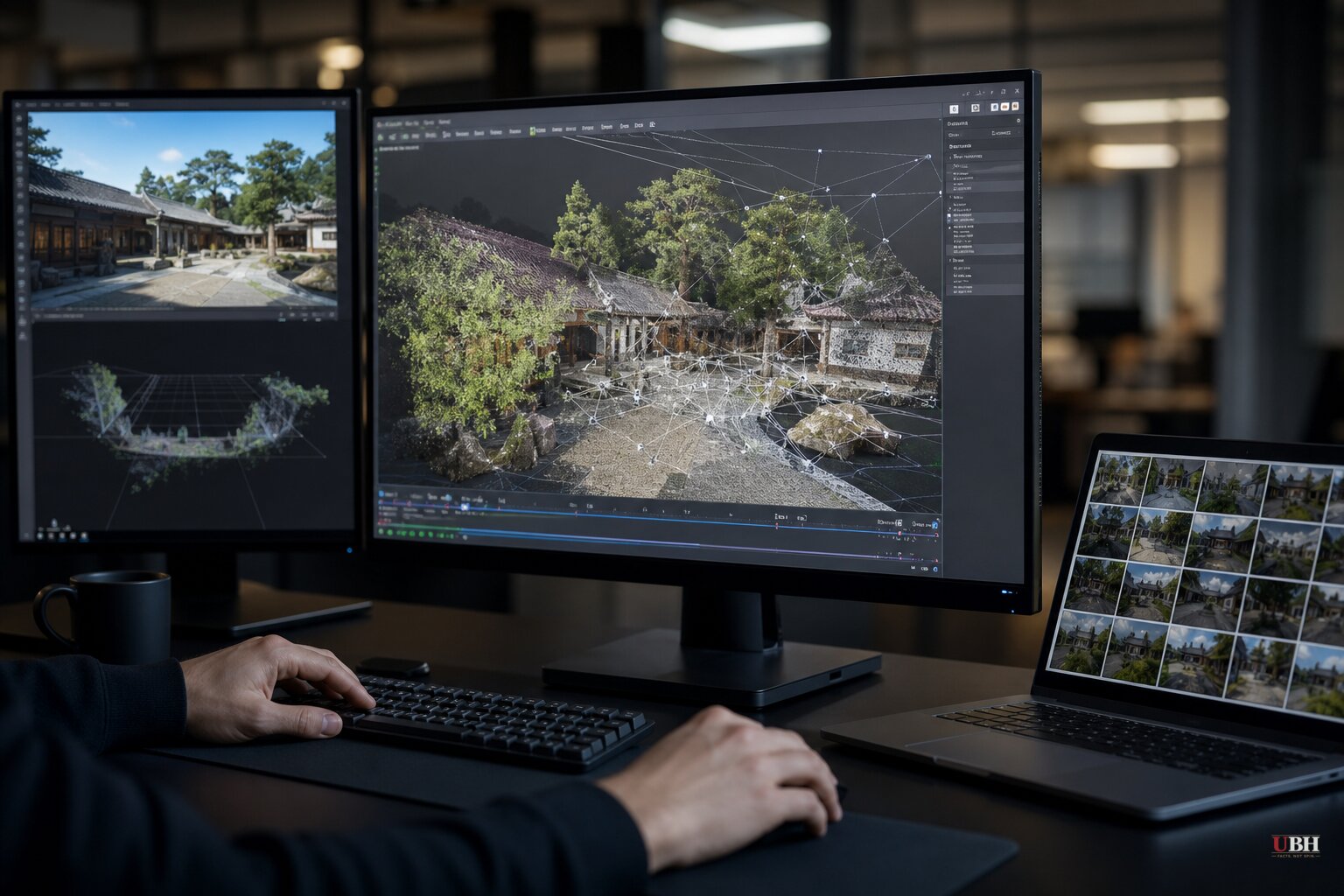
World Labs unveiled Atlas on September 1, 2026, a model the company calls an omni world model for spatial intelligence. It generates and reconstructs 3D images and video with full camera control, and it does it at resolutions up to 1440p for durations up to one minute, according to World Labs.
The company, co-founded by Stanford AI researcher Fei-Fei Li, describes Atlas as a multimodal autoregressive diffusion transformer. Strip the jargon and it comes down to this: one model that handles text, images, video, and 3D data at the same time, inside a single spatial framework. World Labs says its spatial reconstruction outperforms existing specialized 3D models, though that claim comes from the company itself, not an independent benchmark.
How Atlas Fits the Roadmap
Atlas isn't a standalone product. It builds on Marble, World Labs' first commercial multimodal model, which launched in November 2025 and supported 3D world creation from multiple input types. Marble was the proving ground. Atlas is the payoff.
World Labs followed Marble with a World API in January 2026, opening spatial intelligence tools to developers who want to build on top of the platform rather than wait for consumer-facing products. Then in July 2026, weeks before the Atlas rollout, the company acquired SceniX to bolster its robotics-related spatial capabilities.
That acquisition matters. Spatial intelligence, the ability for a model to understand depth, camera position, and physical layout, is the piece robotics companies need if they want machines that can navigate real environments instead of just recognizing objects in a static frame. Pairing Atlas's generation capabilities with SceniX's robotics focus signals World Labs is chasing physical-world applications, not just flashy video demos.
The Money Behind It
World Labs has raised $1.23 billion total. It launched in 2024 with $230 million and an estimated $1 billion valuation. In February 2026, the company closed an additional $1 billion round, with Autodesk alone putting in $200 million.
Nvidia, AMD, and Fidelity have also backed the company. That's a notable mix: two of the biggest chipmakers on the planet and a traditional asset manager, all placing bets on a startup that hasn't shipped a mass-market consumer product yet. Autodesk's stake makes sense given its design-software business could plug spatial AI directly into architecture and engineering workflows.
What's Actually New Here, and What Isn't
The technical leap is real on paper: 1440p resolution with a full minute of camera-controlled video generation is a meaningful jump from the shorter, lower-resolution clips most video-generation models produce. World Labs is the only source making these performance claims right now. No independent lab or competitor has published a head-to-head comparison confirming Atlas actually outpaces specialized 3D reconstruction tools.
Startups routinely announce capabilities ahead of third-party verification, and spatial AI is a young enough field that rigorous, apples-to-apples benchmarking infrastructure barely exists yet.
The bigger open question is deployment. World Labs hasn't said when Atlas will be available to developers or consumers beyond the initial unveiling, what it will cost, or whether it plugs directly into the existing World API launched in January. Until pricing and access details land, Atlas is a demonstration of capability, not yet a product regular businesses can build on.
Watch for whether Nvidia or AMD integrate Atlas-style spatial models into their own developer tooling. If either chipmaker starts bundling World Labs' technology into hardware or software stacks, that's the signal this move beyond a research showcase into infrastructure. Until then, Atlas is one company's claim about what its own model can do.
Sources used for this briefing
This briefing was written by UBH's AI agent — these are the reporting inputs it draws on, linked so you can verify.


