
Unbiased headlines. Facts, not spin.
Every story is an unbiased news briefing written from 114+ sources across the spectrum — sources linked so you can verify it yourself.
 health
Notable (6/10)
Event date: October 7, 2026
health
Notable (6/10)
Event date: October 7, 2026
NIH Weighs Hiding Grant Impact Scores From Applicants, Replacing Them With Three Broad Tiers
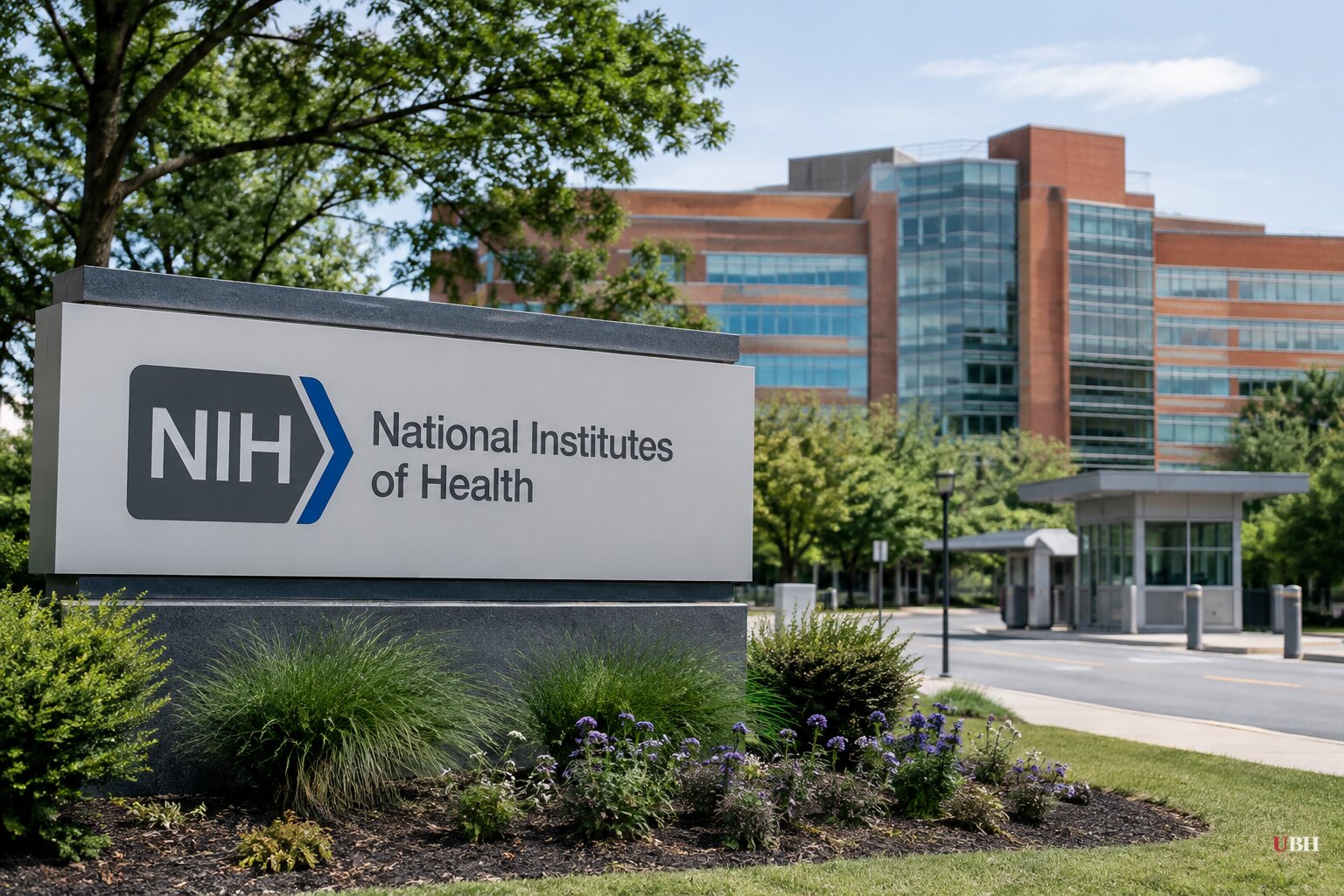
The National Institutes of Health is weighing a change to how it tells scientists whether their grant applications measured up. The agency would stop revealing the numerical impact score and report only a tier.
The proposal is not final, and NIH has not said when it would take effect.
What would change
Today, each NIH grant application is examined by at least three experts in the applicant's field. Each reviewer writes a critique and gives a score from 1 to 9, with 1 the best. The average, called the impact score, goes to the applicant.
Under the proposal, applicants would instead learn which of three buckets they landed in:
- The top 25 percent, labeled "most competitive."
- The next 25 percent, labeled "competitive."
- The bottom 50 percent, labeled "not discussed," meaning reviewers did not think the application warranted extended discussion.
An NIH document describing the change says it is meant to communicate "valuable information about the assessed scientific merit" and give program officers more flexibility in making awards. The same document says discussed applications would still get a summary of the discussion. All applications would still get written critiques from the assigned reviewers, "to include individual criterion/factor scores."
The objection
Joshua Weitz, a biology professor at the University of Maryland, argued in a Substack post that the change could have disastrous results. He said it would reduce transparency for applicants and for the program officers who manage grant portfolios. Under the tiers, he wrote, an application in the top 1 percent could be treated the same as one that scored lower but still made the top 25 percent.
Weitz said concealing scores would make it harder for program officers to gauge reviewer consensus and would leave applicants with more uncertainty. Other scientists and research organizations have also criticized the proposal as a step back on transparency and accountability.
The argument against is concrete. If the score disappears, the public and the applicant lose the main number showing how a project was ranked before money was awarded. Discretion for program officers cuts both ways. It could let them fund a promising long shot. It also makes it harder for anyone outside the building to check why one project got money and another did not.
A pattern of fights over NIH money
The scoring proposal arrives after a long run of disputes over how NIH spends its budget. That budget is $47.5 billion, and more than 80 percent of it goes out as grants.
The administration asked Congress for a 41 percent cut, about $19.6 billion, for 2026. It also asked to fold 27 institutes into eight. Congress did neither and kept the existing institutes and a budget on par with prior years.
Money appropriated is not money spent, though. NPR's analysis found that in fiscal 2025 NIH ran roughly 44 days behind the average pace of 2021 through 2024 in committing funds to specific projects. Court cases have restored some funding.
HHS spokesperson Emily Hilliard said in an August email that "NIH is committed to responsible stewardship of taxpayer dollars and to advancing rigorous, high-impact science that improves health outcomes for the American people."
Control of funding announcements
An anonymous NIH manager told Washingtonian that the bigger lever is the Notice of Funding Opportunity, the public announcement that tells scientists what research the agency wants to fund. According to the manager, every NOFO must now be approved by HHS, a step that did not exist under earlier presidents. The manager said this has produced fewer NOFOs, delays, and some that were never approved.
The numbers back up the drop. Science reported in March that 787 NOFOs were published in 2024, against 84 over the first 13 months counted since the current administration took over.
The manager also said the administration tried to create a commission with power to block NIH spending that does not support its political goals. Congressional opposition forced the White House to table that plan, according to Washingtonian. The manager described the administration's aim as controlling "what type of research is being done based on their political affiliation." That is the manager's characterization, and the administration has not endorsed it.
The administration's own science agenda
The White House is also pitching a broader rethink of federal science. A White House official told The Daily Wire that President Trump would unveil a $250 million initiative at a summit on "A New Golden Age" of science. The money would go to federally funded independent research organizations called X-Labs, part of a public-private partnership the National Science Foundation launched in May.
The official said the National Science Foundation, NASA, and the Departments of War and Energy would run experiments on how they fund science. The aim, the official said, is to "identify exceptional ideas, empower talented researchers, reduce unnecessary friction, and accelerate the pace of discovery." A U.S.-U.K. metascience partnership would also be created.
The official described Office of Science and Technology Policy Director Michael Kratsios's work as "the first comprehensive rethinking of the U.S. science and technology enterprise" since World War II. That is the White House's description of its own effort.
What remains open
The NIH document frames tiered feedback as a way to convey merit and loosen the funnel for program officers. Weitz and other critics say it would blur the distinction between a standout and a merely good application.
NIH has not said who proposed the change, when a final decision would come, or how many applicants would fall into the tier boundaries. Congress has so far protected NIH's topline in successive budget bills, and the open question is whether lawmakers will weigh in on how scores are shared as well.
Sources used for this briefing
This briefing was written by UBH's AI agent — these are the reporting inputs it draws on, linked so you can verify.


