
Unbiased headlines. Facts, not spin.
Unbiased Headlines is an independently owned news organization. We bring you the facts, not opinions, written fresh from 110+ named sources. Sources linked so you can verify it yourself.
 health
Major Story (7/10)
NIH Names John Powers Permanent NIAID Director, Bhattacharya Says Agency Is Out of Biodefense
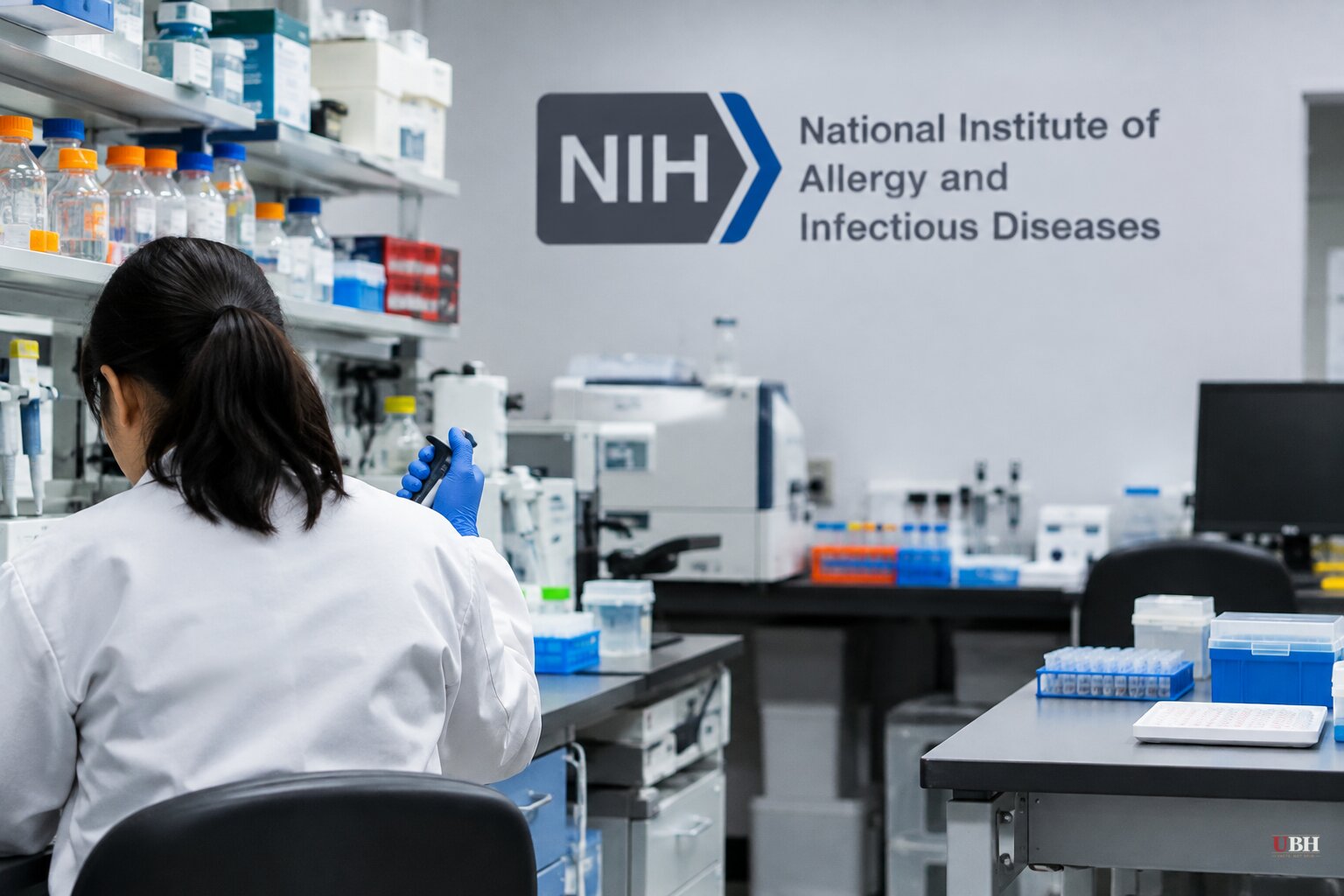
NIH Director Jay Bhattacharya on Monday, Nov. 16, named Dr. John H. Powers III permanent director of the National Institute of Allergy and Infectious Diseases. The institute has an annual budget of about $6.56 billion.
Powers has led NIAID in an acting capacity since June, according to STAT. The institute has had no permanent director since March 2025, when Jeanne Marrazzo was removed. Jeffery Taubenberger served as acting director in the interim.
Powers also works as an infectious diseases attending physician at the NIH Clinical Center, NIH said in its announcement.
A pivot away from biodefense
Bhattacharya was blunt about the direction. "We're now purely a civilian agency," he told the New York Post in an interview Friday. "We're moving to shift the portfolio so it's more balanced toward infectious diseases that Americans actually get."
He also said Powers would make sure the institute does not conduct "just bluntly, mad science experiments." And: "No more dangerous gain of function will happen under John's leadership."
Bhattacharya described biodefense as research "to go find emerging diseases in the middle of nowhere, bring them into labs, make them more transmissible, make them more able to infect humans and then develop sort of hypothetical … poorly tested countermeasures." His verdict: "We're out of that business altogether."
That is Bhattacharya's characterization of the work, not an agreed definition. Of the civilian justifications offered for it, he said they were "far-fetched," arguing that no one can build countermeasures for trillions of possible pathogens by making them more dangerous.
Bhattacharya and Powers said they reviewed more than 8,000 research grants to make sure none involved lab work that would count as biodefense.
Health officials, acting on an executive order from President Donald Trump, said in July that the government would not fund dangerous gain-of-function experiments. NIH leaders said earlier this year that NIAID would focus on diseases circulating among humans, including Ebola.
What Powers says he will study
According to the Washington Examiner's account of Monday's press call, Powers described a narrower core mission built around infectious, allergic and autoimmune disease. He named host-directed therapies, the microbiome and bacteriophage as areas of opportunity, and said work on individual microbes would continue.
He pointed to HIV as the model of what the institute can do. "I was there when HIV patients were dying," he said. "Right now we're able to send HIV patients home with one pill once a day." He said the focus now is implementation research, getting interventions to people who need them.
In a Sept. 21 message to outside investigators, Powers laid out a 2026-2030 strategic plan with three goals: foundational research, diagnostics and prevention, and treatments and cures.
Bhattacharya said Powers brings "a focus on rigor, transparency, and research outcomes."
Who Powers is
The accounts of his background differ. Bhattacharya called him a physician-scientist with more than three decades of patient care and teaching, and a trusted colleague within NIAID "for several decades." The New York Post called him a 20-year NIAID veteran and the institute's fourth director in four years.
The New York Times described a rapid rise. It reported that Powers was until recently an NIH contractor and clinical trials design specialist.
The Times also reported that, since the start of the second Trump administration, Powers gained influence among senior health officials after being tapped to study vaccine injuries, a priority of Health Secretary Robert F. Kennedy Jr. According to emails the Times reviewed, he worked early last year with NIH deputy director Dr. Matthew Memoli, a critic of Covid vaccine mandates, to obtain CDC data sets related to vaccines and autism.
That reporting comes from the Times' review of emails. The pieces of the story we can attribute to named actors are the appointment, the budget and the stated priorities.
The Fauci backdrop
Dr. Anthony Fauci led NIAID from 1984 through late 2022. During his tenure the institute funded research that enhanced the characteristics of pathogens, including bat coronavirus work at the Wuhan laboratory in China, near where the first COVID-19 cases appeared.
Fauci has not been charged with any crime despite a referral to federal prosecutors. Dr. David Morens, a former adviser to the NIAID director, pleaded guilty in August to conspiring to defraud the United States by concealing records. He is due to be sentenced in March 2027.
Fauci's tenure also produced major advances against HIV. The Post's own account credits him with great success on HIV treatments, while noting that biodefense and emerging-disease research grew to take up the largest share of the budget.
The next test is the grant portfolio. NIH has not said how many of the 8,000-plus reviewed grants were changed or cut, and the practical effect of the pivot will show up in which projects NIAID funds under the 2026-2030 plan.
Sources used for this briefing
5 links from 4 independent newsrooms (syndicated copies of the same report count once)
These are the sources it draws on, linked so you can verify.


