
Unbiased headlines. Facts, not spin.
Unbiased Headlines is an independently owned news organization. We bring you the facts, not opinions, written fresh from 110+ named sources. Sources linked so you can verify it yourself.
 health
Notable (6/10)
FDA Approves Roche's Gazyva as First Drug for Primary Membranous Nephropathy
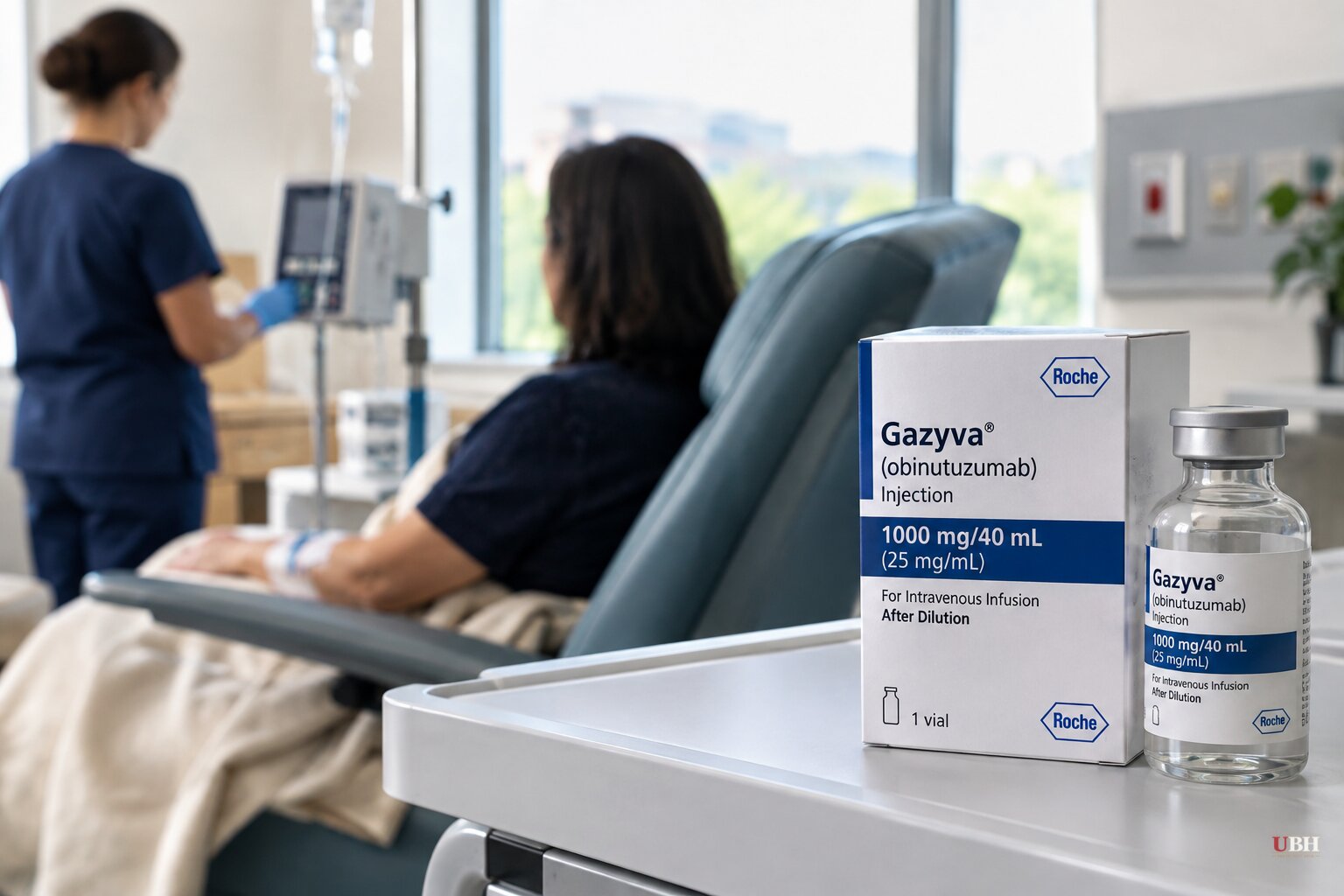
The FDA approved Genentech's Gazyva (obinutuzumab) on Friday, Nov. 13, for adults with primary membranous nephropathy who are at risk of disease progression. It is the first drug approved specifically for the condition. Roche, Genentech's parent, announced the approval publicly today, Nov. 16.
The label covers inducing remission of proteinuria, the leak of protein into urine that signals kidney damage. The application had breakthrough therapy, orphan drug and priority review designations.
What the trial showed
Approval rests on MAJESTY, a phase 3 trial that randomly assigned 142 adults 1:1 to intravenous Gazyva or oral tacrolimus. The primary endpoint was complete remission at week 104.
The numbers: 26 of 71 patients on Gazyva reached complete remission, versus 4 of 70 on tacrolimus. The reported rates were 36.1% versus 5.7%, an adjusted difference of 31.1 percentage points (95% confidence interval 18.2 to 44.0, p<.001).
Complete remission required a urine protein-to-creatinine ratio of 0.3 g/g or lower, a stable estimated glomerular filtration rate, and no rescue therapy, treatment failure or early discontinuation.
Overall remission, complete or partial, hit 50% on Gazyva versus 12.9% on tacrolimus. At week 76, complete remission was 36.1% versus 8.6%.
The results were a late-breaking presentation at the European Renal Association Congress in June 2026 and were published in the New England Journal of Medicine.
The disease
Primary membranous nephropathy happens when the immune system attacks the glomeruli, the kidneys' filtering units. Patients can develop swelling, fatigue, high cholesterol, high blood pressure and kidney failure, the FDA said.
Roche estimates the U.S. incidence at 1.2 per 100,000 people per year. The company says up to 30% of untreated patients progress to kidney failure within 10 years.
Until now, doctors have relied on off-label treatment: drugs that block the renin-angiotensin-aldosterone system, immunosuppressants, glucocorticoids, cytotoxic drugs, and calcineurin inhibitors such as tacrolimus. Rituximab, an older anti-CD20 antibody, has also shown benefit.
"The first FDA approval of a treatment specifically for this condition is a milestone, finally giving patients and clinicians more treatment options," said Marc Hurlbert, CEO of the National Kidney Foundation.
Levi Garraway, Roche's chief medical officer, said targeting B cells "addresses a critical underlying driver of disease."
The limits of the data
MAJESTY was open-label, so patients and investigators knew who received which drug. The comparator was tacrolimus. The trial was not a head-to-head against rituximab.
On kidney function, the picture is less clear. The trial did not show a significant difference in sustained reductions of 30% or more in eGFR. Under the trial's hierarchical testing plan, that halted formal testing of later endpoints, including durability of remission and patient-reported fatigue, according to a clinical review in Pharmacy Times.
Genentech has not reported whether Gazyva reduced the number of patients who developed kidney failure during the study.
Safety is the other trade-off. The most common side effects were infusion-related reactions (38%) and upper respiratory tract infections (14%). Roche says no new safety signals appeared.
The label still carries boxed warnings for hepatitis B reactivation and progressive multifocal leukoencephalopathy, a rare and potentially fatal brain infection. It also warns of serious infections, neutropenia, thrombocytopenia and embryo-fetal toxicity. Live-virus vaccines should be avoided during treatment.
A different FDA call on the same weekend
The FDA also turned down a drug this week. On Nov. 15, Summit Therapeutics said the agency issued a response letter saying its application for ivonescimab, a lung cancer drug developed by China's Akeso, could not be approved in its current form.
The HARMONi trial of 438 patients with EGFR-mutated lung cancer found a median progression-free survival of 6.8 months with ivonescimab plus chemotherapy versus 4.4 months with chemotherapy alone. Median overall survival was 16.8 months versus 14 months, a gap that did not meet the trial's statistical threshold.
Summit disclosed on Nov. 4 that the FDA required a statistically significant overall survival improvement in this setting.
The two decisions involved different diseases and different endpoints. Gazyva was approved on remission of proteinuria. Ivonescimab was held to survival.
The agency's direction is also a live political topic. Heidi Overton, President Trump's nominee for FDA commissioner, told senators at her Sept. 24 confirmation hearing that "slow and prohibitive requirements for cutting edge therapies at the FDA means investment is increasingly flowing to China." She pledged to use "all of the statutory authority we can" to speed treatments for rare diseases.
What comes next
Gazyva is now cleared for three immune-mediated kidney diseases: primary membranous nephropathy, childhood-onset idiopathic nephrotic syndrome and active lupus nephritis. It is also approved for chronic lymphocytic leukemia and follicular lymphoma.
The FDA is due to decide by Dec. 4 on systemic lupus erythematosus, which would be a fourth immune indication. Roche is also submitting MAJESTY data to other regulators, including the European Medicines Agency.
Whether Gazyva's remission advantage translates into fewer kidney failures over time is the question the MAJESTY results have not yet answered.
Sources used for this briefing
7 links from 7 independent newsrooms (syndicated copies of the same report count once)
These are the sources it draws on, linked so you can verify.


