
Unbiased headlines. Facts, not spin.
Unbiased Headlines is an independently owned news organization. We bring you the facts, not opinions, written fresh from 110+ named sources. Sources linked so you can verify it yourself.
 health
Major Story (7/10)
NIH Grant Text Changes Hit 8.5% of Continuing Awards in 2026, Up From 0.4% in 2023, Grant Witness Data Show
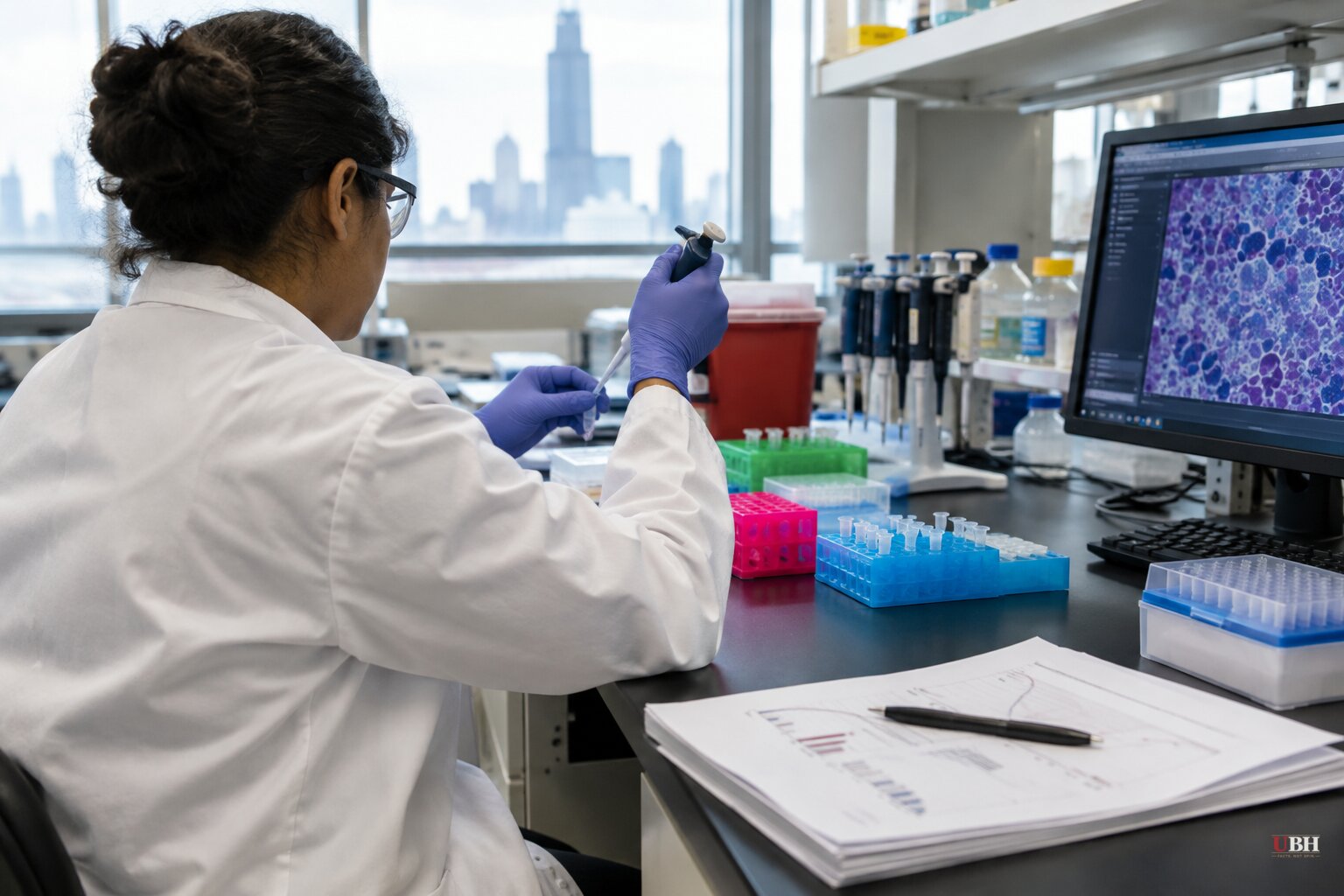
Dr. Jade Pagkas-Bather got her first National Institutes of Health grant in June 2025. By 2026, she was being told to gut it.
Her randomized trial would test whether $500 monthly cash payments help poor, HIV-positive young people in Chicago stay on treatment. "Maybe taking care of your HIV isn't your priority when you're unhoused or hungry," she said.
The study had already cleared peer review. Then NIH program officers began asking for edits, usually verbally on video calls.
What NIH officers asked her to change
The first requests were about wording, Pagkas-Bather said. Officers asked her to drop the phrase "gender identities" from a clause on including people of all gender identities. They asked her to remove a line saying Black and Latinx people experience more poverty than other groups. They also raised "concern" over the acronym for basic income grants.
She made the changes, received funding and enrolled dozens of participants.
The 2026 request went to the core of the design. She says she was told: "You can't use unconditional cash transfer and you need to remove any reference to this having an impact on policy."
The numbers
Grant Witness, an independent group that tracks NIH grants, analyzed how often continuing grants changed their titles, abstracts or public health statements. Its data show a sharp jump:
- 2023: 154 of more than 40,000 grants, or 0.4%.
- 2025: more than 3,401 of roughly 39,000 grants, or 8.6%.
- 2026: 3,006 of nearly 35,500 grants, or 8.5%.
HIV research has been hit harder. In 2025, 305 of 1,795 continuing HIV grants changed, or 17%. In 2026 it was 335 of 1,609, or 20.8%.
The analysis counts text changes, not their cause or content. How many scientists have been through the renegotiation process is not known.
How the review works
The process runs on a text analysis tool that flags grants not in "alignment" with administration priorities. Those priorities include the view that gender is binary and that health equity research is unscientific, according to the account of the process.
Program officers are the ones who contact investigators. Sarah Kobrin, a branch chief at the National Cancer Institute, described the awkward position it puts them in. "We are compelled," she said. Officers do not say outright, "Hey, could you change these words," she said. They are told to ask: "Hey, you know, if you want, you could change these words and it might work out well for you."
Bhattacharya has repeatedly denied that a list of banned words exists. That leaves officers guessing which terms will trigger a flag.
Jeremy Berg, a former director of the National Institute of General Medical Sciences, called it unprecedented. "The censorship that's happening now is, I think, pretty much unprecedented," he said. "It's very Orwellian in the sense that it's purely double-speak."
The lawsuit
Pagkas-Bather is represented by Shalini Agarwal, special counsel at Project Democracy, in a suit seeking class-action status. It alleges the government is violating the First Amendment. The claims are allegations and no court has ruled on them.
"Her story is not unique," Agarwal said. "There are many other researchers in a similar situation who are being asked to subvert their own grant projects that have been peer-reviewed and approved for funding a year or more into the project."
The taxpayer question
A government that funds research gets to set priorities. Taxpayers have no obligation to underwrite every study a scientist dreams up, and it is reasonable to ask whether grants on gender identity or race-based poverty framing belong in the portfolio at all.
The objection from Pagkas-Bather and her lawyers is narrower. Her grant was peer-reviewed, approved and funded. The edits came after approval, in some cases a year or more into the project, delivered verbally, with no published list of what is disallowed.
That is a process problem regardless of which words are on the list. Scientists cannot plan a multiyear trial when the rules shift verbally in the middle of it. Participants are already enrolled. And an agency that denies having a word list while running software to flag words has not explained the gap.
The unresolved question is scale. The Grant Witness figures show roughly 3,000 grants a year with altered text, but no one outside NIH can say how many changes were demanded under pressure versus requested by researchers, or how many studies lost their core design as hers did. The class-action bid is the first test of whether a court will compel answers.
Sources used for this briefing
3 links from 3 independent newsrooms (syndicated copies of the same report count once)
These are the sources it draws on, linked so you can verify.


