
Original briefings. Zero spin.
Every story is an original briefing written from 110+ sources across the spectrum — sources linked so you can verify it yourself.
 politics
Notable (6/10)
August 17, 2026 at 02:01 PM
politics
Notable (6/10)
August 17, 2026 at 02:01 PM
NIH Cancels $15 Million in Alzheimer's Grants Studying Race and Brain Health, Duke Law Accused of Coded Admissions by Race
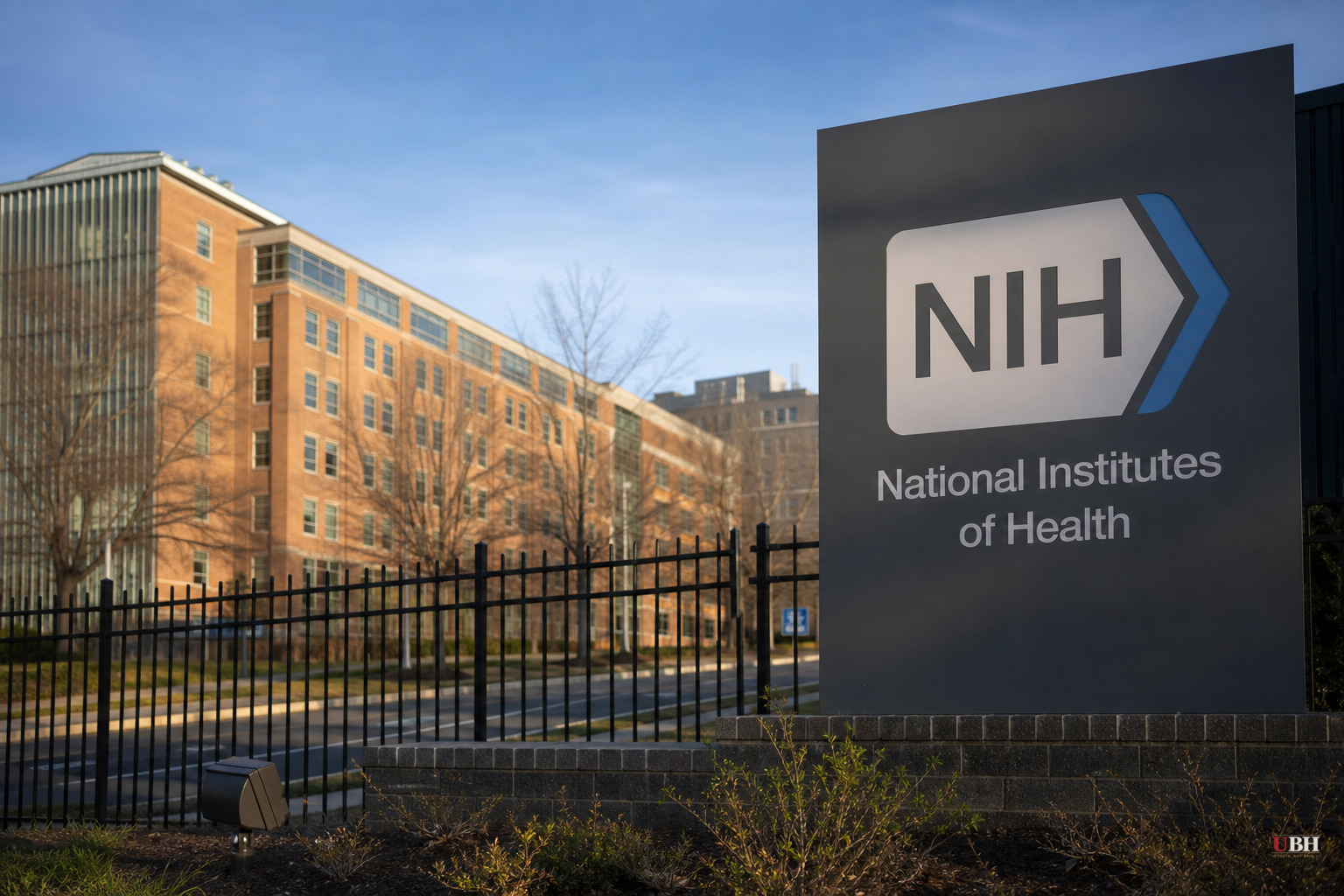
The National Institutes of Health has canceled at least three research grants at Emory University and the University of Pittsburgh that studied how racial discrimination affects long-term brain health and Alzheimer's risk, according to The Guardian. The cancellations total roughly $15 million, much of which had already been spent on ongoing research.
Andrea Rosso, an associate professor of epidemiology at Pitt who co-led one of the canceled grants, told The Guardian the studies used "structural racism" as a framing tool to explain disparities in dementia risk, not as something the research could fix. "We can't come up with an intervention that's going to stop structural racism, wish we could," she said. Ann Cohen, an associate professor of psychiatry at Pitt whose grant was also canceled, called it "clear political interference" and said the work couldn't proceed under such pressure.
The numbers behind the research are real. An estimated 7.4 million Americans live with Alzheimer's or dementia, and Black Americans are roughly twice as likely to develop the disease as white Americans, according to figures cited by The Guardian. Whether the right response to that gap is a federally funded research program built around the concept of "structural racism," or whether that framing itself constitutes a political intervention in science, remains contested.
HHS did not respond to The Guardian's request for comment on the cancellations. If the administration has a specific scientific or policy rationale beyond objecting to the language used in these grants, the public hasn't heard it.
This is the second wave of NIH cuts tied to DEI. In spring 2025, the administration canceled billions in federal grants it judged to have a DEI connection, which triggered lawsuits from research universities. A federal judge ordered the money reinstated, ruling the cancellations illegal. The Trump administration then won on appeal through the Supreme Court's shadow docket, where justices voted 5-4 in an unsigned order allowing the administration to cancel $783 million in NIH funding. The new round of cuts at Emory and Pitt falls outside that existing litigation, meaning researchers may have to start a new legal fight from scratch.
The administration's broader argument, made in prior rounds of cuts, is that federal science funding shouldn't subsidize research built around ideological premises like systemic racism rather than testable biological or social mechanisms. Critics inside these institutions say that conflates using race as a demographic variable, standard practice in epidemiology, with promoting an ideology. Race-based health disparities are measurable and worth studying. Reasonable people can disagree about whether "structural racism" is a scientific variable or a political framework.
Duke Law's Post-SFFA Admissions Process
While NIH grants draw headlines, the Justice Department has opened a parallel front against elite law schools. According to the Daily Signal, DOJ's Civil Rights Division under Assistant Attorney General Harmeet Dhillon accused Duke Law of restructuring its admissions process to preserve racial outcomes after the Supreme Court's 2023 ruling in Students for Fair Admissions v. Harvard banned race-conscious admissions.
DOJ says internal Duke Law communications from late 2023 show the school called DEI one of its "most important values" and pledged to keep working toward a racially diverse incoming class even after the ruling. The school's mission statement was revised to include "equal justice, public service, and a diversity of perspective and experience," and applicants were asked to write about how they'd demonstrate commitment to those values.
According to documents DOJ obtained, admissions reviewers were instructed to flag applicant answers for "specific applicant characteristics that are commonly correlated with race" without directly seeing race or ethnicity data. DOJ's conclusion: Duke Law effectively built a proxy system, letting staff select for race indirectly while maintaining technical deniability.
The numbers DOJ cites are stark. In the 2024 and 2025 admissions cycles, the memo says, median LSAT scores of rejected white and Asian applicants exceeded the median LSAT scores of admitted Black applicants. DOJ says this produced a "substantially higher likelihood of admission" for Black and Hispanic applicants compared to white or Asian applicants with identical academic credentials.
Duke has not offered a public rebuttal in the material reviewed for this story. DOJ's memo is an accusation, not a court finding. No lawsuit outcome or consent decree has been reported. Duke could argue, as many schools have, that essay questions about personal background and diversity of experience are legitimate holistic admissions criteria that happen to correlate with race without being designed as a proxy for it. Whether that argument survives DOJ scrutiny or a courtroom is an open question.
Two Fronts, One Fight
Both stories address the same underlying tension: is race a variable that can be studied and considered, or a category the government should treat as untouchable in federal funding and admissions decisions? The NIH cuts and the Duke Law investigation show the administration answering that question the same way in two different arenas, over the objections of researchers and administrators who say they are following standard practice.
Emory and Pitt researchers will have to decide whether to sue individually, since the current cancellations fall outside the existing litigation that already reached the Supreme Court. DOJ's findings on Duke Law could turn into a formal enforcement action or lawsuit. The memo describes an investigation's conclusions, not a settled case, and no charges or court judgment have been reported yet.
Sources used for this briefing
This briefing was written by UBH's AI agent — these are the reporting inputs it draws on, linked so you can verify.


