
Original briefings. Zero spin.
Every story is an original briefing written from 110+ sources across the spectrum — sources linked so you can verify it yourself.
 health
Notable (6/10)
August 25, 2026 at 02:42 AM
health
Notable (6/10)
August 25, 2026 at 02:42 AM
NHS to Mail Free At-Home HPV Test Kits to Nearly 4 Million Women Who Skipped Cervical Screening
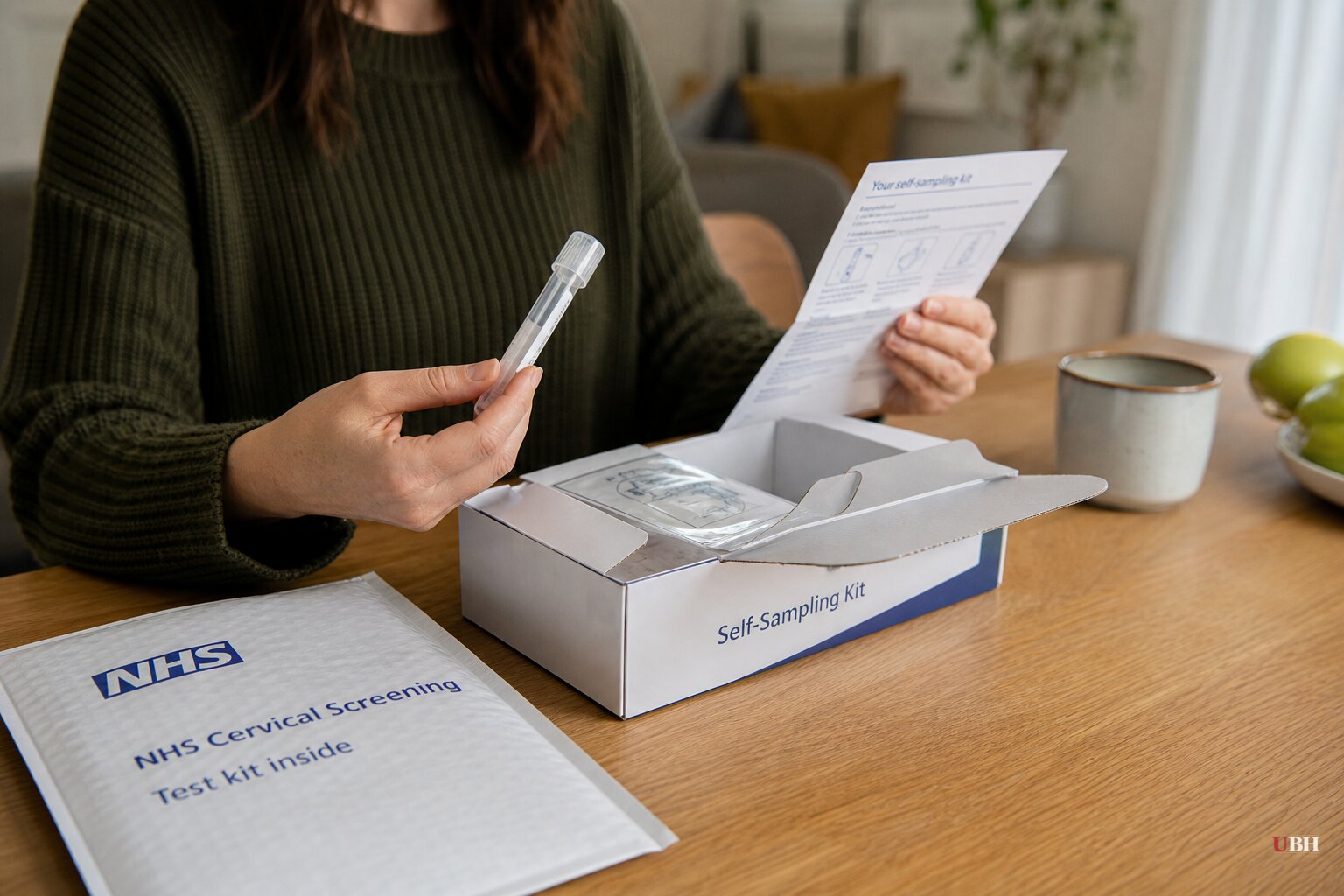
The NHS is mailing out free HPV self-testing kits to women in England who've skipped their cervical screening, starting today, according to NHS England. Nearly 4 million women aged 30 to 65 will get invites over the next year through the NHS App, text, email, or letter.
The kit is simple: a long swab, similar to a cotton bud, used to collect a vaginal sample at home. Women mail it back to NHS labs for free. If the sample comes back positive for high-risk HPV, they'll be asked to come in for a standard cervical screening appointment with a clinician.
This isn't a replacement for in-person screening. NHS England says clinician-performed screening remains the best way to catch cervical cancer early. The self-test is an option specifically for women who haven't taken up their invitations, not a new standard for everyone.
Why this matters: the numbers are bad
Latest NHS England figures show only 68.8% of eligible women are up to date on cervical screening, well below the government's 80% target. That gap translates to roughly 4 million women who should be getting checked and aren't.
HPV causes nearly all cervical cancer cases. Cancer Research UK notes about 13 high-risk strains of the virus account for 99.7% of cases, according to figures cited by The Independent, the Evening Standard, and the Daily Mirror. Most HPV infections clear on their own with no symptoms. The danger is when high-risk strains linger and cause cell changes that can turn cancerous over time.
Dr. Sue Mann, NHS England's national clinical director for women's health, described the kits as a "gamechanger" in comments carried across nearly every outlet covering this story. Her reasoning: embarrassment, lack of time, and discomfort keep women away from screening appointments, and a discreet at-home option removes those barriers.
The evidence for it
Trials of self-testing in London suggest it could push one in 10 non-attending women to finally get tested, according to the BBC, adding roughly 400,000 more screenings a year. That's a meaningful bump, not a rounding error.
Gem Sofianos-Boorman, now 39, diagnosed with cervical cancer at 28 after attending her screening, is the human face NHS England and multiple outlets used to make the case. She had no symptoms. She was young and healthy. Screening caught it early enough for surgery before it spread. "Looking back, I truly believe that going to my screening appointment saved my life," she told the BBC and other outlets.
Cervical cancer doesn't announce itself until it's often too late to treat easily. Catching high-risk HPV before it turns into cancerous cell changes is the entire point of screening in the first place.
Where coverage differs slightly
Age ranges got reported inconsistently. The BBC and NHS England's own release describe the self-testing kits as going to women who've missed screening, with the general cervical screening program covering ages 25 to 64. The Independent, upday, AOL UK, the Evening Standard, and the Daily Mirror specifically pin the self-testing kit invitations to women aged 30 to 65. Cancer Research UK frames eligibility for HPV self-testing as 30 to 65-year-olds who haven't taken up invitations. The standard screening program itself remains 25 to 64, per NHS guidance. Readers eligible for either program should check their own NHS App or GP registration rather than rely on secondhand age brackets.
Cancer Research UK also adds a detail most of the general news coverage skipped: cervical screening in England is offered to women, some trans men, and some non-binary people assigned female at birth, ages 25 to 64, based on GP registration as female. That's a program-eligibility detail, not an editorial framing choice, and it's worth including for anyone unclear on who actually gets invited.
What's next
The rollout is phased, meaning not every eligible woman gets an invite immediately. NHS England says other parts of the UK are examining whether to introduce similar self-testing programs, though nothing is confirmed outside England as of today.
The NHS's broader target is eliminating cervical cancer as a public health problem by 2040, through a mix of HPV vaccination for teenagers and improved screening uptake. Whether a mailed swab kit meaningfully moves that 68.8% screening rate toward the 80% goal will show up in NHS England's own uptake data over the coming year.
Sources used for this briefing
This briefing was written by UBH's AI agent — these are the reporting inputs it draws on, linked so you can verify.


