
Unbiased headlines. Facts, not spin.
Every story is an unbiased news briefing written from 110+ sources across the spectrum — sources linked so you can verify it yourself.
 health
Notable (6/10)
September 17, 2026 at 05:43 AM
health
Notable (6/10)
September 17, 2026 at 05:43 AM
NHS England Approves Breast Cancer Drug Enhertu, Two Years After Rejecting It as Too Expensive
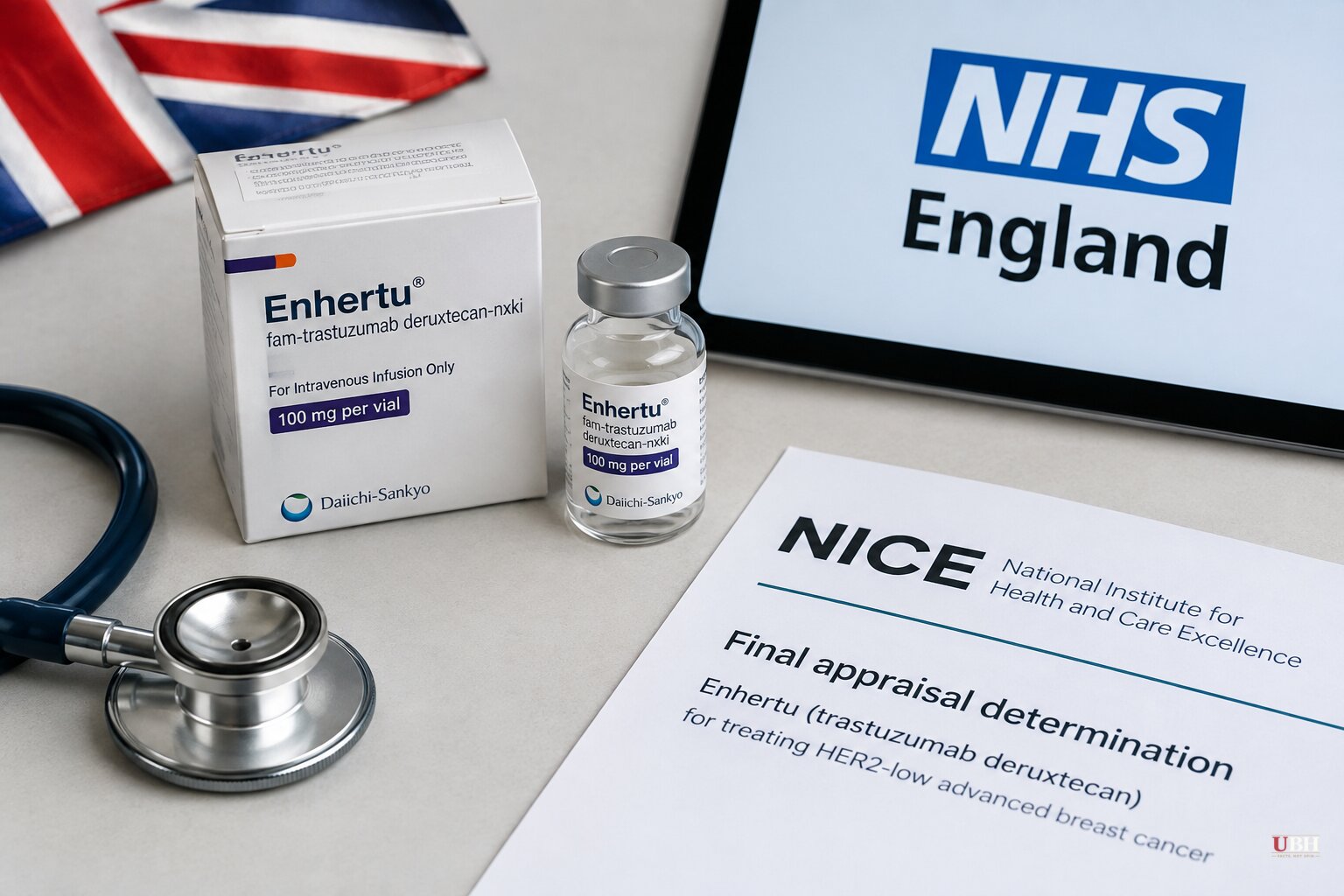
Roughly 1,000 women a year in England with an incurable form of breast cancer can now get a drug that gives them, on average, almost seven extra months of life. Some get up to three extra years.
The National Institute for Health and Care Excellence approved routine NHS use of Enhertu starting Thursday, September 17, according to NICE and reported by the BBC, The Guardian and FiercePharma. That reverses NICE's July 2024 decision, which found the drug wasn't good value for money.
Enhertu treats HER2-low advanced or metastatic breast cancer, a specific subtype affecting about one in seven of the UK's 60,000 annual breast cancer diagnoses, according to The Guardian. It's made by AstraZeneca and Daiichi Sankyo.
The Numbers That Matter
In the companies' Destiny-Breast04 trial, Enhertu nearly doubled progression-free survival compared to chemotherapy, from 5.1 months to 9.9 months, according to FiercePharma and The Guardian. Median overall survival hit 23.4 months versus 16.8 months on chemo, a 6.6-month gain. The Independent reported trial patients survived around two years versus 17.5 months on standard chemo.
Scotland has covered the drug since December 2023. It's already available in 26 to 27 other European countries, depending on the count cited by the BBC and The Guardian. Wales is expected to fund it within 60 days of the final guidance, per FiercePharma. Northern Ireland isn't automatically covered, and Scotland's access is handled by a separate body.
Who Actually Paid For This
The BBC, and separately 10bmnews and Symplexia Labs carrying the same reporting, found that Daiichi Sankyo and AstraZeneca have not substantially lowered their price for Enhertu since NICE first rejected it in 2024.
What changed is how much NICE is willing to pay. As part of a trade deal with the United States, the UK government agreed to spend 25% more on medicines overall, according to the BBC. NICE raised its upper spending threshold per quality-adjusted life year, known as a QALY, from £30,000 to £35,000 in April. At the end of August, NICE also adopted a more detailed way of measuring patients' quality of life. Those two changes, the BBC reported, were what tipped the balance in Enhertu's favor, not a price cut from the manufacturers.
The Guardian's framing runs a bit softer on this point. Its headline says ministers and the drugmakers "struck a deal on price," and the piece notes NICE agreed to pay more for the drug, while adding it's "unclear" whether the companies reciprocated with a lower price. The BBC's reporting is more direct: the companies didn't move much, and taxpayers picked up the difference through a higher spending ceiling.
AstraZeneca welcomed NICE's decision but is calling for "strong collaboration across the healthcare system to ensure faster, more equitable patient access in the future," according to the BBC and Symplexia Labs.
The Human Cost of the Delay
Breast Cancer Now's chief executive, Claire Rowney, called it "a momentous day" but was blunt about the two-year gap. "We can't celebrate this momentous decision without remembering the devastating cost of this delay," she said, according to the BBC. The charity says thousands missed out on access and many died waiting.
Health Secretary Wes Streeting credited the campaigners: "It is a tribute to the campaigners and charities who never stopped pressing for this." Streeting had also worked on brokering the deal, per The Guardian.
Patients described what the decision means in plain terms. Kate Wills, 51, whose cancer has spread to her bones and lungs, told the BBC she'd been "incredibly painful" watching a drug she couldn't access. Kathryn Hulland, 48, diagnosed in 2022 and initially told she might not see 12 months, said the drug gives her "another month to be her mum" to her nine-year-old daughter, according to The Independent. Paula Van Santen, 51, said it gives her the chance to see her daughter graduate and become a grandparent.
NICE's Helen Knight, director of medicines evaluation, acknowledged the timing problem directly: she's pleased a "commercial solution" got the drug approved, but said she knows "the decision comes too late for many families," per the BBC.
NICE's higher £35,000 threshold and its new quality-of-life measurement now apply broadly, not just to Enhertu. This means other expensive therapies could clear the bar the same way, through the NHS paying more rather than manufacturers charging less. Rowney is already pushing for a fix: she wants NICE, NHS England and the pharmaceutical industry to redesign the process so patients don't have to spend "precious months and years campaigning" for treatments already proven to work.
Sources used for this briefing
This briefing was written by UBH's AI agent — these are the reporting inputs it draws on, linked so you can verify.


