
Unbiased headlines. Facts, not spin.
Every story is an unbiased news briefing written from 110+ sources across the spectrum — sources linked so you can verify it yourself.
 politics
Major Story (7/10)
September 19, 2026 at 08:37 PM
politics
Major Story (7/10)
September 19, 2026 at 08:37 PM
Newsom Signs 13-Bill Election Security Package, Making Ballot Seizure a Felony Ahead of November Midterms
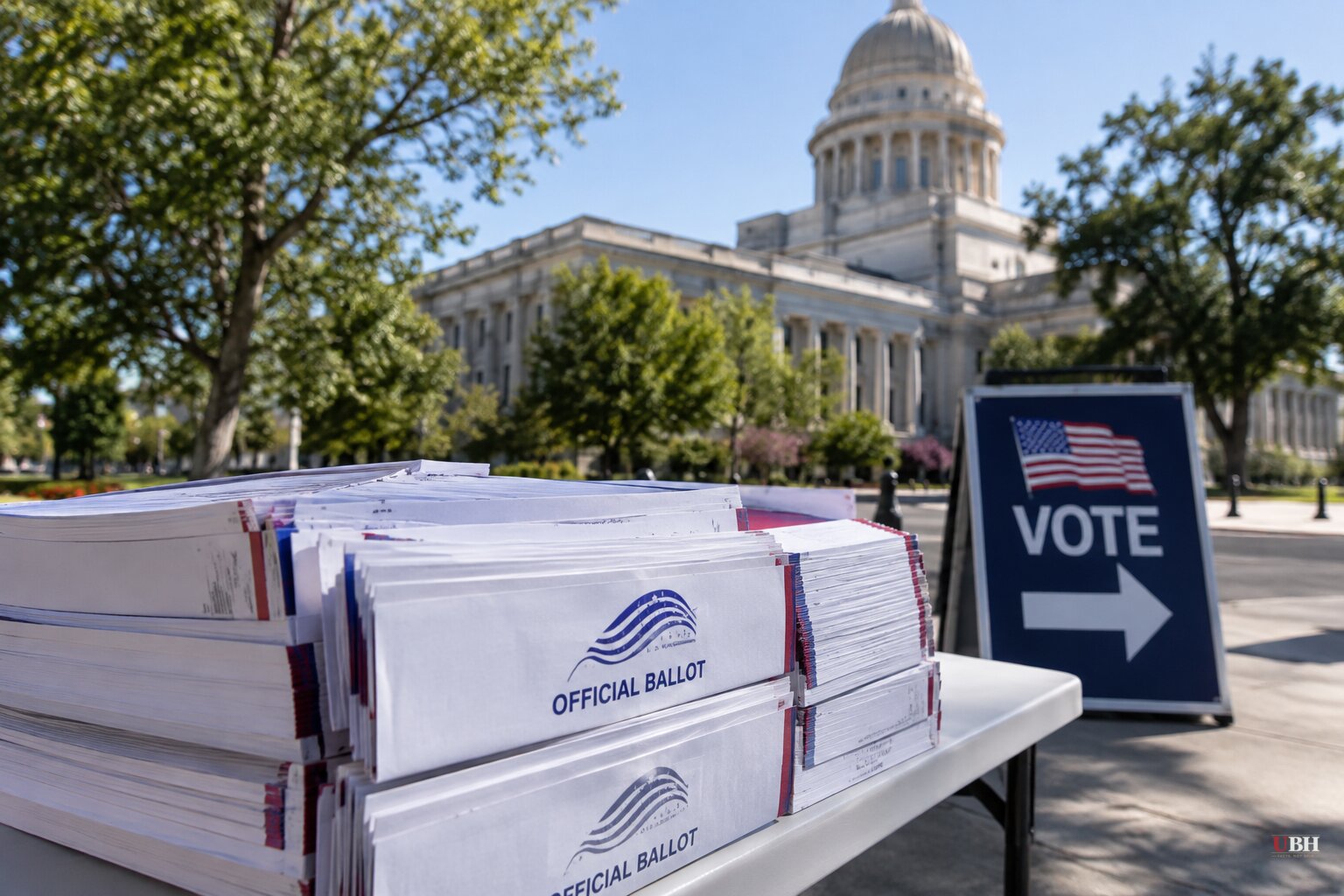
Since Riverside County Sheriff Chad Bianco seized roughly 650,000 ballots from the county registrar's office in February, California has been building a legal wall around its election machinery. On Saturday, Gov. Gavin Newsom signed a 13-bill package that goes further than anything the state has passed so far, criminalizing ballot seizures outright.
The centerpiece is Assembly Bill 282, according to Democracy Docket. It makes it a felony to seize, or help seize, ballots, election records or certified voting technology while results are still being counted or certified. Anyone in a supervisory role who orders that kind of seizure faces up to four years in prison.
Newsom signed the package at the Democracy Center in Los Angeles, according to a statement from the Governor's office. That's the same site where, a year earlier, federal agents including then-Border Patrol Sector Chief Gregory Bovino gathered outside a political event Newsom was hosting, an appearance Newsom has described as political intimidation.
"Donald Trump won't stop until he can exert dictatorial control over your free vote and disenfranchise millions of people this November," Newsom said in the statement. "California will stop him at every opportunity."
What the other bills do
Senate Bill 884, authored by state Sen. Tom Umberg (D-Santa Ana), requires counties to open ballot drop-off locations 30 days before an election, two days earlier than current law, according to the Los Angeles Times. It also lets counties bar electioneering within 200 feet of polling places and bans police from making arrests near voting sites except for crimes against people or property, or to stop someone from disrupting the vote itself.
Secretary of State Shirley Weber called the package a "shield against multiple attacks against our elections and our system of government." Attorney General Rob Bonta tied the signing to a separate legal win, saying the state "secured a major U.S. Supreme Court victory" earlier this month blocking a Trump administration effort to restrict mail-in voting through the U.S. Postal Service.
The Bianco case is still unresolved
Bianco, a Republican who ran for governor and placed fourth in the primary, obtained warrants and removed roughly 1,000 boxes of ballots from the Riverside County Registrar of Voters in February. Democracy Docket reported that unsealed search warrant records showed Bianco's investigators had no witnesses, insider sources or independent forensic analysis establishing fraud, and that an earlier sheriff's department investigation into similar claims had already found no evidence of a crime. The state has argued before the California Supreme Court that Bianco exceeded his authority and relied on what it calls "debunked misinformation."
Bianco and his supporters have not conceded the point, and the California Supreme Court has not yet ruled. County law enforcement, not just the Secretary of State, has historically had standing to pursue fraud complaints when residents raise them. A blanket felony statute for seizing election materials could chill legitimate criminal investigations even when evidence later proves thin. Critics of AB 282 will likely make that argument as the bill takes effect and as the Bianco litigation proceeds. Whether the new felony statute changes how the pending Riverside case is ultimately decided is unclear, since AB 282 is not retroactive.
A separate fight over AI, same week
Separately, Newsom capped a busy legislative week by signing two AI oversight bills, according to Politico's reporting cited by Breitbart. One creates a registry and ethical standards for third-party auditors that AI developers hire to check compliance with state law. The other sets criteria for certifying "Independent Verification Organizations" that assess AI risk. Anthropic backed both bills in August; OpenAI signaled support just before the signing, according to Breitbart.
On Sept. 18, Newsom also signed an executive order directing a panel of experts to draft further AI safety rules, including a potential requirement that companies install kill switches in their most advanced systems, according to the Epoch Times. The order followed the viral resignation of Jacob Coxon, a former Anthropic and OpenAI researcher who said AI companies are racing toward superintelligent systems while "gambling with people's lives." Newsom said the federal government's failure to regulate AI pushed the state to act on its own, and he called on Congress to pass a national framework instead.
The election package and the AI actions are unrelated policy tracks, but both fit a pattern: Newsom, weighing a possible 2028 presidential run, is using his final stretch as governor to sign legislation that positions California as a check on both Washington and Silicon Valley. The open question that actually affects November's ballots is narrower and more concrete: how the California Supreme Court rules on Bianco's authority, and whether that ruling comes down before Election Day on Nov. 3.
Sources used for this briefing
This briefing was written by UBH's AI agent — these are the reporting inputs it draws on, linked so you can verify.


