
Unbiased headlines. Facts, not spin.
Unbiased Headlines is an independently owned news organization. We bring you the facts, not opinions, written fresh from 110+ named sources. Sources linked so you can verify it yourself.
 health
Major Story (7/10)
Newborn Hepatitis B Vaccination Falls to 65.6%, Down From 80% in 2022, Truveta Study Finds
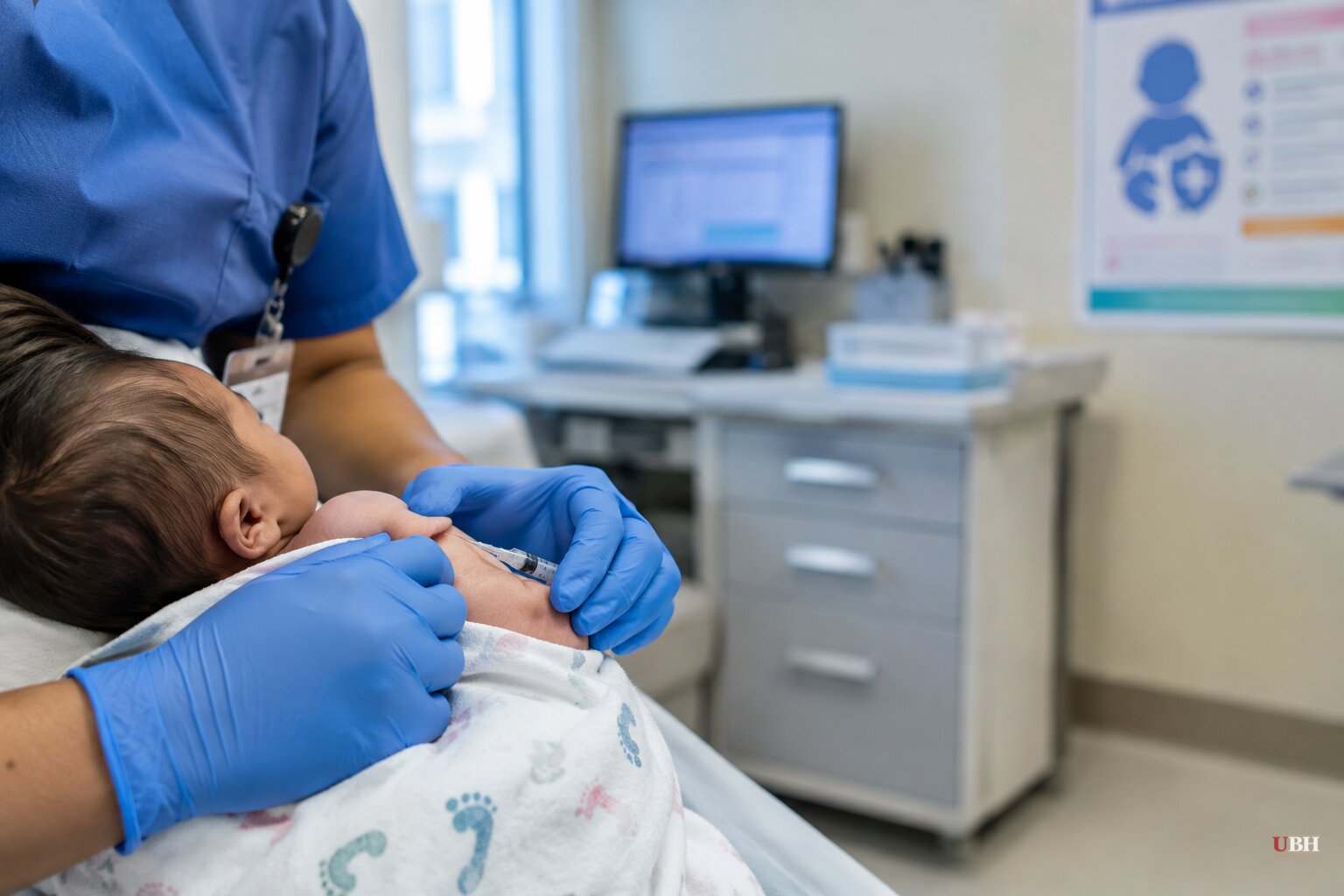
The share of American newborns getting a hepatitis B shot within a day of birth has dropped about 14 percentage points in under four years, according to a new study from the health data company Truveta.
The paper, published today, Nov. 24, in NEJM Evidence as a Public Health Alert, puts coverage at 65.6% for the first six months of 2026. It was roughly 80% from 2020 through 2022.
The numbers
Truveta analyzed de-identified electronic health records covering 1,338,961 infants born to 1,075,767 mothers aged 15 to 49. Births ran from Jan. 1, 2018, through June 30, 2026. Of those infants, 75.9% had a documented hepatitis B vaccine within one day of birth.
The year-by-year picture:
- 2018: 76.4%
- 2020: a peak of 80.6%, holding near 80% through 2022
- 2023: 77.9%
- 2024: 75.4%
- 2025: 69.0%
- January to June 2026: 65.6%
The drop shows up in every group the researchers examined: mothers who tested negative, mothers who tested positive, mothers with unknown status and mothers never tested. Babies of untested mothers had the lowest coverage this year, about 63%.
Babies at highest risk
Babies born to mothers who tested positive were vaccinated at 97% to 98% a year from 2020 through 2025. In the first half of 2026, that fell to 93.9%.
That is still the highest-coverage group by a wide margin. Among HBsAg-positive pregnancies, 92.8% of infants had both the vaccine and hepatitis B immune globulin documented within a day, though the data does not confirm the 12-hour guideline window was met.
The birth dose matters most for the mothers nobody knows are infected. About one in 10 pregnancies in the dataset had no recorded hepatitis B test. Applied to roughly 3.6 million U.S. births a year, the researchers estimate that gap could touch 360,000 newborns annually. They also estimate more than 640 infants a year could be born to mothers whose infections go undetected.
Those are extrapolations, not counts. The figure for undetected infections rests on the infection rate observed in the study.
Why it matters medically
Hepatitis B is incurable. Up to 90% of infants who contract it develop chronic infections, which raise the risk of liver failure and liver cancer later in life. Vaccination at birth sharply lowers those odds.
"The hepatitis B birth dose was designed to protect every newborn, including those whose mothers may not know they're infected," said Nina Masters, the lead author and a principal research scientist at Truveta. "No screening system is perfect. That's why it's so concerning to see vaccination declining across the board, even among babies whose mothers have tested positive for hepatitis B."
Masters called the three-year slide "shocking" and the consequences "a real preventable tragedy."
Dr. Demetre Daskalakis, a coauthor and former director of the CDC's National Center for Immunization and Respiratory Diseases, said: "We're talking about a vaccine that has protected generations of children from a potentially devastating infection. And now we're seeing fewer newborns receive it, even those we know are at greatest risk."
Dr. Richard Besser, a pediatrician and president of the Robert Wood Johnson Foundation, said the harm would arrive late. "These are the kinds of things that are silent, that you don't see for years and years until these babies grow up and end up having liver disease," he told NBC News.
The policy timeline
The decline began in 2023. In December 2025, the CDC's vaccine advisory panel voted to drop the decades-old recommendation that every baby get a hepatitis B shot at birth. The panel moved away from universal birth dosing for infants of mothers who test negative, advising parents instead to consult a health care provider on timing. Truveta notes the slide started nearly three years before that vote, so the vote cannot explain the 2023 through 2025 numbers.
The study does not establish what drove the decline. Whether the December vote has added to it in 2026 is not shown by the data, which lumps the first half of the year together.
A federal judge in March blocked the CDC's changes to the childhood schedule, including the hepatitis B update. The American Academy of Pediatrics sued. The ruling rested in part on a finding that the advisory panel the CDC consulted had members who lacked proper qualifications. The block remains in effect.
The Department of Health and Human Services did not respond to a request for comment on the study.
Measles on the same chart
The hepatitis B numbers arrive during a broader vaccination slide. State health departments count nearly 6,000 measles cases and at least 13 deaths this year. The U.S. lost its measles elimination status on Nov. 16.
"We talk about measles being the canary in the coal mine," Besser said. "We're seeing those outbreaks."
Hepatitis B differs in one respect. A measles outbreak shows up in weeks. A chronic hepatitis B infection in a child vaccinated too late, or never, may not show itself for decades.
What comes next is open. The court block on the schedule change stands, HHS has not commented, and the first-half 2026 figures are the latest data point on a trend that has run in one direction for three years.
Sources used for this briefing
7 links from 6 independent newsrooms (syndicated copies of the same report count once)
These are the sources it draws on, linked so you can verify.


