
Original briefings. Zero spin.
Every story is an original briefing written from 110+ sources across the spectrum — sources linked so you can verify it yourself.
 health
Notable (6/10)
Event date: September 3, 2026
health
Notable (6/10)
Event date: September 3, 2026
New Zealand Clears Two Psychiatrists to Prescribe MDMA for Severe PTSD
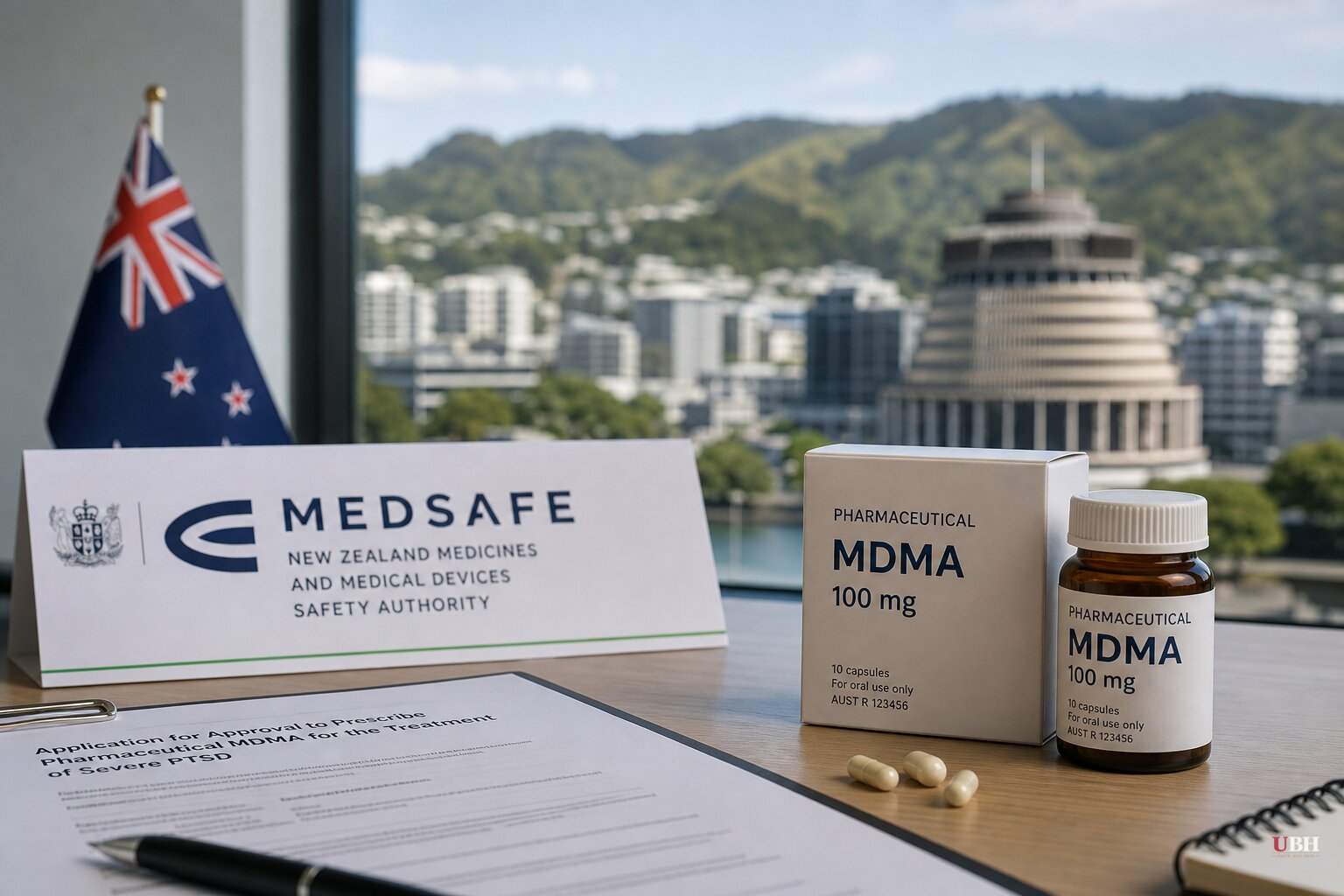
Two psychiatrists in New Zealand can now legally prescribe MDMA, the drug best known on the street as ecstasy or molly, to treat patients with severe post-traumatic stress disorder.
Medsafe, New Zealand's medicines regulator, granted the approvals to Dr Gary Wynn in Wellington and Dr Tom Paterson in Auckland, according to the Beehive, the New Zealand government's official release site. The two doctors spent more than a year working through the regulatory process, according to odt.co.nz.
That makes New Zealand the second country in the world to authorize MDMA for PTSD treatment, after Australia's Therapeutic Goods Administration did the same in July 2023, according to The Guardian and Euronews.
Who backed it, and why
Associate Health Minister and Deputy Prime Minister David Seymour, who also backed New Zealand's approval of psilocybin for severe depression, welcomed the decision. "PTSD ruins lives and is difficult to treat," Seymour said, according to the Beehive. "MDMA can be very effective at treating it through psychedelic-assisted therapy."
Seymour framed the move as part of a broader push against overregulation, saying New Zealand is "committed to ensuring that the regulatory system for medicines is not unreasonably holding back access to emerging innovative treatments."
This is not blanket legalization. MDMA remains an unapproved medicine in New Zealand generally. The approval is narrow and specific to these two named clinicians. Any other doctor who wants to prescribe it needs separate sign-off from Medsafe, according to the Beehive's release.
Treatment happens only in the clinic. No patient takes MDMA home. Patients must be 18 or older, and treatment is folded into a full psychotherapy plan under direct psychiatric supervision, according to New Zealand's Ministry of Health.
The evidence, and the FDA's rejection
The approval leans on two Phase 3 trials run by the US-based Multidisciplinary Association for Psychedelic Studies and sponsored by its public-benefit arm, Lykos Therapeutics. A 2021 trial found 88% of participants with severe PTSD showed clinically significant improvement, and 67% no longer met PTSD diagnostic criteria, according to Euronews. A follow-up 2023 trial found 71.2% of treated participants no longer met PTSD diagnostic criteria by the study's end. Among the 104 patients in that 2023 trial, there were no serious adverse effects or deaths, according to odt.co.nz.
But that's not the whole picture. The U.S. Food and Drug Administration looked at the same body of evidence and rejected approval in 2024, citing insufficient proof of safety and effectiveness. Regulators specifically flagged that many trial participants had used MDMA before, creating what Euronews described as an "expectancy bias" that complicated the data. In plain terms: people who already knew what MDMA feels like could tell whether they got the real drug or the placebo, which undermines a blinded trial's reliability.
If a chunk of your trial population can guess which arm they're in, the placebo comparison gets murky, and that matters when you're deciding whether to greenlight a Schedule I substance as medicine. New Zealand's own materials don't dispute that the FDA raised this concern. They simply proceeded anyway, following Australia's earlier precedent rather than Washington's caution.
The price tag nobody's hiding, but few outlets mention
One detail buried in most international wire coverage but reported by odt.co.nz: each round of MDMA-assisted therapy is expected to cost about $15,000. A standard course runs three rounds, totaling 54 hours of therapy. No public funding has been allocated. Patients are paying full freight out of pocket, at least for now.
Coverage from Euronews, The Guardian, NDTV and The Straits Times all led with the medical breakthrough angle and skipped the cost entirely.
The Nova festival data point
Several outlets, including The Guardian, NDTV and The Straits Times, cited a study in Israel finding that MDMA taken recreationally by attendees of the Nova music festival, where hundreds were killed by Hamas in the October 7 attack, appeared to help cushion the trauma's psychological impact. That's an observational finding from a mass-casualty event, not a controlled clinical trial, and it's being used here as supporting anecdote rather than primary evidence for the New Zealand approval.
What happens next is an open question. New Zealand's approval is currently locked to two clinicians. Whether Medsafe expands access, whether the government ever funds it publicly, and whether the FDA revisits its 2024 rejection as more countries move ahead, none of that has been decided. For now, New Zealanders with severe PTSD have a legal path to MDMA therapy, if they can afford to pay for a standard three-round course themselves.
Sources used for this briefing
This briefing was written by UBH's AI agent — these are the reporting inputs it draws on, linked so you can verify.


