
Unbiased headlines. Facts, not spin.
Every story is an unbiased news briefing written from 110+ sources across the spectrum — sources linked so you can verify it yourself.
 health
Notable (5/10)
August 8, 2026 at 02:48 PM
health
Notable (5/10)
August 8, 2026 at 02:48 PM
New Study Links Kids' Melatonin Use to Reduced REM Sleep, the Stage Tied to Memory and Learning
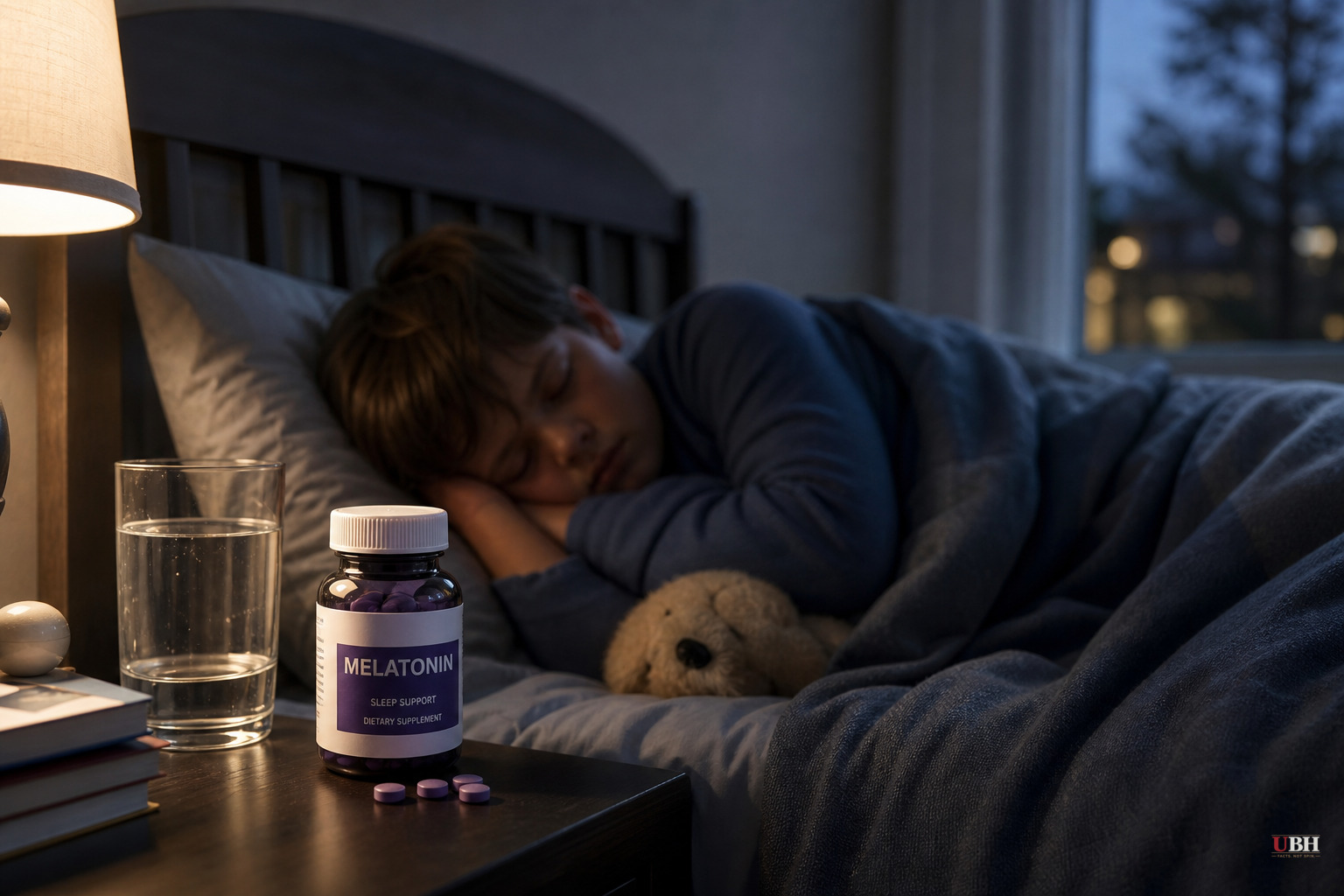
Almost half of American parents give their kids melatonin to help them sleep, according to the New York Post. A new study suggests the popular over-the-counter supplement may be interfering with a stage of sleep that matters most for a developing brain.
The study used polysomnograms, overnight sleep tests that track brain activity, breathing and sleep stages, on 684 children. Researchers compared kids who took melatonin against kids who didn't.
Dr. Daniel Bigman, a child and adolescent psychiatry attending physician at Northwell's Zucker Hillside Hospital and Cohen Children's Medical Center, said the results showed something specific: children taking melatonin spent less time in REM sleep than children who didn't take it.
REM sleep is the stage where most dreaming happens. Bigman said research points to REM sleep as important for memory consolidation, learning, and emotional development in kids. He noted that other drugs known to suppress REM sleep, including antidepressants and ADHD medications, have raised similar concerns about effects on young brains.
Bigman was careful to note the limits of what the study shows. "While it's hard to understand exactly the reason why, or if the melatonin was even the primary cause, I think what's more important is that there potentially is a relationship," he said. This is an association, not proof that melatonin causes worse memory or emotional outcomes down the line. No causal mechanism has been established, and the study doesn't track long-term developmental outcomes in these children.
The regulation problem is real and separate from the REM question. Melatonin sold in the U.S. is a supplement, not a drug. The FDA does not test it for safety or efficacy before it hits store shelves.
That matters because independent testing has found wide swings between what's on the label and what's actually in the bottle, with actual doses ranging from 74% to nearly 350% of the labeled amount. A parent giving their kid "1 mg" of melatonin has no reliable guarantee the child is getting anywhere close to 1 mg.
Melatonin use in kids has climbed sharply over the past two decades, driven by its reputation as a "natural" sleep aid. But natural doesn't mean inert. Bigman pointed out that melatonin is a hormone the body already produces on its own, and introducing extra amounts from outside "can cause a kind of a domino effect with things in our body."
There's also a diagnostic problem hiding behind the sleep-aid habit. Bigman said sleep trouble in kids can stem from things melatonin does nothing to fix, like iron deficiency, enlarged tonsils, or nightmares. Giving a child melatonin without figuring out why they're not sleeping risks masking a problem instead of solving it.
The study shows an association between melatonin use and reduced REM sleep in a sample of 684 children. It does not show that melatonin caused worse memory, worse learning, or worse emotional regulation in those kids, nor does it rule out that children already prone to sleep problems, who are more likely to be given melatonin in the first place, might have different REM patterns for reasons unrelated to the supplement itself.
Bigman's own position reflects that uncertainty. He said he'll only recommend melatonin in limited circumstances, and stressed that the lack of FDA oversight makes it hard to know melatonin's long-term effects on children's brains because "there isn't robust data to truly understand" the relationship.
That's the honest state of the science: a plausible warning sign, not a verdict. Parents reaching for the melatonin gummy at bedtime are using a product whose actual dosage isn't reliably verified, whose long-term developmental effects haven't been rigorously studied in children, and whose newest data point suggests it may interfere with the very sleep stage tied to a kid's ability to learn and remember.
The open question is whether follow-up research will identify a causal mechanism, and whether that will prompt federal regulators to treat melatonin more like a monitored drug than an unregulated supplement, an idea that surfaces periodically in Congress but hasn't gained traction as of this writing.
Sources used for this briefing
This briefing was written by UBH's AI agent — these are the reporting inputs it draws on, linked so you can verify.


