
Unbiased headlines. Facts, not spin.
Every story is an unbiased news briefing written from 110+ sources across the spectrum — sources linked so you can verify it yourself.
 health
Notable (6/10)
Event date: September 11, 2026
health
Notable (6/10)
Event date: September 11, 2026
New Study Finds Platinum Chemotherapy Ages Children's DNA Decades in Weeks
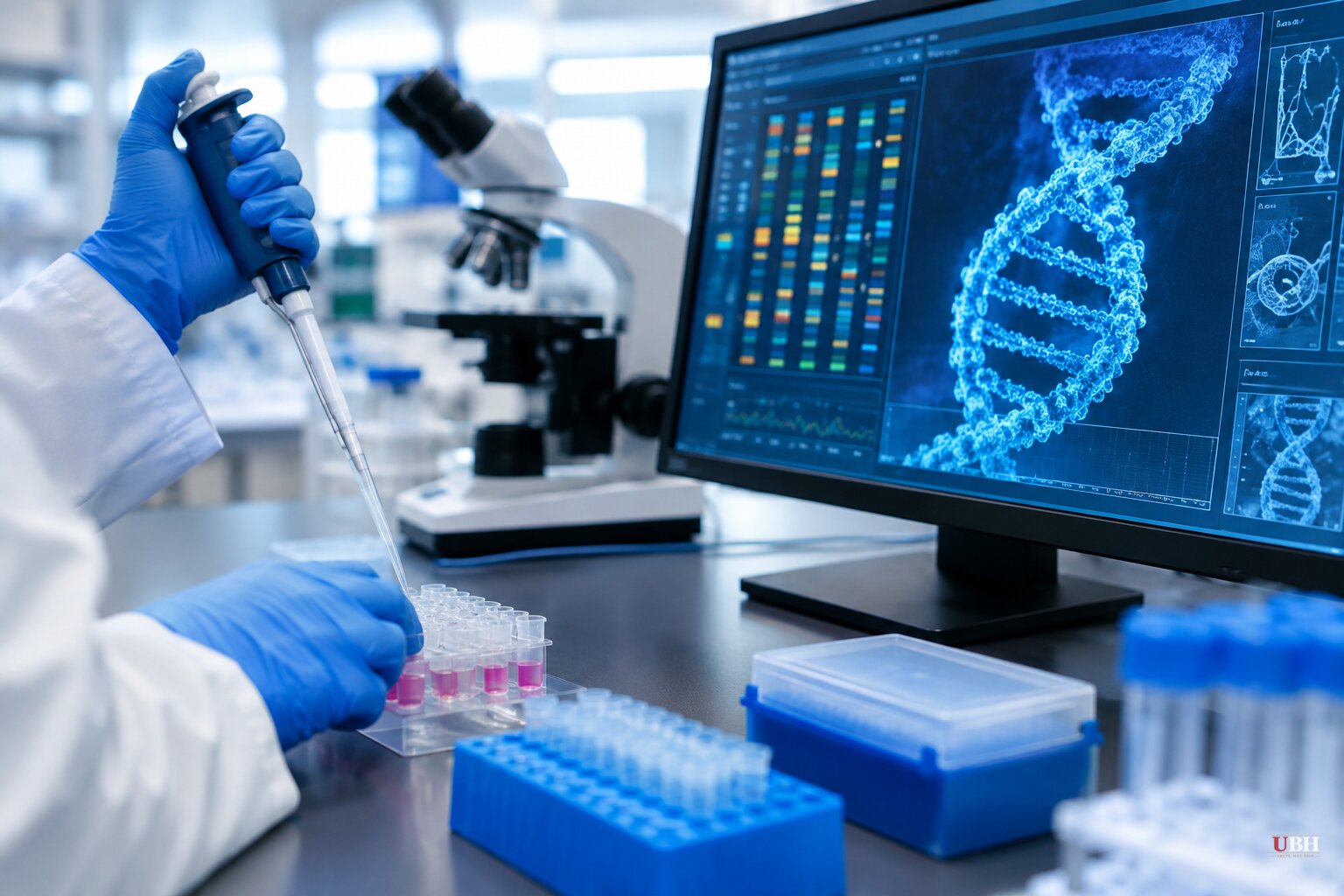
Chemotherapy saves kids' lives. It also appears to rewrite their DNA in ways doctors are only now able to see clearly.
A study published September 10 in the journal Science found that platinum-based chemotherapy drugs, cisplatin and carboplatin among them, cause extensive genetic damage in healthy cells that survive treatment. The team, led by researchers at the Wellcome Sanger Institute, the University of Cambridge, the Francis Crick Institute, King's College London, and the University of Gothenburg, found that this damage accumulates fast enough to make a child's cells look genetically decades older.
"Chemotherapy causes healthy cells in children to age genetically," said Anna Wenger, the study's first author and a researcher at Sahlgrenska Center for Cancer Research at the University of Gothenburg, who is also affiliated with the Wellcome Sanger Institute. "In a relatively short period of time, it caused the same amount of DNA damage that would normally accumulate over decades and be seen in middle-aged adults," Wenger said, according to a statement from the University of Gothenburg.
The liver stood out
The researchers used a technique called NanoSeq, an ultra-sensitive sequencing method that reads both strands of DNA independently to catch mutations conventional sequencing misses. Using it, they found a DNA damage pattern in liver tissue, which they've labeled SBSA, that didn't show up anywhere else in the body despite platinum drugs circulating through the entire bloodstream.
According to Newsweek, platinum-exposed liver tissue showed roughly a 12-fold increase in mutations compared with untreated samples, averaging about 2,200 DNA substitutions per sample, on par with what shows up in adult livers after decades of normal wear. Newsweek also reported that in platinum-exposed liver tissue alone, researchers found about 22,000 mutations that alter protein-coding DNA, including roughly 1,500 variants that would be considered pathogenic in the context of cancer.
Dr. Foad Rouhani, co-senior author of the study at the Francis Crick Institute and King's College London, said the finding undercuts the assumption that chemotherapy hits every organ the same way, according to Newsy Today. Because platinum drugs are broken down in the liver, researchers believe that organ and the metabolic process happening inside it is where this specific damage signature originates.
Even a single treatment cycle left a mark. Newsweek reported that in one infant, a single cycle of carboplatin was linked to a four-fold increase in DNA mutations compared with similarly aged children who hadn't received platinum chemo.
What it doesn't mean
Finding cancer-associated mutations in healthy tissue sounds alarming. It isn't a diagnosis.
Wenger told Newsweek the study "was not designed to determine whether these mutations directly contribute to such outcomes in individual children, and further research is needed to understand their clinical significance." Multiple sources, including News Medical and the University of Gothenburg's own release, note that secondary cancers among childhood cancer survivors remain rare, even though the mutations detected are widespread.
Professor Sam Behjati, co-senior author at the University of Cambridge and director of the Cambridge Children's Research Institute, framed the work as a starting point rather than a warning label. Understanding exactly how these drugs damage normal tissue is "the necessary first step toward developing protective treatments that reduce long-term health risks," he said, according to Newsy Today.
Wenger echoed that goal directly. "Our finding enables us to begin to think about ways in which we could protect healthy tissues from DNA damage," she said, according to Inside Precision Medicine. Researchers across every account of this study were explicit: this is not an argument against chemotherapy, which remains essential for curing childhood cancer.
The sample counts don't quite line up
Coverage of the study's scope varies in a way worth flagging. News Medical, the University of Gothenburg, and Inside Precision Medicine describe a core dataset of 186 samples, blood, liver tumor tissue, and healthy liver tissue, drawn from nine children treated with platinum-based chemotherapy, plus additional comparison samples (30 from two children on non-platinum treatment, and either 47 or 77 more from children with other cancers or no treatment, depending on the outlet). Newsweek instead describes the dataset as "more than 200 platinum-exposed samples and 61 samples from children who had not received the treatment," a simpler framing that doesn't match the more granular breakdown other outlets give. The underlying study population appears to be the same, but the two framings aren't identical, and neither fully resolves the exact total sample count on its own.
What's next
Dr. Ellie Waters-Barnes, a patient advocate not involved in the research, told Newsy Today the findings offer hope for future therapies that could reduce the lasting health burden of pediatric cancer treatment. No such protective treatment currently exists.
For now, the practical takeaway for parents navigating a child's cancer diagnosis is information, not alarm. The study gives oncologists a clearer biological reason why childhood cancer survivors face elevated risks of secondary cancers and liver disease decades later, a link doctors have observed clinically for years without a clear mechanism. Whether that translates into new monitoring protocols, dosing adjustments, or protective drugs given alongside chemotherapy is the question the Sanger Institute, Cambridge, the Crick Institute, and Gothenburg teams say they're now working to answer.
Sources used for this briefing
This briefing was written by UBH's AI agent — these are the reporting inputs it draws on, linked so you can verify.


