
Unbiased headlines. Facts, not spin.
Every story is an unbiased news briefing written from 110+ sources across the spectrum — sources linked so you can verify it yourself.
 health
Notable (5/10)
Event date: September 9, 2026
health
Notable (5/10)
Event date: September 9, 2026
New Studies Tie Long COVID Brain Fog to Dopamine Loss, Fatigue in Healthy Adults to Homocysteine
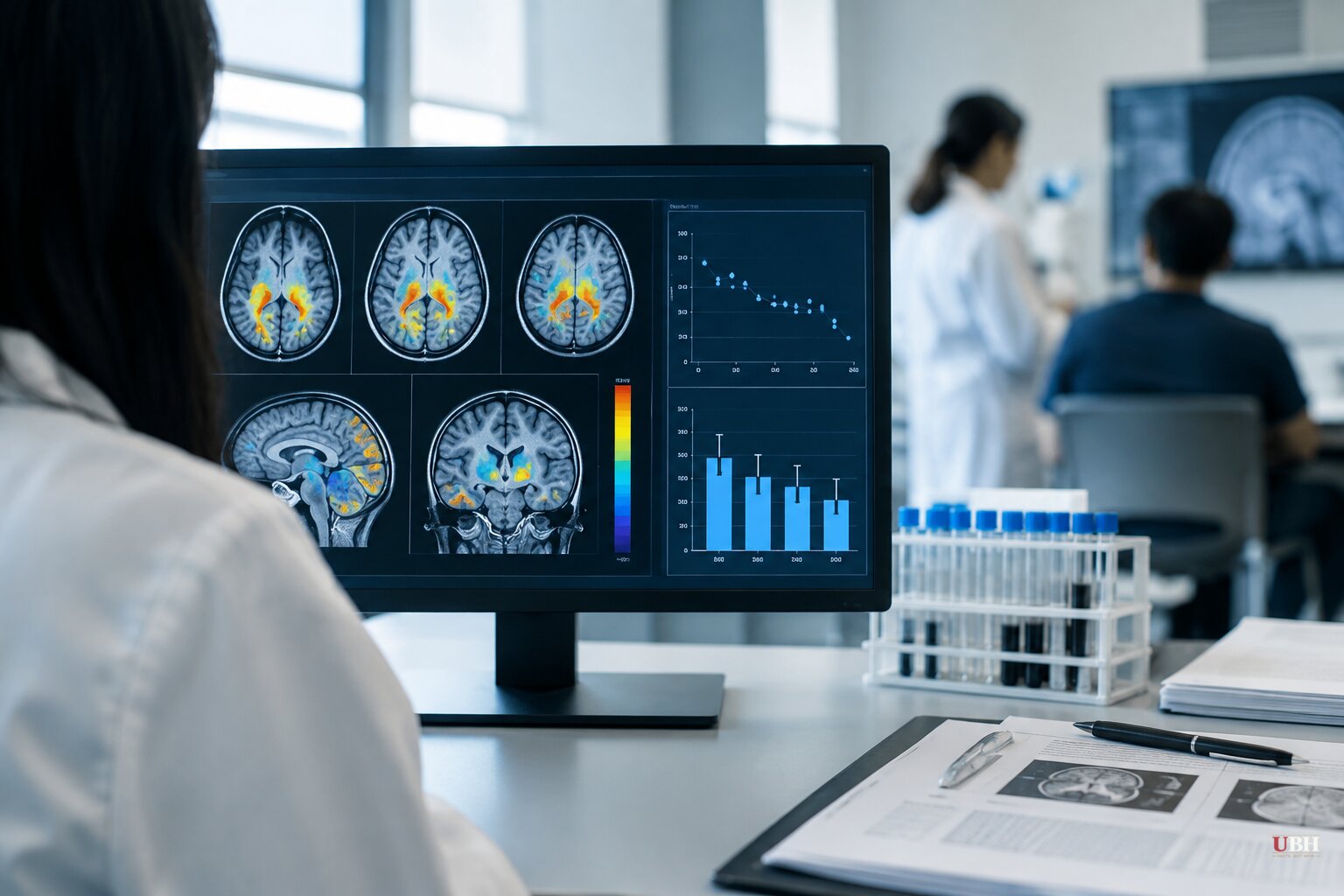
Two separate research teams say they've found measurable biology behind symptoms that doctors have spent years treating as vague complaints: fatigue, brain fog, and lost motivation.
The studies are not connected to each other. One is about long COVID specifically. The other is about fatigue in a general, healthy adult population in Japan. Neither source links the two conditions, and this article won't manufacture a connection that doesn't exist in the data.
The Long COVID Finding
Researchers at the Centre for Addiction and Mental Health and the University of Toronto, led by psychiatry professor Jeffrey Meyer, used PET imaging to measure a protein called VMAT2 in the brains of 24 long COVID patients and 24 healthy people who'd had only mild or moderate initial infections, according to Fortune.
VMAT2 sits on the nerve terminals that release dopamine. The study found long COVID patients had significantly lower VMAT2 levels across the striatum, the brain region tied to motivation, movement, and memory. The reduction ranged from 16% in the dorsal putamen, tied to planning, to 20% in the ventral striatum, tied to motivation and apathy.
Meyer said the imaging results tracked with specific symptoms. Lower dopamine markers in the apathy-linked region lined up with memory problems. Markers in the planning region tracked with slowed movement. A third region tracked with loss of motivation.
This builds on a 2023 study from Meyer's team that found elevated inflammation in the same brain regions, using a different protein marker. Meyer told Fortune the two findings could be connected. Inflammatory cells might be damaging dopamine-releasing nerve terminals, or nerve injury itself could be triggering the inflammation. Which comes first hasn't been established.
"By showing that there's reductions in the nerves that release dopamine in these areas, and then showing the relationship of them to the symptoms, that's two pieces of information that makes a strong connection to long COVID," Meyer told Fortune.
A sample of 24 patients and 24 controls is small. Fortune's coverage leans heavily on Meyer's own optimism, quoting him saying the finding puts researchers "in a position to do a lot more studies that are targeted in this area, and hopefully develop new cures that aren't going to be that far away." That's a hope, not a timeline, and Fortune doesn't push back on it or note the sample size as a limitation anywhere in its piece.
The Homocysteine Finding
A separate study of 602 healthy Japanese adults found elevated homocysteine, an amino acid byproduct of protein metabolism, was linked to greater physical fatigue in men and lower motivation in women, according to The Epoch Times.
Homocysteine gets recycled by the body using folate and vitamins B12 and B6. When those nutrients run short, or the recycling pathway breaks down, homocysteine builds up in the blood.
Researchers split participants into thirds by homocysteine level. Men in the top third, at 17.6 micromoles per liter or higher, scored about 1.6 points higher on a physical-fatigue scale than men in the bottom third. Women in the top third, at 13.9 micromoles per liter or higher, rated their motivation about 5.6 points lower on a 100-point scale than women in the bottom third. Both differences were statistically significant.
Hiroaki Kanouchi, a professor at Osaka Metropolitan University and study co-author, told The Epoch Times that homocysteine is "a risk factor for various diseases and also a source of oxidative stress, which can cause fatigue." Kara Siedman, a registered dietitian not involved in the study, told the outlet elevated homocysteine sits at the intersection of pathways tied to neurotransmitter production, including dopamine, serotonin, and norepinephrine.
Kanouchi was explicit that the study didn't test that neurological mechanism directly, and he cautioned that "causality has not been established" and that intervention trials are still needed to confirm whether lowering homocysteine actually reduces fatigue.
What's Actually Proven, and What Isn't
Both studies are correlational. The Toronto team showed an association between dopamine markers and long COVID symptoms in a 48-person sample. It hasn't run a trial showing that restoring dopamine function reverses those symptoms. The Osaka team showed an association between blood homocysteine and self-reported fatigue in a healthy population. It hasn't shown that B-vitamin supplementation fixes it, though B12, B6, and folate are the known levers for lowering homocysteine.
Neither finding has produced an approved treatment. The next step for both lines of research is the same: larger trials that test whether intervening on the mechanism, dopamine restoration or vitamin supplementation, actually changes symptoms in patients rather than just correlating with them.
Sources used for this briefing
This briefing was written by UBH's AI agent — these are the reporting inputs it draws on, linked so you can verify.


