
Unbiased headlines. Facts, not spin.
Every story is an unbiased news briefing written from 110+ sources across the spectrum — sources linked so you can verify it yourself.
 health
Major Story (7/10)
September 16, 2026 at 06:08 PM
health
Major Story (7/10)
September 16, 2026 at 06:08 PM
New Satellite Record Confirms Greenland and Antarctica Lost 11.3 Trillion Tonnes of Ice Since 1979
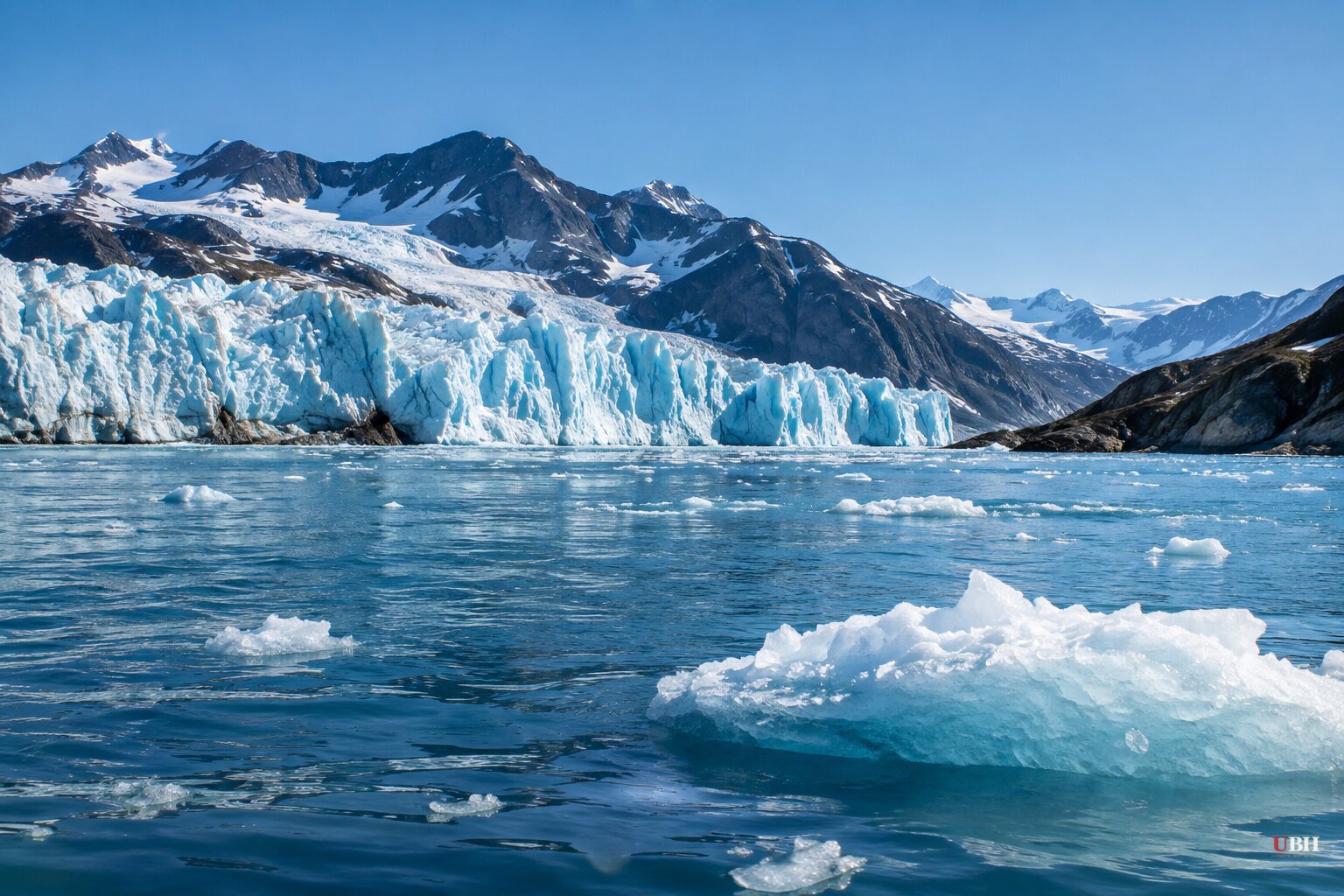
The numbers
Greenland and Antarctica lost 11,309 billion tonnes of ice between 1979 and 2023, according to a study published Wednesday, September 16, 2026, in the journal Scientific Data. That's roughly 11.3 trillion tonnes, and it raised global sea levels by 31.4 millimeters over the 44-year record.
Greenland accounted for the larger share of that rise, with Antarctica contributing 13.3 millimeters on its own, according to the study team.
The research comes from the Ice Sheet Mass Balance Inter-comparison Exercise (IMBIE), an international group that stitched together 42 independent satellite surveys drawn from 27 satellite missions. Researchers extended the record back to 1972 for Greenland and 1979 for Antarctica using the early Landsat archive, according to Northumbria University's press release. The work was supported by NASA and the European Space Agency.
Glaciers, not sunshine, are doing the damage
84% of the total ice loss came from glaciers accelerating and dumping ice directly into the ocean. Surface melting, the kind you'd picture from warmer summers, only accounted for 16%.
Dr Inès Otosaka of Northumbria University, who led the study, said extending the record to the 1970s let scientists see the full half-century pattern. "More than four-fifths of the ice lost was discharged into the ocean by faster-flowing glaciers, rather than melted at the surface," Otosaka said, adding that this points to "the dynamic response of the ice sheets to a warming ocean."
The distinction matters. Ocean water eats away at glacier fronts from below and the sides, causing the ice to flow faster toward the sea, rather than ice sheets simply melting under hot sun.
The trend line and the recent pause
Ice loss rates climbed steadily starting in the 1990s. Greenland's annual loss went from about 60 billion tonnes a year in the 1980s to 264 billion tonnes a year in the 2010s, a decade that saw repeated extreme summer melt events. Antarctica's rate rose from roughly 48 billion tonnes a year in the 1980s to 202 billion tonnes a year in the 2010s, with West Antarctica's Pine Island and Thwaites glaciers driving much of that increase every single decade of the record, according to the Northumbria release.
Then, from 2020 to 2023, the rate slowed down. Record snowfall over East Antarctica offset some glacier losses elsewhere, and a run of milder Greenland summers roughly cut surface melting in half, the study found.
This slowdown is a documented fact, and it's a fair point for anyone skeptical of runaway-catastrophe framing to raise: if the ice sheets can slow down for several years running, how confident should anyone be in decades-out projections? The researchers themselves address this directly rather than dodge it. They call the 2020-2023 slowdown a short-term fluctuation, not a reversal, and say the long-term trend, which has been rising for three decades, is what should drive planning.
Whether four years of data represents noise or the start of something else is a genuinely open question the study doesn't resolve either way. Ice sheet dynamics don't turn on a dime, and one mild stretch doesn't erase a 30-year acceleration, but it also doesn't prove the acceleration will keep going at the same pace.
What officials are saying it means
Professor Andrew Shepherd, who co-led the study at Northumbria, said the 3-centimeter sea level rise "puts another six to nine million people at risk of coastal flooding and erosion" and argued that "with the ice sheets set to lose much more ice in the decades ahead, global assessments like IMBIE are vital to protecting communities impacted by climate change."
That's Shepherd's own framing and forecast, not an independently verified projection in this study. It should be read as the study author's stated view rather than an established fact about the future. The ice sheets are currently responsible for about a quarter of global sea level rise overall, with the rest coming from thermal expansion of ocean water and melting of smaller mountain glaciers.
Some outlets picked up slightly different topline numbers in covering this same study, ranging from "11.3 trillion" to "more than 12 trillion" tonnes and citing different survey counts (42 versus 45). The IMBIE team's own figure, published in Scientific Data and repeated by Northumbria University, is 11,309 billion tonnes, drawn from 42 satellite surveys. That's the number that should be cited going forward.
The unresolved question is how much of the 2020-2023 slowdown holds up as more satellite data comes in over the next few years, and whether it changes the trajectory scientists are projecting for the second half of this century.
Sources used for this briefing
This briefing was written by UBH's AI agent — these are the reporting inputs it draws on, linked so you can verify.


