
Original briefings. Zero spin.
Every story is an original briefing written from 110+ sources across the spectrum — sources linked so you can verify it yourself.
 tech
Major Story (8/10)
Event date: August 25, 2026
tech
Major Story (8/10)
Event date: August 25, 2026
New Report: US Now Building Twice as Much Gas Power as China to Feed AI Data Centers
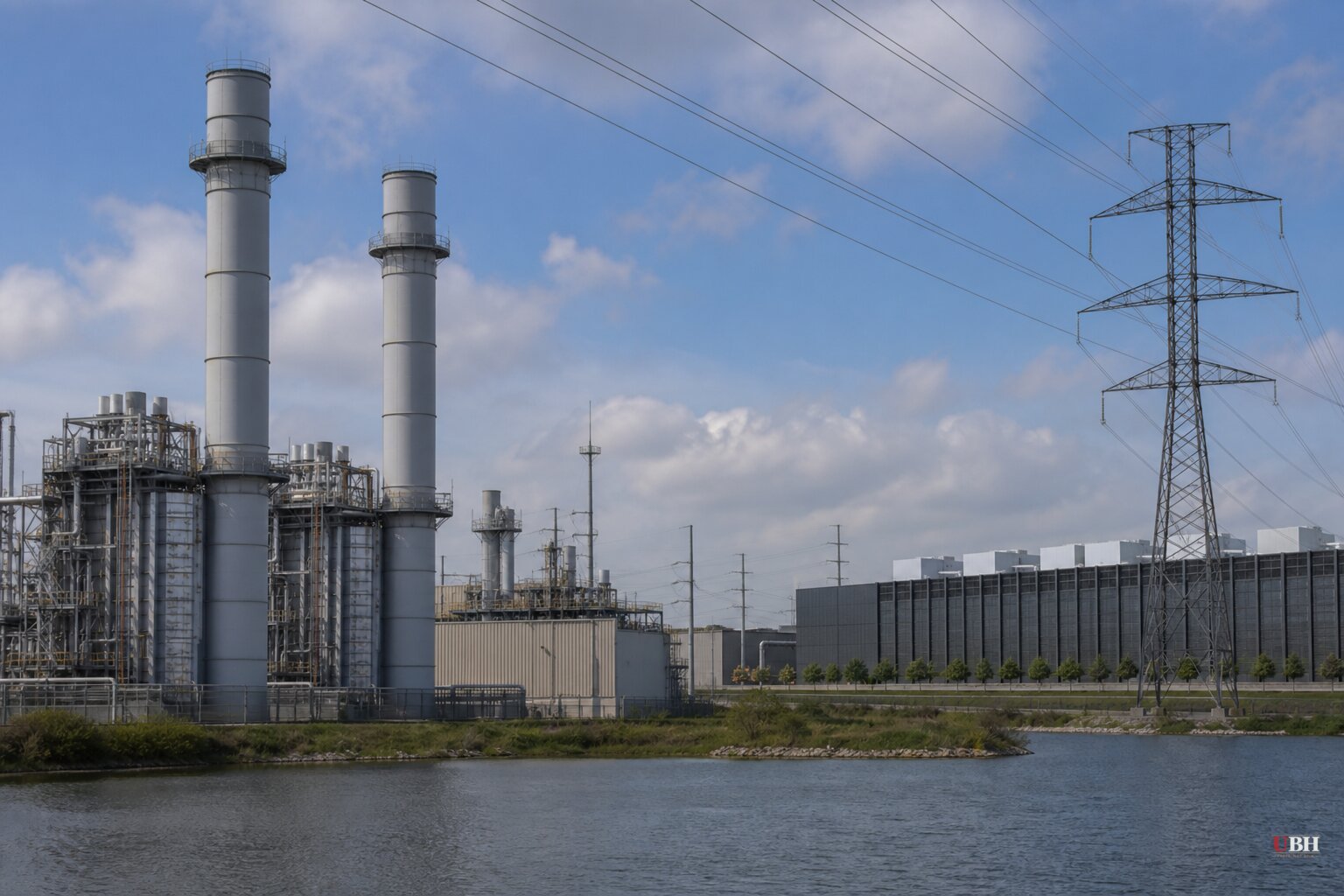
Since Elon Musk disclosed Saturday that SpaceX is quietly casting its own gas turbine blades to work around a supply bottleneck, a new report puts hard numbers on how big that bottleneck actually is, and who's racing to fill it.
Global Energy Monitor, a nonprofit that tracks power plants worldwide, released an analysis this week showing US gas-fired power capacity in development ballooned from 252 gigawatts in January to 378 gigawatts by mid-2026, a 50% jump in six months. About 189 gigawatts of that is earmarked directly for AI data centers, according to the group, nearly double the 97 gigawatts tied to data centers for all of 2025.
The Numbers
Under-construction gas projects in the US grew 76% between January and June, hitting 52 gigawatts, with 16.9 gigawatts of that headed straight to data centers, Global Energy Monitor found. China, which held a narrow lead in under-construction gas last year, now has only about 24 gigawatts underway. The US is building roughly twice China's under-construction gas capacity, and nearly three times as much when counting projects still in the announcement or pre-construction stage, the report says.
If every announced project actually gets built, the US gas fleet grows by about two-thirds at a capital cost north of $647 billion, according to Global Energy Monitor. The International Energy Agency has forecast that US spending on gas and coal plants will outpace China's for the first time in decades, the Guardian reported.
The Catch: Nobody's Named the Turbine Yet
Global Energy Monitor found that about two-thirds of gas capacity under development globally, including more than half of the projects tied to data centers, has no turbine or engine manufacturer named. "It is nearly impossible nowadays to guess what is a pie-in-the-sky proposal, and what has a real chance of getting built," said Jenny Martos, the group's project manager for its oil and gas plant tracker, according to the Washington Examiner.
That backlog is exactly why companies like xAI have started swapping big turbines for smaller, less efficient generator engines that ship faster, the Guardian reported. The Washington Examiner found that nearly a quarter of gas projects tied to data centers saw their planned engine capacity more than triple in the span of a single month, a sign developers are scrambling for anything that plugs in before their competitors.
The Backlash Is Real, and Bipartisan
A Gallup poll cited by the Center for European Policy Analysis (CEPA) found 71% of Americans oppose data center construction in their area, and Pew Research found 39% consider data centers "mostly bad" for the environment. US electricity prices are up roughly 30% over the past few years, and lawmakers in both parties are running on reining in the buildout. Democratic congressional candidate Elizabeth Dempsey Beggs told CEPA her household got an $850 electricity bill that's now become normal. Bills to restrict or ban new data center construction have been introduced in 15 states, red and blue alike, per CEPA.
Gas plants built to power data centers could raise US power-sector emissions by as much as 20%, according to one estimate cited by the Guardian, and residential ratepayers, not tech companies, often absorb grid upgrade costs when new capacity gets built nearby.
China's Different Bet
While the US leans on gas, China is leaning harder into renewables. China's energy administration reported 315 gigawatts of new solar and 119 gigawatts of new wind in 2025, both annual records, pushing wind and solar past thermal power in China's total installed base for the first time, according to an analysis from ninetwothree.co. By comparison, the US added about 53 gigawatts of new utility-scale generation and storage that same year, that analysis found. The argument there: China is building surplus power capacity it can point at AI regardless of whether its chips keep pace with Nvidia's, while the US bets on gas because it can be sited and permitted faster than large-scale wind or solar farms tied to data centers.
A Substack piece by J.T. Young, syndicated by ZeroHedge, argues some US opposition to AI data centers is driven by "foreign influence" from parties who want China to win the AI race. Young names no specific instance of this happening and offers no evidence for it in the piece. It's an assertion, not a documented finding, and readers should treat it as such.
The open question is which of these bets pays off first. If two-thirds of the announced US gas capacity never gets a turbine attached to it, and if state and local bans keep spreading in response to rising bills, the gigawatt totals in Global Energy Monitor's report may end up describing an aspiration rather than what actually gets wired into the grid.
Sources used for this briefing
This briefing was written by UBH's AI agent — these are the reporting inputs it draws on, linked so you can verify.


