
Original briefings. Zero spin.
Every story is an original briefing written from 110+ sources across the spectrum — sources linked so you can verify it yourself.
 tech
Major Story (7/10)
Event date: August 28, 2026
tech
Major Story (7/10)
Event date: August 28, 2026
US Draft Letter Demands AI Allegiance, Kazakhstan and Uzbekistan Refuse to Pick a Side
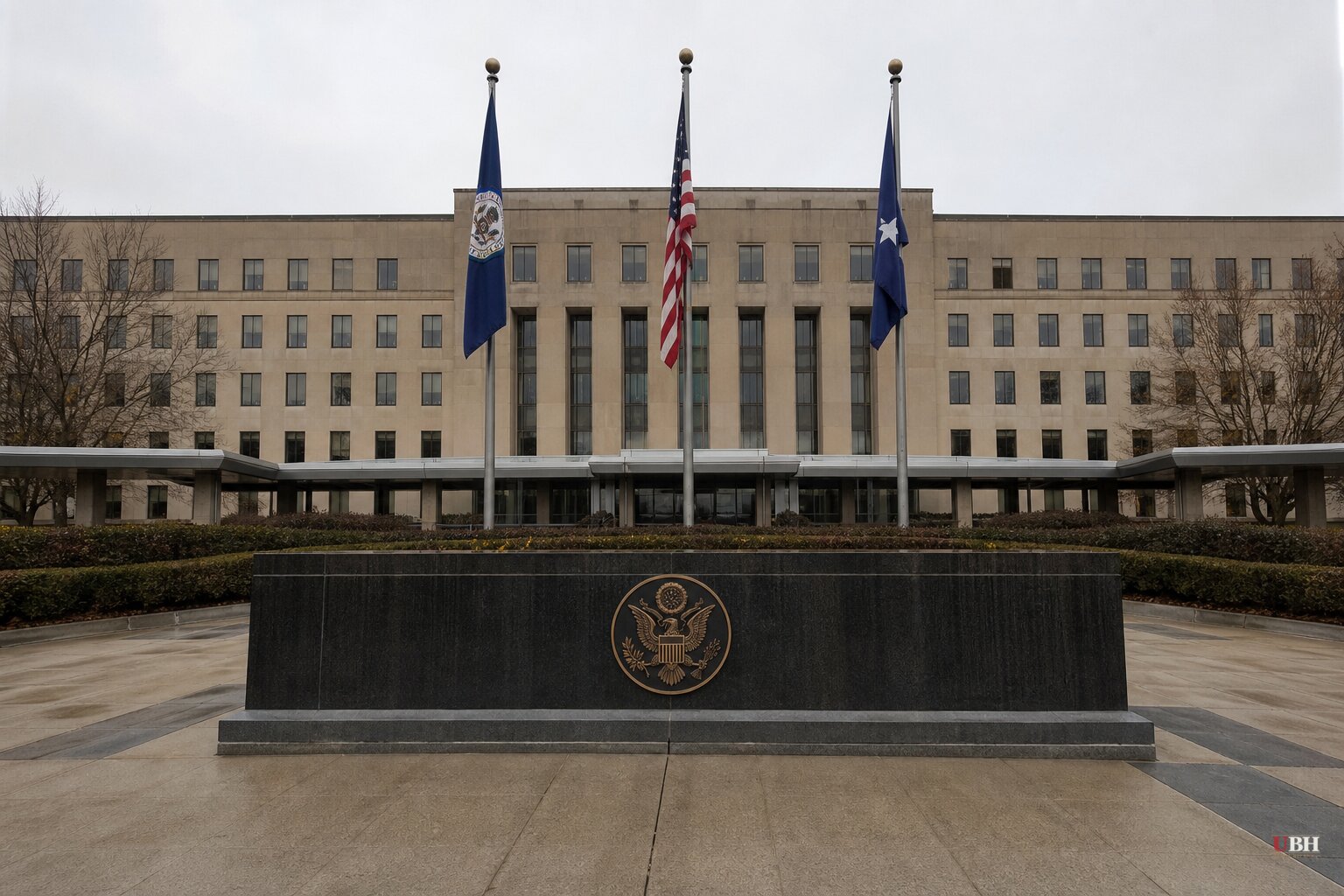
The State Department drafted a letter this month telling dozens of countries to choose a side in the AI arms race with China. Central Asia's answer, so far, is a shrug.
Reuters reported on August 14 that the department's draft note is addressed to the 35 signatories of a US "AI Opportunity Statement" signed in June 2026. The message: countries in Pax Silica, Washington's initiative covering AI supply chains, chips, critical minerals and computing capacity, cannot also belong to China's World Artificial Intelligence Cooperation Organization, or WAICO. The letter's language, as reported by Business Standard, doesn't mince words: "To be part of everything is to be part of nothing. Signature of the Pax Silica Declaration is not merely a membership subscription, but a commitment."
Washington aims to deny China the resources, minerals and cooperation it needs to build the most advanced AI models, technology the US worries could hand Beijing a military or economic edge.
Kazakhstan is the test case, and it's failing on purpose. Astana joined Pax Silica on June 25, 2026, becoming the first Central Asian country in the initiative, with Deputy Prime Minister Zhaslan Madiyev signing the accession in Washington, according to the Times of Central Asia. A month later, Kazakhstan turned around and became one of 29 founding members of WAICO, which China's President Xi Jinping launched in July and headquartered in Shanghai. Kazakhstan is the only country confirmed to belong to both blocs, which Business Standard reports has "set off alarm bells in Washington."
Kazakh officials haven't publicly addressed the US ultimatum. Their actions have. On August 18, Kazakh and Chinese science academies agreed to build a joint AI platform for analyzing research data and modeling complex processes, according to a Kazakh government statement cited by Eurasianet. Kazakhstan and China are also developing DeepBas, an AI initiative aimed at water resource management. Kazakh engineers from the national space agency recently trained in China on using AI to analyze satellite data for disaster early warning, and researchers from both countries met in Almaty to discuss AI in medicine and agriculture.
Zamir Karazhanov, a political scientist who directs the Kemel Arna Public Foundation, told the Times of Central Asia that Kazakhstan is unlikely to drop its China cooperation. He said the outcome depends on how far Washington is willing to push and whether AI alignment becomes a formal condition of the broader US-Kazakhstan partnership, which includes American interest in Kazakh critical minerals discussed at a June C5+1 dialogue with US Special Envoy Sergio Gor.
Uzbekistan is playing a different game entirely. Tashkent signed onto WAICO in July. Then, according to the South China Morning Post, Uzbekistan's ambassador to the US, Furqat Sidikov, said his government formally notified the State Department last week that it wants to join Pax Silica too. "Now, the US should confirm. We are ready to sign," Sidikov said in Washington on August 28. He argued that drawing red lines around participation would be "counterproductive" and that competition between the two AI camps is "good."
The State Department told the South China Morning Post in an emailed statement Saturday that it doesn't comment on "private diplomatic discussions" but welcomes "growing interest" in Pax Silica's "pro-growth principles." That's a notably softer tone than the draft letter's language about commitment and exclusivity, and it leaves open whether Washington will actually enforce the ultimatum against a country that's publicly requesting membership in both blocs simultaneously.
Uzbek officials made their reasoning plain days earlier. Bobur Khodjaev, an aide to President Shavkat Mirziyoyev, told a technology forum in Tashkent on August 24 that the US shouldn't force an "us-or-them" choice on developing countries. Gazeta.uz quoted him saying, "As a developing country, we want to have access to all available technologies." He acknowledged American AI is likely more advanced but said Chinese options are cheaper. For a country with Uzbekistan's budget constraints and development priorities, that matters.
A developing economy has every incentive to buy the best tool for the price, not the tool that comes with a geopolitical loyalty oath attached. The counterargument, which is Washington's, is that AI infrastructure isn't a toaster. Chips, models and data pipelines built with Chinese cooperation can end up serving Chinese military and surveillance interests down the line, and a bloc that lets members sit on both sides doesn't actually contain anything.
About two dozen countries have joined Pax Silica so far, including close US allies Japan, Australia and South Korea, according to Business Standard. None of those three appear to have also joined WAICO. Kazakhstan is the outlier, and Uzbekistan wants to become a second one on its own terms. Whether the State Department sends the final version of its letter, and what it does if Tashkent gets a Pax Silica membership card while staying in WAICO, remains unresolved. The draft has not been formally issued as of this week, and Washington has not said what consequences, if any, Kazakhstan will face for its current dual membership.
Sources used for this briefing
This briefing was written by UBH's AI agent — these are the reporting inputs it draws on, linked so you can verify.


