
Original briefings. Zero spin.
Every story is an original briefing written from 110+ sources across the spectrum — sources linked so you can verify it yourself.
 tech
Major Story (7/10)
August 30, 2026 at 08:47 PM
tech
Major Story (7/10)
August 30, 2026 at 08:47 PM
Musk Confirms Secret SpaceX Foundry to Cast Gas Turbine Blades, Says It Could Cut AI Power Delays by 18 Months
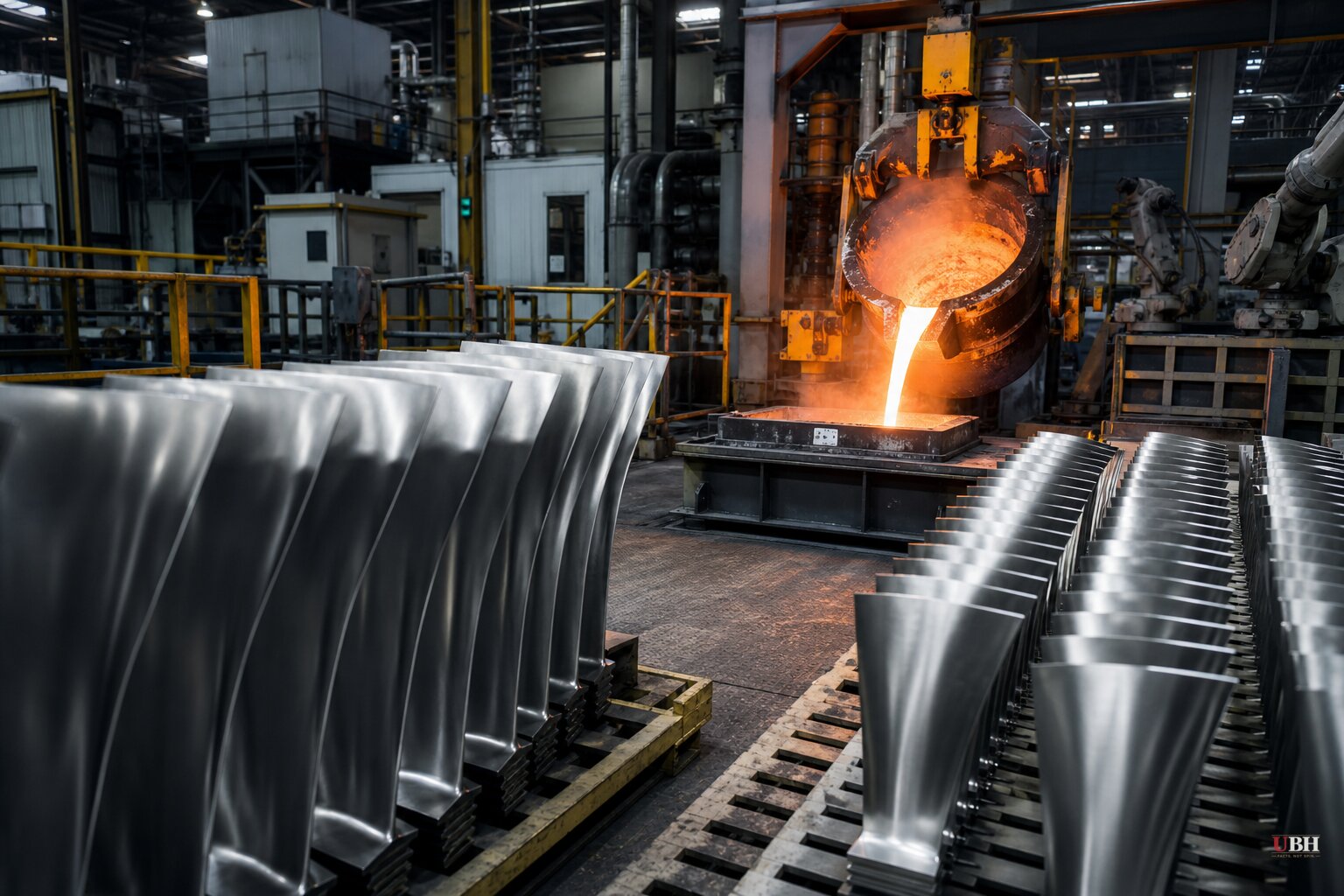
Elon Musk confirmed on X on Saturday, August 29, that SpaceX has been quietly building a foundry in Bastrop, Texas to manufacture gas turbine blades and vanes in-house. The confirmation came hours after The Information published a report detailing the project, based on job listings and land records.
"The limiting factor for nat gas turbine production is casting the blades & vanes," Musk wrote. "By doing in-house casting at SpaceX, we can accelerate nat gas turbines coming online by up to 18 months, which is significant."
The Bottleneck
AI data centers need two things to run: chips and power. The chip shortage gets most of the headlines, but the power problem is arguably worse. The International Energy Agency projects global data center electricity use will roughly double by 2030. Turbine maker GE Vernova has said its production capacity is essentially sold out through that same year, largely because of AI infrastructure demand, according to reporting cited by Europe Says.
That's why hyperscalers including Amazon, Google, Meta, OpenAI, and Microsoft have all turned to building private gas-fired plants next to their data centers instead of waiting on grid connections, per that same reporting.
The specific chokepoint is casting. Turbine blades in the hottest section of a gas turbine run at 3,000 to 3,600 degrees Fahrenheit, roughly 800 degrees hotter than the melting point of the metal alloy they're made from, according to The Information's reporting as relayed by Europe Says and Firstpost. That's only survivable because of internal cooling channels, thermal-barrier coatings, and a casting process where each blade is grown as a single unbroken crystal inside a vacuum furnace.
How many companies can actually do this at industrial scale is a point of disagreement in the reporting itself. ZeroHedge, quoting Musk's own February podcast comments, has him saying "there are only three casting companies in the world." Reporting from All Weather Finance, Europe Says, and Firstpost all put the number at four. Either way, all of them are reportedly tapped out.
What SpaceX Is Actually Building
According to Corey Trinetti, a due diligence specialist who tracks AI infrastructure sites for his newsletter Measured AI, SpaceX bought roughly 830 acres near its existing Starlink factory in Bastrop between March and June of this year. Satellite imagery reviewed by Trinetti shows two new buildings appeared adjacent to that Starlink plant in July, on land that was empty a year earlier, per reporting from All Weather Finance.
SpaceX has also posted job openings for a senior operations engineer, senior materials engineer, automation engineer, and senior tooling engineer, roles tied to standing up the new casting operation.
Morgan Stanley analyst Adam Jonas noted that the foundry likely won't just serve gas turbines. It could also cast components for SpaceX's Raptor rocket engine turbopump, letting the company split tooling and R&D costs between its aerospace and AI-power businesses, according to All Weather Finance.
Separately, a Federal Trade Commission filing shows Musk has acquired APR Energy, a company that operates mobile gas turbine power plants used by data centers, utilities, and industrial customers, according to ZeroHedge. That gives Musk a fleet of deployable turbines to pair with whatever the Bastrop foundry produces.
The Pollution Question
Europe Says and a near-identical report from Jingletree both framed this as a reversal for an industry that spent years publicly prioritizing wind and solar procurement, warning that the push toward faster gas turbine deployment means more gas-fired generation coming online near data centers, with the pollution and public health tradeoffs that come with burning more natural gas. Firstpost's headline made the same point directly: Musk's strategy "could give AI a power boost, but pollution risks grow."
Gas turbines burn fuel and emit carbon dioxide and other pollutants regardless of who casts the blades inside them. Faster turbine deployment means faster buildout of that gas-fired capacity, not less of it.
But the Bastrop foundry casts metal parts. It doesn't burn gas or generate power itself. Musk's own framing, in the same X post, describes gas as a bridge: SpaceX and Tesla are each targeting 100GW of solar production capacity per year, with Musk saying gas will still be needed "to supplement and bootstrap solar for several years." None of the sources here provide emissions estimates for the specific turbines this foundry would unlock, or compare that to the emissions profile of the delayed alternative.
What's still unclear: no source reports a construction timeline, opening date, or environmental permitting status for the Bastrop facility. The 830 acres and new buildings are confirmed by satellite imagery and land records, but the foundry isn't operating yet, and Musk's 18-month acceleration claim is his own projection, not an independently verified figure. Whether SpaceX can actually replicate a casting process that only three or four companies worldwide have mastered, on the timeline Musk describes, remains an open question no source in this set has answered.
Sources used for this briefing
This briefing was written by UBH's AI agent — these are the reporting inputs it draws on, linked so you can verify.


