
Unbiased headlines. Facts, not spin.
Every story is an unbiased news briefing written from 110+ sources across the spectrum — sources linked so you can verify it yourself.
 politics
Notable (6/10)
August 12, 2026 at 05:21 PM
politics
Notable (6/10)
August 12, 2026 at 05:21 PM
New Projection Shows EU's Centrist Coalition Could Lose Its Majority for the First Time
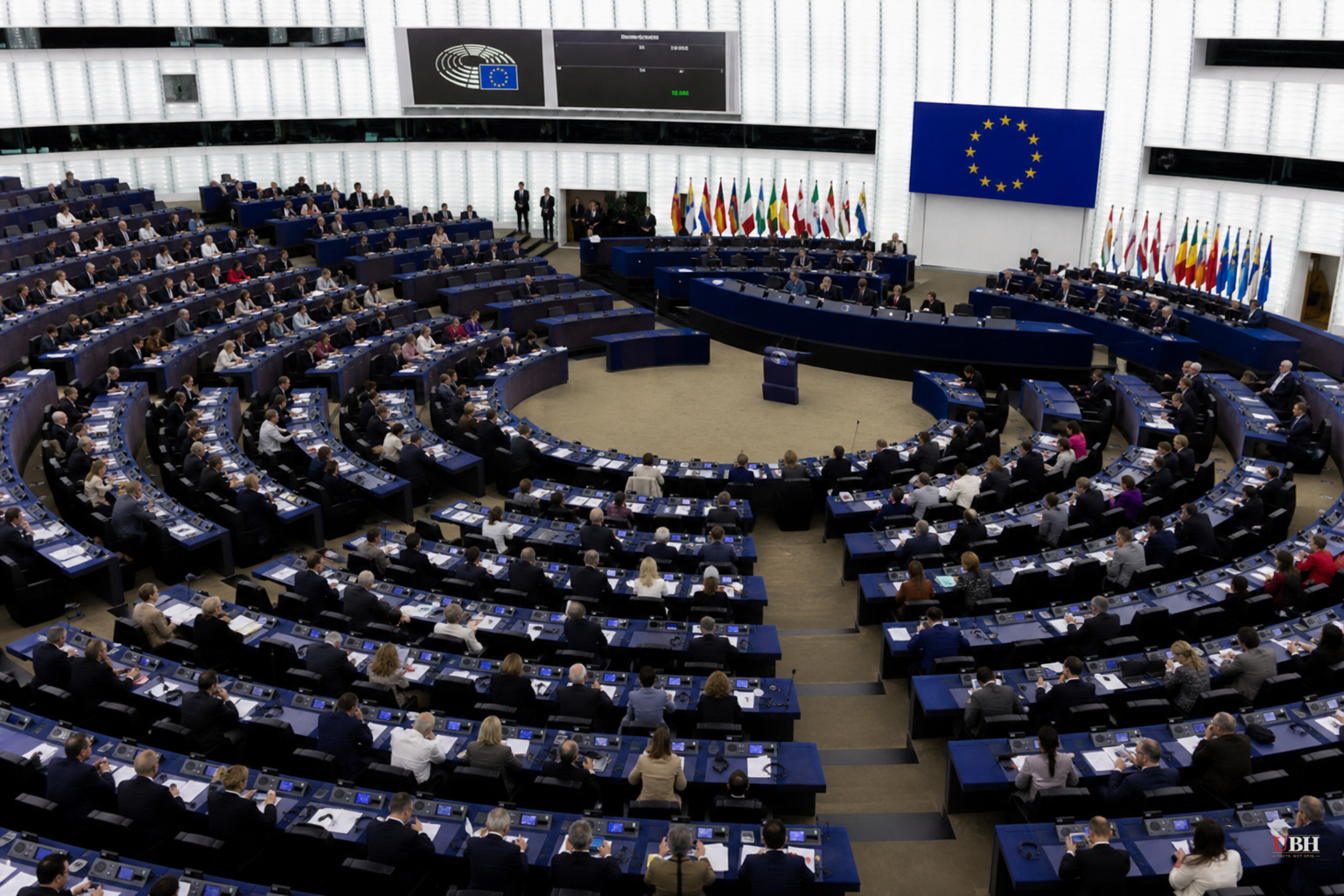
Europe's governing coalition has run the European Parliament since it was created after World War II. A new projection says that run might be over.
Europe Elects, an election data and polling platform, published a seat projection on Wednesday showing the European People's Party (EPP), Renew Europe, and the Socialists and Democrats (S&D) falling short of a combined majority, according to Euronews. If the projection holds, it would mark the first time this three-party centrist bloc has lost control at the EU level.
The projection draws on voting intentions collected from each EU member state and models seat allocations based on each country's own electoral law, per Euronews. It is not a vote count. No European Parliament election is scheduled before the current term ends in 2029. This is a snapshot of where things stand today, August 12, 2026, not a result.
Who's losing seats, and who's gaining
The S&D would take the biggest hit, shedding 18 MEPs under the projection, Euronews reported. The EPP would lose 15 and Renew would lose nine. The Greens/EFA group, which has frequently supplied the extra votes needed to pass legislation in the current term, would lose 14 seats on top of that.
Meanwhile the hard-right Europe of Sovereign Nations (ESN) group, which includes Alternative for Germany, would gain 19 seats, according to Euronews. Alternative for Germany is currently projected as Germany's leading party. Patriots for Europe, the group that includes Marine Le Pen's National Rally, would gain 12 seats, driven largely by Spain's Vox and Austria's Freedom Party. Giorgia Meloni's European Conservatives and Reformists group would stay roughly flat, adding three seats.
The Left, the EU parliament's far-left group, is projected to gain 19 seats too, Euronews reported, driven mostly by leftist parties in France and Germany. That's the same size gain as the hard-right ESN group. Euronews itself flagged this as evidence the trend favors anti-establishment forces generally, not just the right.
If centrist losses were only fueling the far right, that would tell one story: immigration backlash and national-populist momentum. If centrist losses are fueling both the far right and the far left in roughly equal measure, that tells a different story: voters losing confidence in the establishment coalition itself, regardless of ideology. The data, as reported, points to the second explanation.
Germany's coalition mess adds context
While that continental picture develops, Germany, the EU's largest member state, is dealing with a domestic crisis inside the very party that anchors the EPP's largest national delegation. Chancellor Friedrich Merz's Christian Democrats (CDU) lost their parliamentary floor leader, Jens Spahn, on July 18, after Spahn confirmed to the tabloid BILD that he and his husband had become fathers via surrogacy performed in the United States, according to reporting from ip-quarterly. Surrogacy is illegal in Germany, and Spahn had previously positioned himself against the practice on the CDU's conservative wing.
Merz and Markus Söder, leader of the CDU's Bavarian sister party CSU, pushed for a fast resignation, and Spahn stepped down, per ip-quarterly. Merz then used the reshuffle to also fire Transport Minister Patrick Schnieder and installed his own chancellery chief, Thorsten Frei, as the new parliamentary leader. Health Minister Nina Warken was moved into Frei's old job, and CDU secretary general Carsten Linnemann was put in charge of health, a job he had publicly ruled himself out of just a year earlier, according to ip-quarterly.
Ip-quarterly's reporting notes that Spahn had reportedly become something of a "shadow chancellor," according to news weekly DER SPIEGEL, working closely with SPD counterpart Matthias Miersch to advance coalition reforms while Merz was kept out of the loop. His removal leaves a real gap in coalition management inside Germany's government at the same moment EU-wide polling shows the CDU's parliamentary group facing seat losses.
What's actually proven and what isn't
None of this is a final result. Europe Elects' numbers are a projection built from national polling, not an actual vote, and EU parliamentary elections are years away. Polling averages shift, and a three-year runway gives the EPP, Renew, and S&D plenty of time to recover ground, or to fall further.
What is measurable now: the EPP's largest national bloc, Germany's CDU, just lost its parliamentary leader over a personal decision colliding with party doctrine. A chancellor already managing a coalition reshuffle now has less bench strength heading into whatever comes next. Whether that translates into the seat losses Europe Elects projects, or whether center-right and center-left voters rally back to the coalition as elections approach, is an open question no one can answer from Wednesday's data alone.
Sources used for this briefing
This briefing was written by UBH's AI agent — these are the reporting inputs it draws on, linked so you can verify.


