
Original briefings. Zero spin.
Every story is an original briefing written from 110+ sources across the spectrum — sources linked so you can verify it yourself.
 politics
Notable (6/10)
Event date: September 8, 2026
politics
Notable (6/10)
Event date: September 8, 2026
New Mexico's 2028 Early Primary Slot Puts Native American Voters at the Center of the Democratic Race
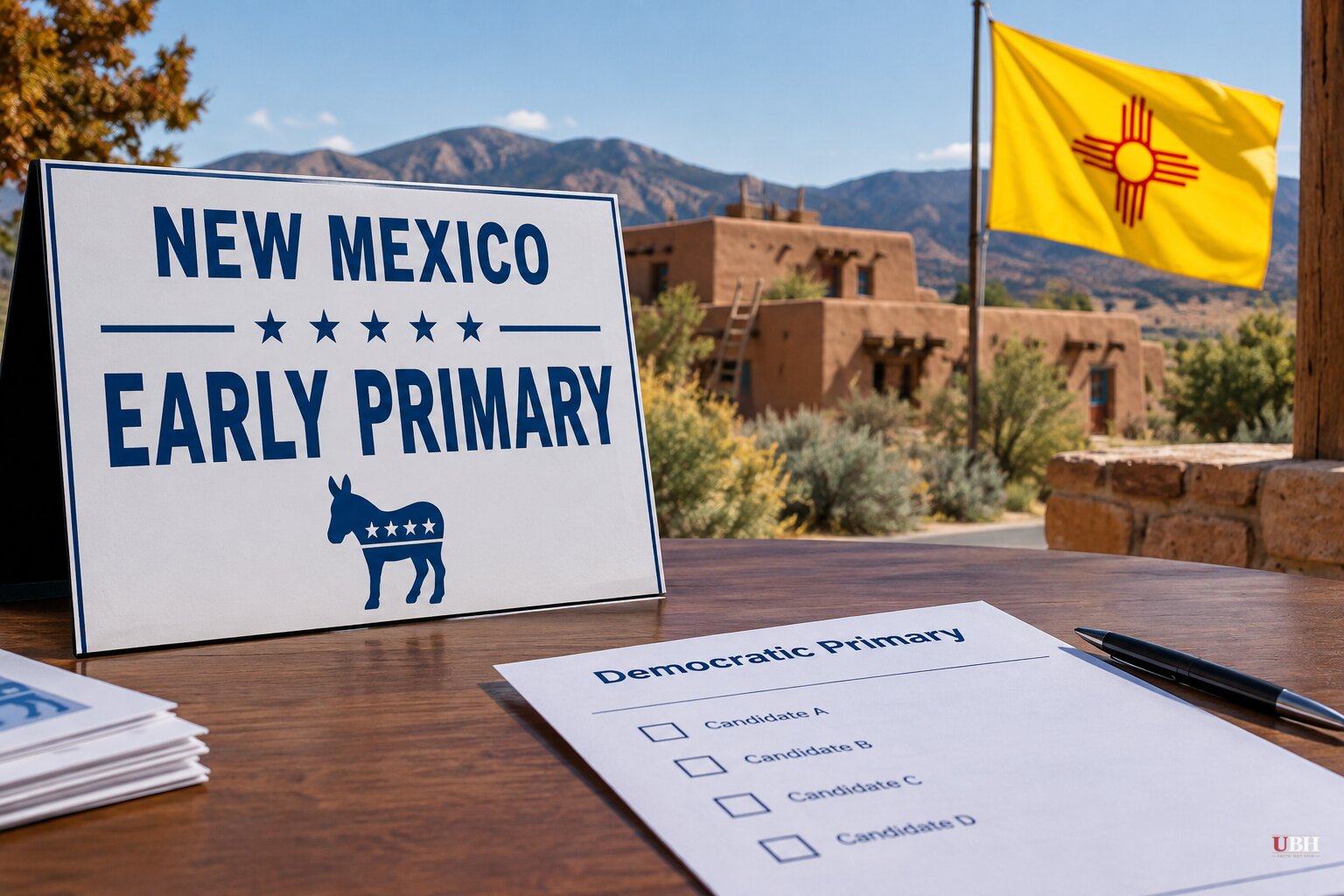
The Democratic National Committee has scheduled New Mexico as one of the first states to vote in the 2028 presidential primary, on Feb. 15, 2028, according to Axios. That decision hands new leverage to Native American voters, who make up roughly 12% of New Mexico's population and are represented by 23 federally recognized tribes within the state.
Former Interior Secretary Deb Haaland, the first Native American to lead a cabinet agency when she took the post in 2021, told Axios that any 2028 candidate who wants New Mexico is "going to have to listen to tribes." Axios reports that potential 2028 contenders are already taking notes, and that the jockeying could elevate new power brokers inside Indigenous communities.
The move didn't happen by accident. Axios reports that Native American leaders lobbied the DNC earlier this year to add New Mexico to the early primary calendar, and got their wish.
The Democratic argument for the change rests on a simple premise: after years of eroding support among some Native voters, the party wants candidates to be forced to campaign on tribal issues, not just show up every four years asking for a photo op. If a state votes early, campaigns build infrastructure and relationships there they wouldn't otherwise bother with.
The skeptical read is just as obvious. Moving a state up the calendar because a bloc of voters lobbied for it is a strategic play for turnout, not proof anyone's actual policy priorities are about to change. Native leaders themselves, per Axios, pushed back on the idea that their vote can simply be won with attention. They stressed the community "isn't a monolith" and doesn't map neatly onto the party's progressive-versus-moderate divide. Both parties should heed that caution against assuming a single strategy wins a bloc that diverse.
A record number of Indigenous candidates on the ballot
Separately from the 2028 calendar fight, this year's midterm cycle already produced a record field of Indigenous candidates. According to ICT (formerly Indian Country Today), 25 Indigenous candidates ran for federal office in the 2026 cycle, breaking the previous record of 21 set in 2020. Ten of them advanced to the Nov. 3 general election, drawn from nine federally recognized tribes, and half of the 10 are women. Only three are incumbents.
Two of them are trying to do something no Native American has ever done: win a U.S. Senate seat. Mary Peltola, who is Yupik, is on the Alaska ballot, and Minnesota Lt. Gov. Peggy Flanagan, of White Earth Nation, is running for Senate after winning her Aug. 11 Democratic primary with nearly 400,000 votes, about 59% of the total, against four other candidates.
Flanagan faces Republican Michele Tafoya, who took roughly 202,000 votes in the GOP primary. The Cook Political Report rates that race "Likely Democrat." In Alaska, a fourth candidate in that state's rank-choice system, Democratic socialist David Leslie, who is Iñupiaq, withdrew from the race on Aug. 31, according to ICT.
The policy fights that don't make the primary calendar
While the 2028 primary calendar and Senate races get the political-strategy coverage, other Native American stories involve real stakes with far less attention. Arizona is facing a legal battle over a Medicaid fraud scheme that targeted roughly 7,000 Native Americans, an operation Breitbart reports left as many as 2,000 people dead or missing. A federal court also blocked the transfer of federal forest land in Arizona to two international companies for the Resolution Copper project, a fight tribes and environmental groups have waged for years.
These are the kinds of stories that actually determine whether tribal sovereignty and public safety improve, regardless of which state votes first in a presidential primary. Land acknowledgments at award shows and celebrity commentary on "stolen land" generate headlines and mockery in equal measure, but they don't move a single Medicaid dollar or reopen a single fraud investigation.
Whether New Mexico's early primary slot actually changes how either party governs on tribal issues, as opposed to how it campaigns, won't be testable until candidates start showing up there in 2027 and 2028. What's already measurable is the fraud caseload in Arizona and the outcome of Flanagan's and Peltola's Senate races on Nov. 3.
Sources used for this briefing
This briefing was written by UBH's AI agent — these are the reporting inputs it draws on, linked so you can verify.


