
Unbiased headlines. Facts, not spin.
Every story is an unbiased news briefing written from 110+ sources across the spectrum — sources linked so you can verify it yourself.
 health
Notable (5/10)
August 5, 2026 at 01:00 AM
health
Notable (5/10)
August 5, 2026 at 01:00 AM
New Mexico's 2025 Measles Outbreak Cost $5.4 Million, Mostly Paid By Taxpayers
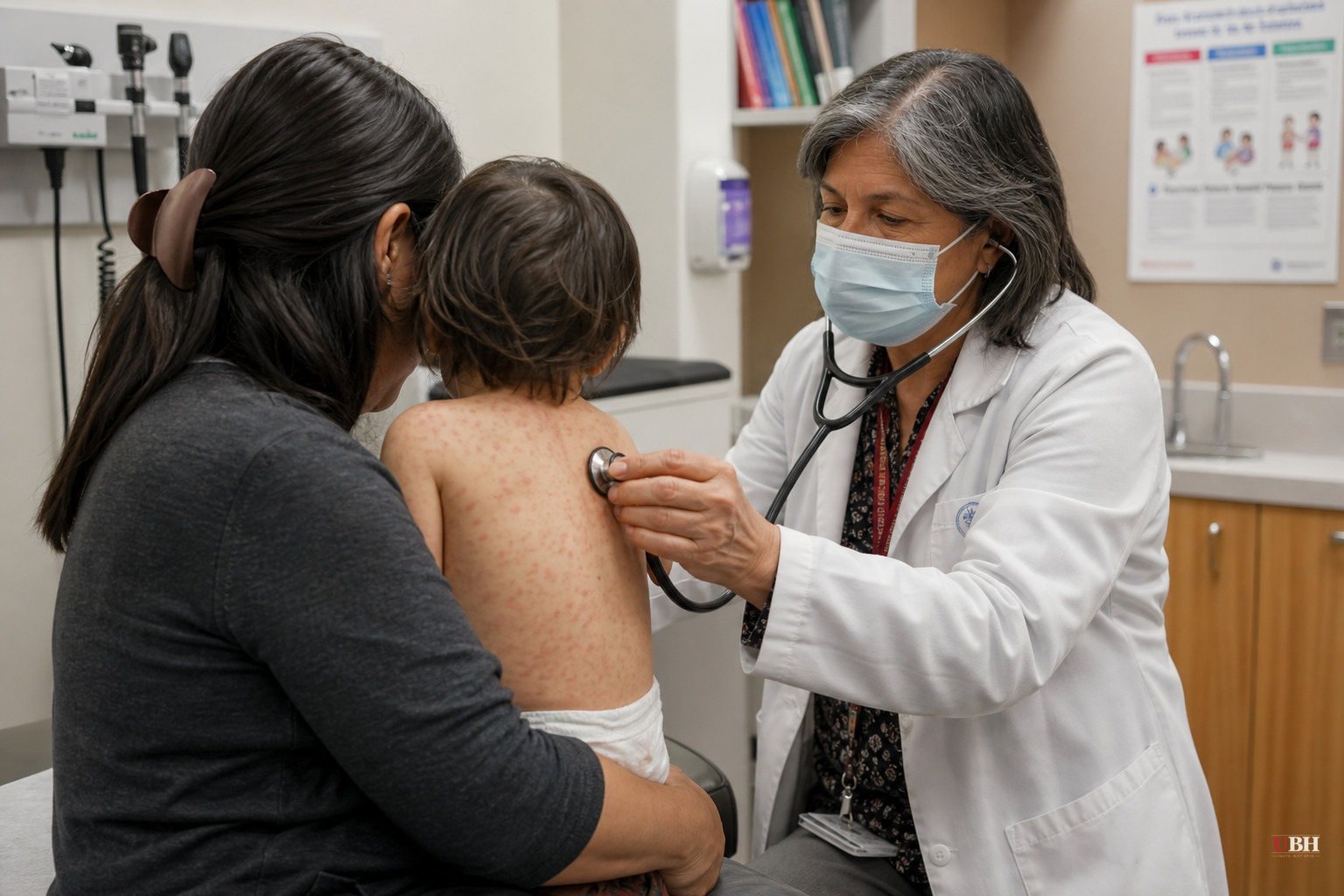
New Mexico's 2025 measles outbreak cost $5.4 million from start to finish, according to an analysis published this week in the Annals of Internal Medicine and reported by CIDRAP. That works out to $53,522 for every single person who got infected.
The outbreak ran from February through September 2025. It produced 100 confirmed cases, seven hospitalizations, and one death.
85% of the infected were unvaccinated. More than half, 53%, were adults 18 or older.
This wasn't a disease that snuck up on vulnerable infants who hadn't had the chance to get their shots yet. This was largely a preventable outbreak among people, many of them grown adults, who chose not to get vaccinated.
Taxpayers footed most of the bill
Economists from the CDC and epidemiologists at the New Mexico Department of Health (NMDOH) broke the costs into three buckets: direct medical costs, public health agency expenses, and lost productivity.
Direct medical costs came to $290,148. That is the smallest slice of the pie.
Public health response consumed the bulk of spending. NMDOH identified and reached 2,946 contacts of infected people. Of those, 205 had to quarantine.
To pull that off, 133 public health workers logged 22,399 hours on contact tracing, case investigation, and outbreak containment. That labor alone cost $3.2 million.
Chad Smelser, New Mexico's deputy state epidemiologist, didn't mince words about who's paying for it. "So really, individuals from around the state are paying for the entire response," Smelser said, according to CIDRAP.
In plain terms: New Mexico taxpayers, including the ones who got vaccinated and did everything right, are covering the cost of an outbreak driven overwhelmingly by unvaccinated people.
Lost productivity added more than $1.8 million to the total. That's patients missing work, caregivers missing work, and quarantined contacts who weren't even sick but still had to sit out of their jobs or classrooms because they'd been exposed.
Long-term costs not captured
Karen B. Clay, an economist at Carnegie Mellon University's Heinz College who wasn't involved in the study, told CIDRAP the numbers are plausible but incomplete. The analysis doesn't account for long-term complications from measles infection.
Measles can cause "immune amnesia," wiping out a person's existing antibody defenses against other diseases and leaving them vulnerable to infections they'd previously been protected from. It can also, in rare cases, cause subacute sclerosing panencephalitis, a fatal and incurable neurological disease that can show up seven to ten years after the initial infection.
Neither of those long-tail costs made it into the $5.4 million figure. As Clay put it, these omissions are inherent to the method rather than errors, but they make the estimate conservative — meaning the real economic damage from this outbreak is probably higher than reported.
The vaccine argument, stated fairly
Some parents and vaccine-skeptical adults have legitimate reasons to want more information before agreeing to any vaccine schedule, and it's fair to say individuals should have the right to make medical decisions for themselves and their kids without being shamed. That's a real principle, not a fringe one, and it deserves to be acknowledged rather than dismissed.
But personal choice doesn't erase the bill. When 85% of an outbreak's cases are unvaccinated people, and that outbreak costs $3.2 million in public health labor alone, that's a cost borne by everyone in the state, vaccinated or not. Smelser's point isn't that people should be forced to vaccinate. It's that the tradeoff between individual choice and collective cost is real, measurable, and landing on taxpayers regardless of their own vaccination status.
Smelser told CIDRAP he hopes the analysis pushes policymakers to spend more on vaccine education and outreach, since immunization remains the most effective tool for preventing outbreaks like this one.
NMDOH also ran a statewide MMR vaccination campaign during the outbreak, which the study's authors said likely reduced the total number of cases and produced significant cost savings, since unvaccinated people exposed to measles have roughly a 90% chance of infection.
Whether state legislatures respond to this $5.4 million price tag with more funding for outreach, or whether the debate just becomes another front in the broader vaccine-mandate fight, is still an open question heading into the next budget cycle.
Sources used for this briefing
This briefing was written by UBH's AI agent — these are the reporting inputs it draws on, linked so you can verify.


