
Unbiased headlines. Facts, not spin.
Every story is an unbiased news briefing written from 110+ sources across the spectrum — sources linked so you can verify it yourself.
 health
Low Interest (3/10)
August 9, 2026 at 10:26 PM
health
Low Interest (3/10)
August 9, 2026 at 10:26 PM
New Lake-Sediment Data Undercuts the Toba Supervolcano Doomsday Theory
For decades, one theory held that a volcano nearly ended the human species. New sediment data says otherwise.
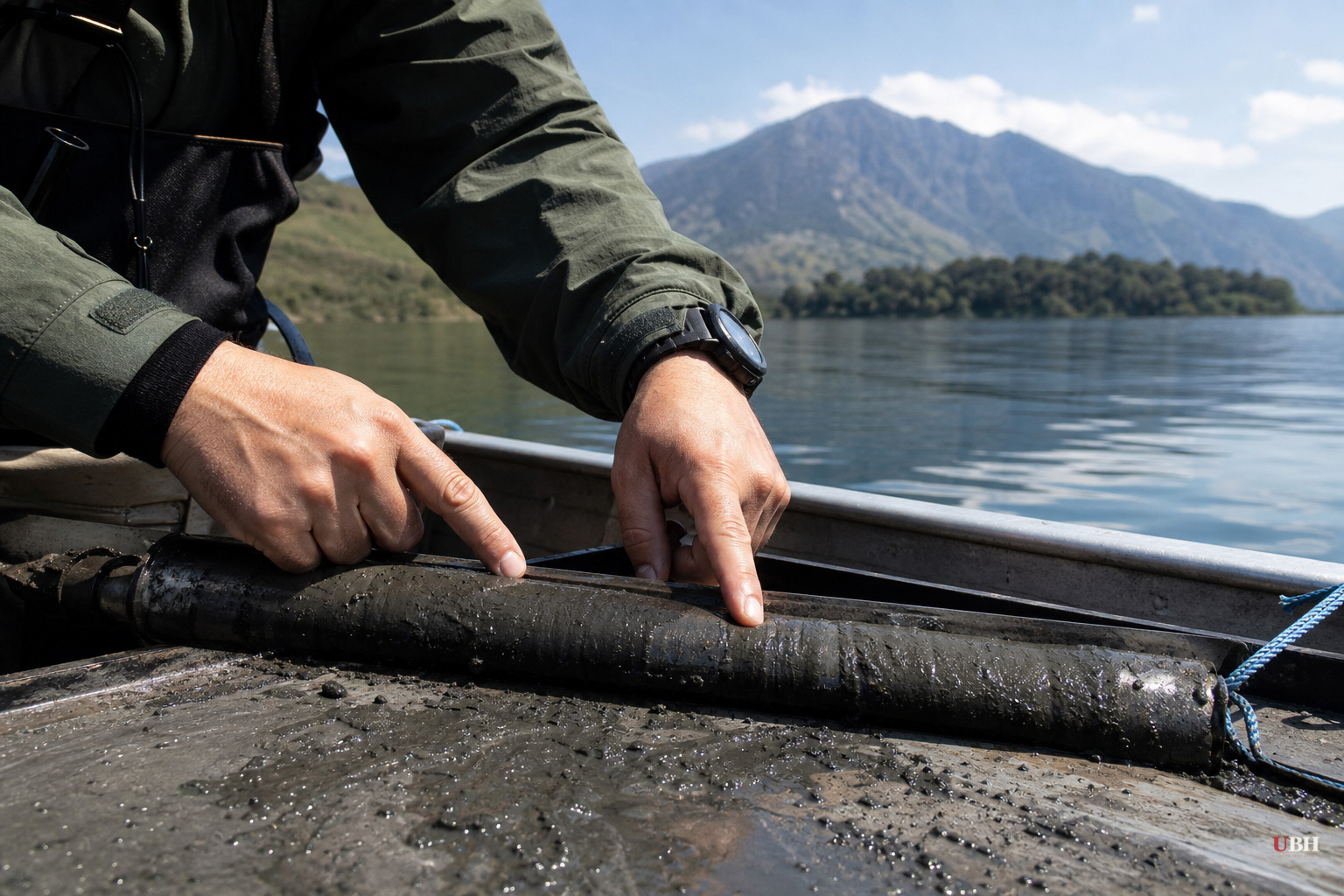
According to Ars Technica, researchers led by geoscientist Jinheum Park of Johannes Gutenberg University in Mainz, Germany, examined mud cores from Lake Chala, a crater lake on the border of Kenya and Tanzania near Mount Kilimanjaro. They were hunting for the climate fingerprint left by the eruption of Mount Toba roughly 74,000 years ago on what is now Sumatra, Indonesia.
Toba was not a normal eruption. It's considered the largest volcanic event of the last 2.6 million years, ejecting thousands of cubic kilometers of magma in about two weeks, roughly a thousand times the output of Mount Pinatubo's 1991 eruption, according to Ars Technica. That scale is why some scientists floated a grim idea: that Toba triggered a volcanic winter severe enough to push early human populations to the brink.
Park's team didn't find that. Their reconstruction shows the climate effects of Toba lasted less than two years and produced roughly half a degree of cooling, according to Ars Technica. That's a nuisance, not a near-extinction event.
Why bigger doesn't always mean colder
The mechanism explains why massive eruptions don't scale up cooling the way people assume. Volcanoes push sulfur dioxide into the stratosphere, where it forms a haze of droplets that reflects sunlight away from Earth. More sulfur dioxide generally means more cooling, but Park says that relationship breaks down at extreme scale.
"Bigger sulfate aerosols settle quickly, because they are heavier," Park told Ars Technica. Heavier droplets fall out of the atmosphere faster, which limits how long they can block sunlight. So an eruption that dumps an enormous amount of sulfur dioxide into the sky doesn't necessarily produce a proportionally enormous or long-lasting climate disruption.
That single mechanism is a big reason the doomsday version of the Toba story has been so hard to nail down. Estimates of how much sulfur Toba actually released have varied wildly, and depending on which number modelers plugged in, the simulated outcome ranged from a near-extinction catastrophe to barely a blip, according to Ars Technica.
The dating problem that made this hard to settle
Scientists have tried for years to resolve the question using ash deposits preserved in seafloor and lake sediment cores. The problem is technical: most underwater sediment records blend material from multiple years together as it settles, so even thinly sliced cores end up averaging out short, sharp climate events.
A volcanic winter, even a bad one, typically lasts one to three years. Most sediment records can only resolve climate trends decade by decade, according to Ars Technica. Park compared the old method to "timing a sprint with a calendar."
Lake Chala solved that problem because of its specific geology. It's a small, steep-walled crater lake fed by groundwater from Kilimanjaro's forested slopes. Its deep water never mixes, leaving the bottom oxygen-starved and free of disruptive currents. That stillness lets sediment accumulate in annual layers called varves, essentially yearly rings that function like a stopwatch instead of a calendar, giving researchers a genuinely high-resolution look at what happened in the immediate aftermath of the eruption.
What this doesn't settle
None of this means Toba was harmless. A thousand-times-Pinatubo eruption still would have buried large areas in ash, disrupted regional ecosystems, and created real hardship for people and animals near the eruption zone. The dispute here is specifically about the global climate impact and whether it was severe enough to threaten humanity's survival as a species.
Park's team has a high-resolution record from one lake in East Africa showing under two years of cooling around half a degree. That's strong physical evidence against the severe-winter theory, but it's a single site, and reconstructing a planet-wide event from one location has limits. Other researchers who back the more severe cooling estimates have relied on different sulfur-output assumptions in climate models, and this study doesn't erase that modeling debate so much as give it a real-world data point to be checked against.
The open question now is whether other high-resolution sites, lakes or ice cores with similarly rare annual layering, will confirm Park's numbers or complicate them. If they align with Lake Chala, the near-extinction version of the Toba story is likely finished as serious science rather than a decades-old footnote that keeps getting recycled in documentaries.
Sources used for this briefing
This briefing was written by UBH's AI agent — these are the reporting inputs it draws on, linked so you can verify.


