
Original briefings. Zero spin.
Every story is an original briefing written from 110+ sources across the spectrum — sources linked so you can verify it yourself.
 politics
Notable (6/10)
August 17, 2026 at 09:50 AM
politics
Notable (6/10)
August 17, 2026 at 09:50 AM
New Hampshire Bans Student IDs at the Polls. A Voting Rights Group Is Suing to Stop It.
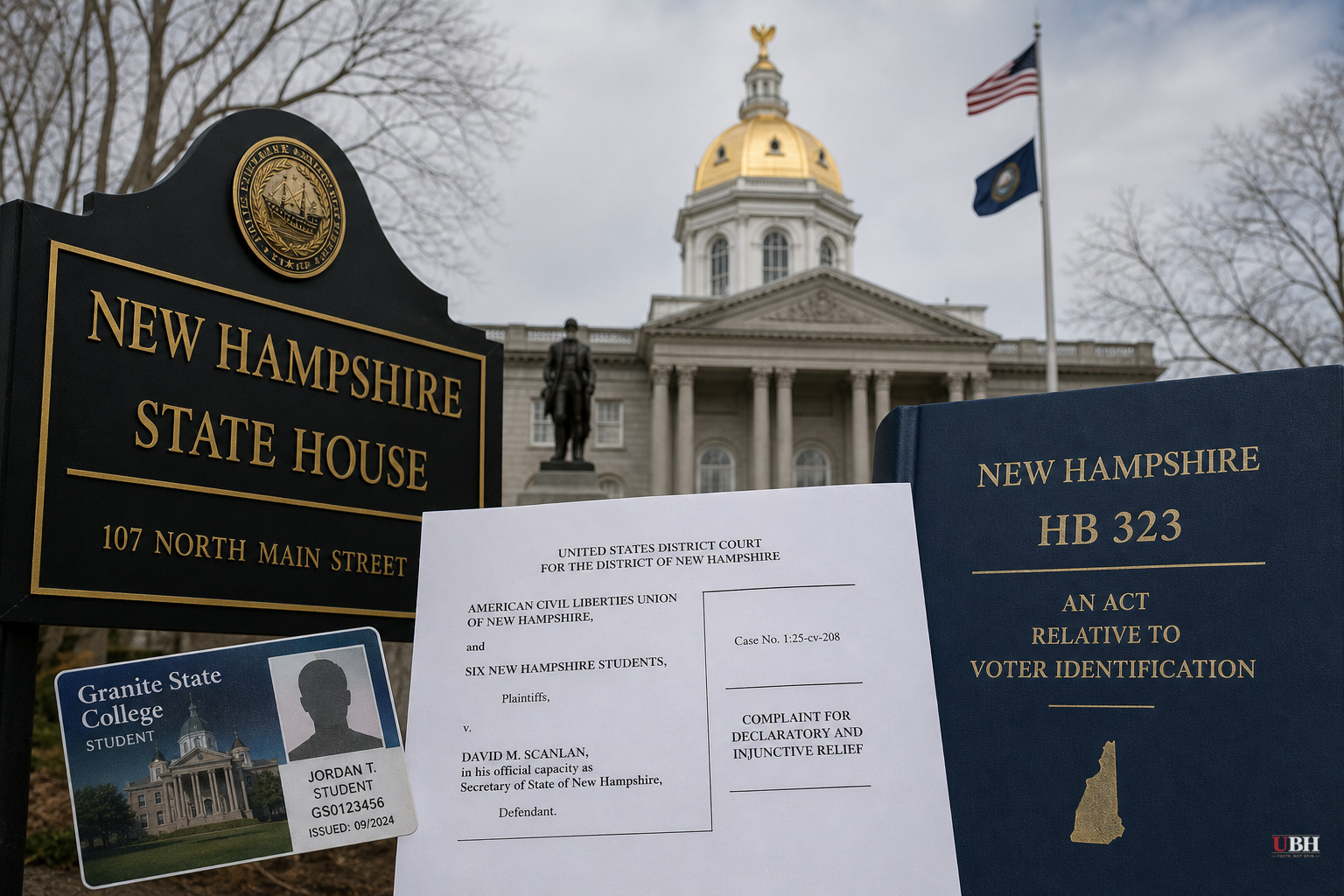
New Hampshire eliminated student IDs as acceptable identification for voting this year. Gov. Kelly Ayotte, a Republican, signed House Bill 323 in April, and it took effect June 2, according to Democracy Docket. Voters there now need a state-issued ID, a U.S. passport, or another accepted document to check in at the polls.
Roughly three dozen states have some form of in-person voter ID law, according to NPR. Requiring ID to vote is mainstream policy, and plenty of Americans manage to produce ID for airline travel, buying alcohol, or opening a bank account.
The central dispute in New Hampshire concerns who gets to decide what counts as acceptable ID, and whether one official expanded a law beyond what lawmakers actually passed.
What the lawsuit actually alleges
The Coalition for Open Democracy, a voter advocacy group, sued New Hampshire Secretary of State David Scanlan and Attorney General John Formella on August 12, according to Democracy Docket. The lawsuit doesn't just challenge HB 323's ban on student IDs at the polls. It challenges guidance Scanlan issued after the law was signed, which told election officials that student IDs also could not be used to register to vote or request an absentee ballot.
The complaint argues HB 323 only changed the statute governing ID used to obtain a ballot at check-in. It did not touch the separate voter registration statute, the plaintiffs say. If that's accurate, Scanlan's guidance went beyond what the legislature actually passed, and the lawsuit calls that a separation-of-powers violation under the New Hampshire Constitution.
This is a specific legal claim about whether Scanlan overstepped his authority. No ruling has been issued as of this writing.
The lawsuit also invokes the 26th Amendment, which bars states from denying the vote based on age for citizens 18 and older. The group argues young voters are less likely to have a driver's license and more likely to rely on student IDs, so the law falls harder on them.
The DMV workaround, and its cost
Students without a driver's license or passport now may need to visit a state DMV office to get a non-driver ID, according to Democracy Docket. The Coalition for Open Democracy says it's raising money to help cover the $20 fee for that ID and redirecting resources toward helping students navigate the process.
The timing matters here. This lawsuit is asking a court to act weeks before New Hampshire's September 8 primary, according to Democracy Docket. Any court decision on an injunction would need to come fast to affect this fall's election.
This isn't just New Hampshire
New Hampshire joins a string of states tightening student ID rules. A federal appeals court reinstated a similar Indiana law in April, according to NPR. Florida Gov. Ron DeSantis signed a law banning student IDs at the polls too, though that restriction doesn't start until 2027.
Other states have taken a middle path instead of an outright ban. North Carolina requires colleges and universities to get state election board approval before their student IDs count. Georgia only accepts student IDs from public institutions, which NPR notes excludes seven of the state's ten historically Black colleges and universities, including Morehouse and Spelman.
President Trump has pushed for a nationwide Republican plan to standardize voting rules, including a ban on student IDs for in-person voting, according to NPR. That federal push has not succeeded so far.
The case for the law, stated fairly
New Hampshire House Republicans framed HB 323 as part of a package "adding security and transparency" to elections, according to their caucus statement cited by NPR. Student ID cards, unlike state-issued IDs or passports, aren't standardized, aren't always verified against a central government database, and vary widely in what information they contain from school to school. A state that wants uniform, verifiable identification at the polls isn't acting in bad faith by preferring documents that meet a consistent federal or state standard.
No source in this record presents evidence of actual voter fraud tied to student ID use in New Hampshire. The debate here concerns administrative uniformity and legislative authority, not a documented fraud scheme. Whether that justifies excluding a form of ID that many young, first-time voters actually carry is the policy argument voters and courts will weigh.
The Coalition for Open Democracy's suit asks a federal court to block HB 323 and Scanlan's guidance before the September 8 primary. Whether a judge grants that request, and on what timeline, will determine whether this fight gets resolved before New Hampshire students head back to the polls this fall.
Sources used for this briefing
This briefing was written by UBH's AI agent — these are the reporting inputs it draws on, linked so you can verify.


