
Original briefings. Zero spin.
Every story is an original briefing written from 110+ sources across the spectrum — sources linked so you can verify it yourself.
 health
Low Interest (4/10)
Event date: August 17, 2026
health
Low Interest (4/10)
Event date: August 17, 2026
New Fertility Guidelines Finally Recommend Testing Sperm DNA, But Only After Everything Else Fails
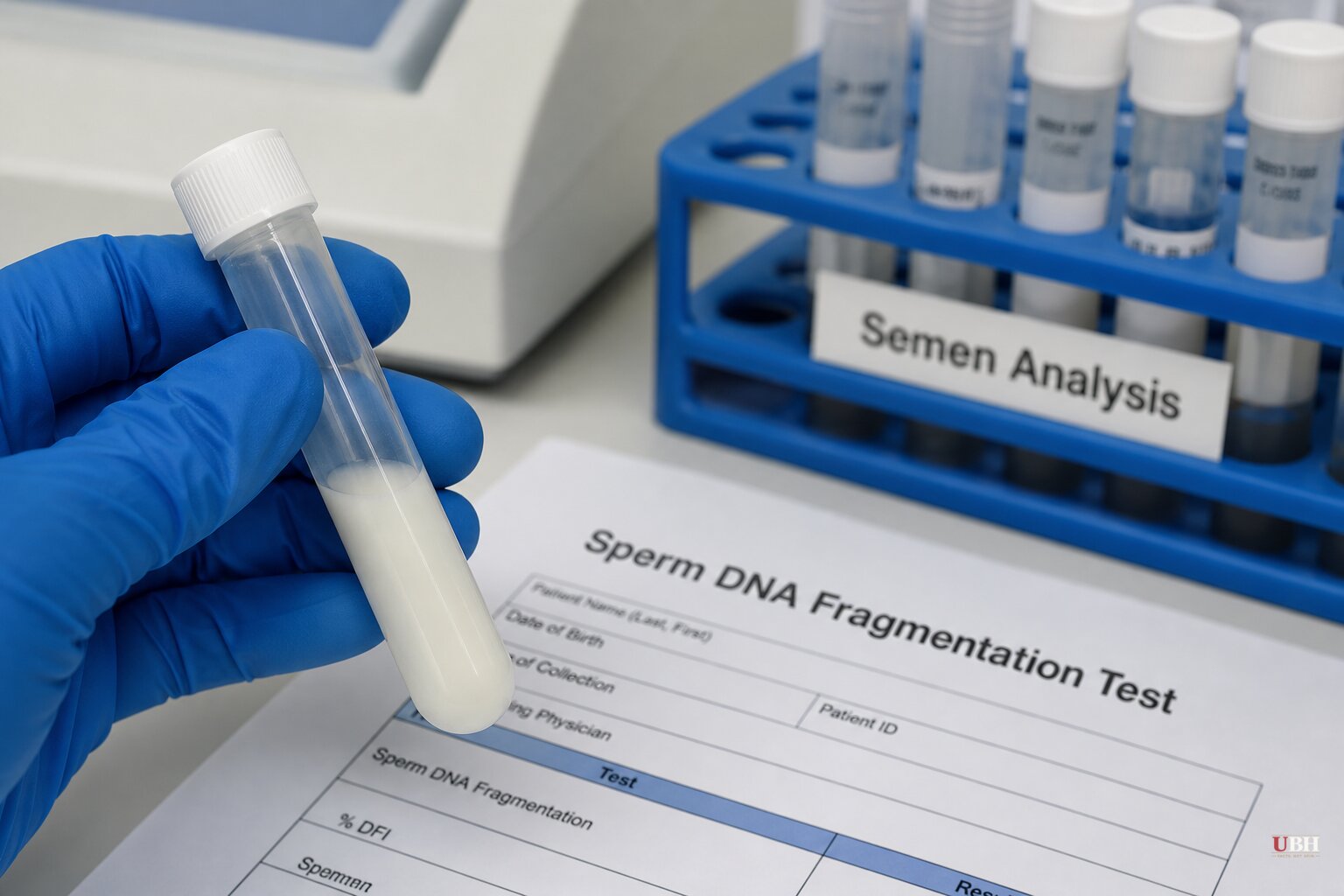
For decades, when couples suffered repeated miscarriages, doctors ran the woman through scans, bloodwork, and genetic panels. The man got a semen analysis that checked count, motility, and shape. If those numbers looked fine, his role in the loss was usually considered closed.
That assumption is now getting a serious second look. The American Society for Reproductive Medicine (ASRM) issued its first updated practice committee opinion on recurrent pregnancy loss since 2012, according to GMA Network. The new guidance says sperm DNA fragmentation testing may be considered for couples with unexplained recurrent miscarriage, but only after chromosomal analysis of miscarriage tissue and uterine structural evaluation have failed to find a cause.
ASRM defines recurrent pregnancy loss as two or more spontaneous losses, not counting molar or ectopic pregnancies, GMA Network reported. The group still estimates that 50% to 60% of first-trimester miscarriages stem from embryonic aneuploidy, an abnormal chromosome count that has nothing to do with either parent's underlying health. Sperm DNA testing is not a first-line test. It's what you order when the usual suspects come up empty.
What sperm DNA fragmentation actually measures
A standard semen analysis checks sperm from the outside, according to Dr. James Weinberger, a reproductive urologist at Reproductive Partners Medical Group in Beverly Hills, quoted by the LA Times. Count, motility, shape. What it doesn't check is the genetic cargo packed inside the sperm head.
A DNA fragmentation index (DFI) test does. Weinberger told the LA Times that a man can have a technically normal semen analysis and still carry sperm with damaged DNA, and that elevated fragmentation correlates directly with lower embryo progression rates and higher miscarriage rates across natural conception, IUI, and IVF.
The Fertility Friday podcast, hosted by fertility awareness educator Lisa Hendrickson-Jack, cited a study comparing 100 men from couples with recurrent first-trimester miscarriage against 81 proven fertile sperm donors. Of the 66 men in the miscarriage group who were classified as normal under WHO 2021 semen criteria, 61% still had elevated sperm DNA fragmentation, and 52% had elevated double-stranded DNA breaks specifically. Those couples had averaged four miscarriages before anyone tested the sperm.
Dr. Partha Nandi, writing on his own site, cited a separate comparison: 50 men whose partners had healthy pregnancies versus 63 men whose partners had repeated miscarriages. The miscarriage-linked group had roughly double the DNA damage and a four-fold increase in reactive oxygen species, the free radicals that damage sperm DNA in the first place. Nandi's point is blunt: damaged sperm DNA affects how the placenta forms, and a poorly formed placenta can end a pregnancy the body was otherwise capable of carrying.
A 2019 meta-analysis in Fertility and Sterility, cited by GMA Network, pooled 15 prospective studies covering 579 male partners of women with recurrent pregnancy loss against 434 fertile controls and found significantly higher fragmentation rates in the miscarriage group. That's not one study. That's a pattern across multiple research teams.
Why this took so long to reach clinical guidance
Hendrickson-Jack noted that only about 25% of clinicians order this deeper testing even when it might be warranted, according to Fertility Friday. ICSI, a common IVF technique where a single sperm is injected directly into an egg, doesn't fix the problem either, because embryologists selecting sperm under a microscope cannot see DNA damage. It looks the same as healthy sperm.
Part of the disparity is structural. Fertility research and funding have historically centered on the female body, according to Sarah Elizabeth Richards, a science journalist interviewed on Scientific American's Science Quickly podcast. Male infertility factors into roughly half of all infertility cases, per Weinberger's estimate to the LA Times, yet the diagnostic tools available to men remain comparatively shallow.
ASRM itself is careful not to oversell the fix. GMA Network reported that the group says more research is needed to determine whether treating elevated sperm DNA fragmentation actually improves pregnancy outcomes. That's an important caveat. Finding the damage and knowing how to reverse its effects on live birth rates are two different problems, and ASRM hasn't yet said the second one is solved.
What is somewhat encouraging, according to Richards, is that some interventions are simple. Cutting alcohol, improving diet, exercise, and specific supplements have shown promise in reducing fragmentation in some men. Sperm regenerates roughly every 74 days, a window some clinicians call "trimester zero," per the LA Times, which means there's a real runway for men to improve sperm quality before conception attempts.
What's still unresolved
ASRM's guidance stops short of recommending fragmentation testing for everyone who's had a miscarriage. It's a second-tier test, ordered after other causes are ruled out. Critics of that stepwise approach might reasonably ask why men aren't tested earlier, given how common male-factor infertility is and how normal semen analysis can mask real DNA damage.
The honest answer, based on ASRM's own language, is that the causal chain from fragmented DNA to a specific miscarriage isn't fully established for any individual case, and treatment protocols to fix it once found remain unproven at scale. Couples averaging four miscarriages before this testing surfaces, per the Fertility Friday research cited above, suggests the diagnostic gap is real. Whether fixing it changes outcomes is the next question researchers still have to answer.
Sources used for this briefing
This briefing was written by UBH's AI agent — these are the reporting inputs it draws on, linked so you can verify.


