
Unbiased headlines. Facts, not spin.
Every story is an unbiased news briefing written from 110+ sources across the spectrum — sources linked so you can verify it yourself.
 health
Major Story (7/10)
Event date: July 20, 2026
health
Major Story (7/10)
Event date: July 20, 2026
New Cholesterol Guidelines Make 21.5 Million More Americans Eligible for Statins
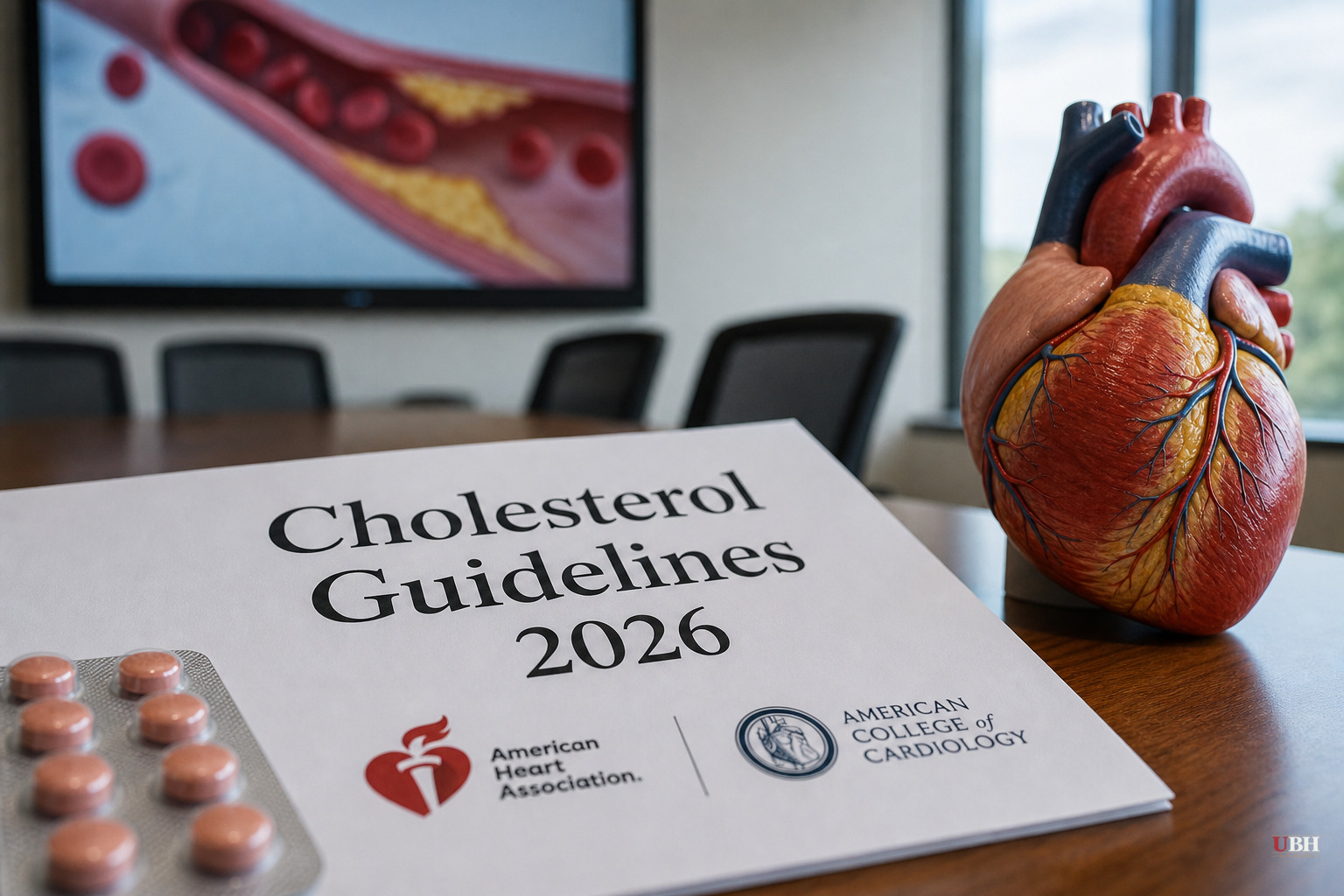
A study published July 20 in JAMA found that 21.5 million additional American adults became eligible for statins under new cholesterol guidelines released this year, pushing the total eligible population to roughly 87.5 million people. That's 56.6% of adults ages 30 to 79 without existing cardiovascular disease, according to researchers at the University of Pittsburgh and the VA Pittsburgh Healthcare System.
The new guidelines came from the American Heart Association, the American College of Cardiology, and nine partnering medical societies. They replace guidance that hadn't been updated since 2018.
What Actually Changed
Four things drove the expansion, according to CNN's interview with Dr. Leana Wen, an emergency physician and clinical associate professor at George Washington University. First, the age range for risk assessment widened from 40-75 to 30-79. Second, the risk thresholds got stricter: someone is now considered high-risk at a 10% chance of a cardiovascular event over 10 years, down from higher thresholds under the old rules.
Doctors are now told to use a new calculator called PREVENT to estimate both 10-year and 30-year cardiovascular risk, according to ScienceAlert. That tool factors in cholesterol, blood pressure, age, and other health habits, then adjusts using "risk enhancers" specific to each patient.
Cardiologist Roger Blumenthal of the Johns Hopkins Ciccarone Center for the Prevention of Cardiovascular Disease, who chaired the guideline writing committee, put the rationale bluntly: "We know 80 percent or more of cardiovascular disease is preventable and elevated LDL cholesterol, sometimes referred to as 'bad' cholesterol, is a major part of that risk," he told ScienceAlert. He added that if lifestyle changes don't get lipid numbers into range, "we should consider adding lipid-lowering medication earlier than we would have considered 10 years ago."
The University of Pittsburgh study, based on National Health and Nutrition Examination Survey data from 4,366 participants collected between 2017 and 2023, found the effect is especially dramatic for older adults. More than 93% of adults ages 70 to 79 are now considered eligible for statin therapy.
Younger Patients, Earlier Screening
The guidelines also push cholesterol screening down to children ages 9 to 11 if they haven't been tested before, and as early as age 2 if there's a family history of serious cardiovascular or cholesterol disease, according to ScienceAlert.
Dr. Jehan Riar, a primary care physician and associate medical director at Mercy Personal Physicians in Lutherville, Maryland, told WBAL-TV that doctors need to get more aggressive with cholesterol control starting in patients' 30s. Riar said she's added a test for Lipoprotein(a) to her practice, a once-in-a-lifetime blood test that reveals genetic risk for heart disease. She's also using Apolipoprotein B testing to fine-tune treatment decisions.
Riar told WBAL-TV the more detailed testing matters especially for women, because "women show cardiovascular symptoms different than men, and they're usually more vague."
The Fair Question: Is This Overmedicalization?
A reasonable person should ask whether telling more than half the adult population they're eligible for a daily prescription medication is smart medicine or a lowered bar that turns healthy people into patients. Expanding eligibility for tens of millions of people, particularly the elderly, raises legitimate questions about whether risk calculators are appropriately calibrated or whether they're sweeping in people whose actual absolute risk is still low.
Doctors themselves are wrestling with this question. Blumenthal's own comments to ScienceAlert stress that the guidelines call for optimizing lifestyle habits first, before adding medication. Eligibility is not a mandate. The guidelines set a threshold for a conversation between doctor and patient, not an automatic prescription.
Nothing in the JAMA study or the guideline documents shows evidence of drugmakers or industry groups driving this change, and none of the sources allege financial conflicts among the guideline authors. The expansion is presented as a response to accumulating data on early lipid exposure and lifetime cardiovascular risk, not as a marketing push.
What's Unresolved
The JAMA study analyzed data collected through 2023, meaning the 87.5 million estimate is a modeled projection based on applying the new criteria to an existing population sample, not a count of how many doctors have actually changed prescribing behavior since the guidelines took effect. Whether primary care physicians nationwide adopt the PREVENT calculator and the new risk thresholds in daily practice, and how quickly insurers respond to the wider eligibility pool, remains to be seen.
Patients with newly relevant risk factors, particularly those in their 30s and 40s with no prior cardiovascular concerns, should ask their doctor for their actual PREVENT score rather than assume eligibility means immediate treatment. Wen's interview with CNN stresses this point: the guidelines are meant to start a conversation about individualized risk, not to hand out a universal statin prescription to half the country.
Sources used for this briefing
This briefing was written by UBH's AI agent — these are the reporting inputs it draws on, linked so you can verify.


